Cart
No products in the cart.
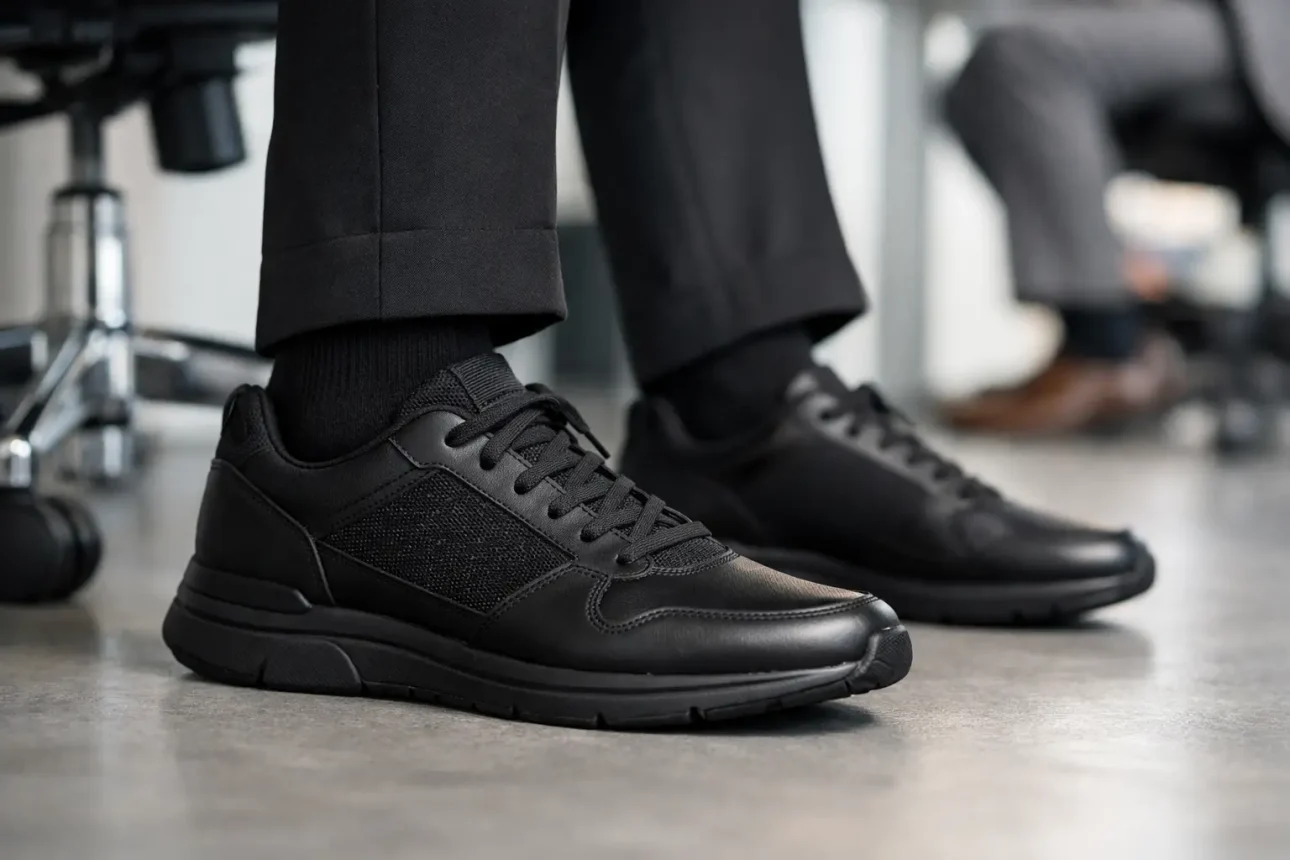
Most people only realize their work shoes are bad around 3 p.m. That’s when your heels start barking, your arches feel flat, and the “they looked fine this morning” decision comes back to haunt you. That’s why black sneakers for work are such a popular fix. They look cleaner than loud running shoes, feel better than stiff dress shoes, and can handle long shifts if you pick the right pair.
We’ll say it straight – not every black sneaker is good for work. Some are all looks and no support. Some feel amazing for 30 minutes and dead flat by lunch. And some are perfect if you sit at a desk, but a terrible idea if you’re walking concrete floors for eight hours. What matters is matching the shoe to the job.
The first thing we care about is underfoot feel after hours, not minutes. A lot of sneakers feel soft when you first step in. That doesn’t mean they stay comfortable through a full shift. The better work-friendly pairs have cushioning that doesn’t collapse fast and a shape that keeps your foot from sliding around when you turn, stop, and walk all day.
Support matters too, but people use that word loosely. We’re not talking about a magic fix for your feet. We mean the shoe should feel stable, not wobbly. If the midsole is too squishy and the upper is too loose, your feet work harder than they need to. That gets old fast.
Grip is another big one. If your workplace has smooth tile, polished floors, or anything that gets wet, don’t ignore the outsole. A black sneaker can look perfect and still be sketchy on slick ground. If slip resistance matters for your job, check that first. Not last.
Then there’s the upper. For work, we usually prefer black sneakers with less mesh and more structure. Heavy open mesh feels airy, sure, but it also looks more like gym gear and can be harder to keep clean. A tighter knit, synthetic upper, or leather-look finish tends to hold up better and pass more dress codes.
They shop for black sneakers for work the same way they shop for weekend sneakers. That’s the problem.
A casual everyday shoe might be fine for errands, commuting, and grabbing coffee. Work is different. Work means repetition. Same hard floor. Same long standing periods. Same pressure points. If a shoe has a weak insole, a flat forefoot, or no real heel support, your feet will find out quickly.
We also think people chase sleek looks too hard. Yes, a slim all-black sneaker looks sharp. But a lot of those low-profile styles don’t give you much underfoot. They’re fine if your job is mostly sitting and you just want something that looks clean with chinos. They’re not the pair we’d choose for warehouse shifts, hospital hallways, retail floors, or restaurant work.
Go for cushioning with some structure. That usually means walking shoes, max-cushion trainers, or stable daily runners in triple black or mostly black colorways. Brands like Hoka, Brooks, New Balance, and Asics usually make more sense here than flat lifestyle pairs.
We like shoes that feel protective without turning mushy. Too soft sounds nice in theory, but all-day standing in a pillow-like shoe can feel sloppy. A slightly firmer, balanced ride often wins by the end of a shift.
You need a shoe that rolls you forward easily and doesn’t feel heavy. This is where lightweight running-inspired models do well. On, Asics, and some Adidas and Nike options can be solid if the outsole has enough grip and the upper looks clean enough for your dress code.
The key here is not just softness. It’s how smooth the shoe feels through repeated steps. A clunky shoe gets annoying fast.
Be picky. A normal sneaker outsole is not the same as a slip-resistant outsole. Some grip well enough for daily city wear but still struggle on wet tile or greasy back-of-house floors. If slipping is a real risk, start with traction and build from there.
Looks matter less when the floor is trying to throw you sideways.
You’ve got more freedom. You can wear slimmer black sneakers for work as long as they stay clean and simple. Leather or leather-look styles work especially well here. They read more polished and pair better with business-casual clothes.
This is one place where style can lead a bit more. Just don’t go so minimal that comfort disappears.
If we had to split the category, we’d put black work sneakers into three useful groups.
The first is the clean lifestyle sneaker. This is best for offices, commuting, and jobs where appearance matters as much as comfort. Think simple shape, low branding, mostly smooth upper. These look good. The trade-off is that many of them feel flatter underfoot.
The second is the walking shoe. This is the safe bet for a lot of people. It usually has more support, better step-in comfort, and a less flashy design than a running shoe. Not the coolest category, if we’re honest. But some of the ugliest shoes are absolute lifesavers at hour nine.
The third is the cushioned performance sneaker in black. This is what we’d point people toward if they cover serious ground at work. These shoes often feel best for long shifts, but some look a little too sporty depending on your workplace. That’s the trade-off. Better comfort, less formal look.
We’d skip super flat skate-style sneakers for long standing shifts. They can look great. We get the appeal. But if you’re on concrete all day, they usually don’t give enough cushion or support.
We’d also be careful with very soft foam shoes that feel amazing in the first five minutes. Some of them bottom out over time and leave your feet tired anyway. Soft is not always better.
And we don’t love bright logo hits or obvious performance detailing if you’re trying to keep the shoe work-friendly. All black means all black for a reason. It blends in. It looks cleaner. It gets less attention from managers with dress code opinions.
A good shoe in the wrong size turns into a bad work shoe fast.
You want enough room in the toe box so your toes aren’t crammed by the end of the day. Feet swell. That’s normal. If the fit is already tight in the morning, it won’t get better later. But don’t size up so much that your heel lifts or your foot slides forward. That creates rubbing and fatigue.
Different brands fit differently, and this is where people get burned. Some run narrow. Some have a snug heel and roomy front. Some feel great for medium-width feet and terrible for wider ones. We always tell people to think about their actual foot shape, not just the number on the box.
This part gets ignored, but it matters. Work shoes get dirty. Fast.
A pair with a smooth upper is easier to wipe down than one covered in soft knit or open mesh. If you work around dust, spills, or city grime, that cleanability matters. So does how the shoe holds its shape. Some black sneakers start out sharp and turn tired-looking after a few weeks. Others still look decent after regular wear. We know which type we’d rather buy.
It’s also worth thinking about socks. Yes, really. Thin socks in a roomy shoe can make the fit sloppy. Thick socks in a snug shoe can make it feel half a size too small. Small detail, big difference.
If your job is physically demanding, comfort should win. Every time.
That doesn’t mean you need to wear a giant orthopedic-looking brick. It just means you shouldn’t choose a sleek black sneaker that punishes your feet because it matches your pants better. There are plenty of branded options now that look clean and still feel good enough for real work.
If your work is lighter and more office-based, then sure, lean more toward style. A simple black Nike, Adidas, New Balance, or Puma sneaker can do the job well. But for nurses, retail staff, hospitality workers, warehouse teams, and anyone else doing long hours on hard floors, we’d steer toward comfort-first models without apology.
Because what actually matters is how your feet feel at 5 p.m. Not how cool the shoe looked at 8 a.m.
If you’re shopping for black sneakers for work, be honest about your day. How long you stand. How much you walk. What the floor is like. How strict the dress code is. Start there, and the right pair gets a lot easier to find. Your feet are the ones doing the shift. Shop for them, not for the fantasy version of your outfit.