Cart
No products in the cart.

You can absolutely walk in running shoes. We do it all the time. But if you’re asking whether are running shoes good for walking, the honest answer is: often yes, sometimes no, and it depends a lot more on the shoe than the label.
Some running shoes feel smooth and easy for long walks. Others feel weirdly unstable, too soft, too narrow, or just wrong once you’re on your feet for hours. That matters. A shoe can be great at mile 3 of a run and annoying by 5 pm at work.
Usually, yes. In fact, for a lot of people, a good running shoe is better for walking than a cheap “walking shoe” that feels stiff and dead underfoot.
Most running shoes are built to handle repeated impact. That usually means more cushioning, better shock absorption, and a smoother ride than flat casual sneakers. If you walk for exercise, commute on foot, travel a lot, or spend long days standing, that extra comfort can make a real difference.
But here’s where we take a side: not every running shoe deserves to become your walking shoe. Some are clearly better for one straight-ahead run than for all-day wear. Some are too aggressive. Some have tall, wobbly foam that feels fun for 30 minutes and sloppy after two hours.
So yes, running shoes can be good for walking. The better question is which kind.
Walking and running aren’t the same movement, but they overlap enough that a lot of running shoes do the job well.
A solid running shoe usually gives you three things walkers actually notice. First, cushion. Not pillow-for-the-sake-of-pillow, but enough softness to take the edge off hard sidewalks. Second, flexibility. Your foot needs to bend naturally when you walk, especially through the front. Third, comfort out of the box. Most people are not trying to “break in” shoes anymore, and honestly, they shouldn’t have to.
We also like running shoes for walking because they’re usually lighter than old-school walking shoes. That sounds minor until you’ve been moving all day. A heavy shoe can feel fine at 9 am and exhausting by dinner.
Breathability helps too. Mesh running shoes tend to keep your feet cooler than bulkier leather styles. That’s not exciting copy. It’s just nice when your socks aren’t cooking by midday.
This is the part a lot of articles skip. Some running shoes are a bad match for walking, even if they’re expensive, popular, or covered in hype.
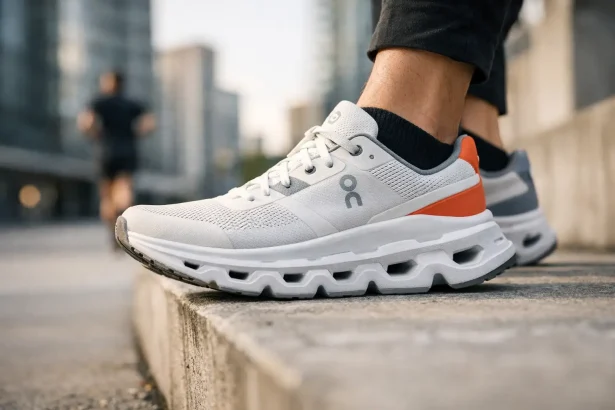
Super soft max-cushion shoes can be hit or miss. Some feel amazing. Others feel like you’re balancing on stacked marshmallows. If the foam is too squishy and the base is too narrow, walking can feel less stable than it should.
Very high-performance running shoes can also be overkill. Carbon-plated race shoes, for example, are built to help runners move fast. For everyday walking, they often feel stiff, awkward, and overpriced. We wouldn’t recommend them unless you enjoy spending extra money to feel slightly strange at the grocery store.
Fit is another problem. A lot of running shoes are shaped for forward motion and a snug lockdown. That’s fine on a run. For walking, especially all-day walking, some people want a little more room in the toe box so their toes can spread naturally. If your feet swell during the day, a narrow running shoe can go from decent to annoying fast.
And then there’s durability in the wrong places. Some lightweight running shoes are great for short runs but wear out quickly when used daily on pavement, errands, travel, and everything else. A walking shoe gets abused differently. It needs to handle lots of hours, not just lots of miles.
We’d rather put someone in the right running shoe than the wrong walking shoe. The category name isn’t the whole story.
What actually matters is how the shoe feels under your foot and how it behaves after a few hours. Does it feel stable when you’re walking slower? Does the heel feel secure without rubbing? Does the forefoot bend where your foot bends, or does it fight you? Is the cushioning soft enough to feel good but not so soft that you feel disconnected from the ground?
That balance is the sweet spot.
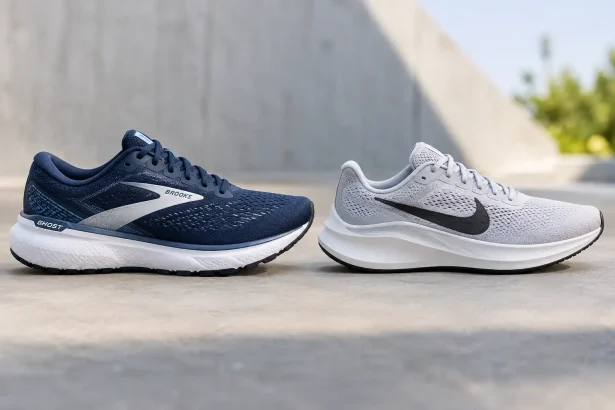
For walking, we usually like shoes with moderate cushioning, a stable base, and a smooth heel-to-toe transition. That’s the feeling where each step rolls forward naturally instead of slapping the ground. Brands like Brooks, Asics, New Balance, Hoka, and On all make models that can do this well, but not every model from every brand hits the mark.
That’s why we don’t buy the blanket idea that “all running shoes are good for walking.” They’re not. Some are brilliant. Some are just fine. Some should stay in the running lane.
Sometimes. But all-day walking is a different test.
A shoe that feels soft and fast for a 40-minute walk can feel unstable, hot, or flat after eight hours. If you’re on your feet for work, traveling through airports, or doing city walking from morning to night, you need more than bounce. You need consistency.
We’d take a stable daily trainer over an aggressive speed shoe every time for all-day walking. Daily trainers are the dependable middle ground of the running world. Not too firm. Not too wild. Just comfortable, balanced, and easy to wear. That’s usually where the best walking crossover happens.
If you’re walking all day, watch out for two things: heel rub and forefoot fatigue. Heel rub usually means the shape doesn’t match your foot. Forefoot fatigue usually means the front of the shoe is too firm or doesn’t flex well enough. You don’t need to sound technical about it. Your feet will tell you.
If you walk for exercise, they’re often a smart pick. If you split your time between light jogging and daily walking, even better. One shoe can cover both.
They’re also a good option for people who want more cushion than flat lifestyle sneakers can offer. We like classic casual shoes. We sell plenty of them. But let’s be honest – some look better than they feel after a full day out.
Running shoes also make sense for travel. If you’re packing one pair, versatility matters. A clean-looking running shoe with decent cushioning is hard to beat when you’re walking ten miles without planning to.
Where we’d be more careful is with people who want a very structured feel or who don’t like tall, soft foam. In those cases, a dedicated walking shoe or a more stable running model may make more sense.
You don’t need a gait lab. You need a few honest checks.
If the shoe feels comfortable right away, that’s a good start. If it feels tippy, too narrow, or weirdly stiff when you walk at a normal pace, trust that. If your heel slips, don’t talk yourself into it. If the cushion feels nice for 20 minutes but your feet feel tired later, that’s useful information too.
We also think your use case matters more than internet rankings. Walking the dog, commuting, travel, treadmill walks, and hospital shifts are all “walking,” but they don’t ask the same thing from a shoe.
For casual daily walking, lighter and more flexible is usually better. For long miles on pavement, more cushion helps. For all-day wear, balance beats extremes.
If you want the short version, here it is: yes, running shoes are often good for walking, and in many cases they’re one of the best options. But the best walking shoe is not automatically the softest, fastest, or most expensive running shoe.
We’d choose a comfortable daily trainer over a flashy race-day shoe every single time. We’d also choose an honest fit over a trendy silhouette. Your feet do not care what’s hot online when you’re halfway through a long day.
If you’re shopping, think less about the category and more about the feel. Stable. Comfortable. Easy. That’s the lane.
And if a shoe looks great but makes walking feel harder than it should, skip it. There are too many good options out there to force a bad one.