Cart
No products in the cart.

Most people searching for how to find wide sneakers have already made the same mistake: they bought their regular size in a roomier-looking shoe and hoped for the best. Then their toes went numb halfway through the day, the upper rubbed their pinky toe, or the shoe felt sloppy at the heel. A wide sneaker is not just a regular sneaker with more fabric on top. The whole fit needs to make sense.
We think too many shoppers blame their feet when the shoe is the problem. If you keep sizing up to stop your toes from getting squeezed, you may not need a longer shoe. You may need a wider one.
A sneaker that is too narrow does not always hurt the second you put it on. It can feel fine in the morning and turn miserable after a commute, gym session, or long shift. Feet naturally spread and swell as the day goes on. What actually matters is how they feel at 5 p.m., not for 30 seconds on your bedroom floor.
Watch for pressure on the sides of your forefoot, especially around the little toe and the joint below the big toe. You might see the upper bulging outward, feel tingling in your toes, or notice deep red marks after taking the shoe off. Those are fit signals, not something to “break in.”
A cramped toe box is the usual culprit, but not always. Some sneakers are narrow through the middle, where the shoe wraps around the arch. Others have a pointed shape that pushes the toes together even when the listed width is technically right. This is why buying by size number alone is a bad bet.
Your shoe size can change over time. Training, pregnancy, weight changes, aging, and simply spending more time on your feet can all affect it. Measure your feet standing up, ideally later in the day, while wearing the socks you plan to use with the sneakers.
Place a sheet of paper on a hard floor against a wall. Stand with your heel lightly against the wall, put weight through both feet, and mark the longest toe. Measure the length from the wall to the mark. Then measure the widest part of each foot, usually across the ball of the foot. Do both feet. They are often slightly different, because bodies like to keep things annoying.
Use the larger foot as your reference. If your left foot is longer but your right foot is wider, choose the size and width that work for the larger measurement. A sneaker can be adjusted slightly with lacing or an insole. It cannot be talked into growing half an inch wider.
Going up a half size gives you extra length. That can help if your longest toe is hitting the front, especially on downhill walks or runs. But it does very little for a foot that feels pinched from side to side. Going up a full size to gain width often creates heel slip, unstable footing, and that clumsy “my shoes are wearing me” feeling.
For everyday sneakers, leave about a thumb’s width of room in front of your longest toe. For running or long walks, a little more room can be smart because feet expand with heat and miles. Just do not confuse empty space at the front with a proper wide fit.
Width markings are useful, but they are not perfectly consistent across brands. In many men’s and unisex sizing systems, D is standard width and 2E is wide. In many women’s systems, B is standard and D is wide. Extra-wide options may be marked 4E for men or 2E for women.
That said, labels only tell part of the story. A wide version of a naturally slim, low-volume shoe may still feel restrictive. Meanwhile, a standard-width sneaker with a broad, rounded toe box can work beautifully for some people. We would take real shape over a promising letter on the box every time.
Look at product details for terms such as wide, extra wide, 2E, 4E, or wide fit. If the listing only says “relaxed” or “roomy,” treat that as a clue, not proof. Brands use soft language because it sounds nice. Your feet need an actual fit option.
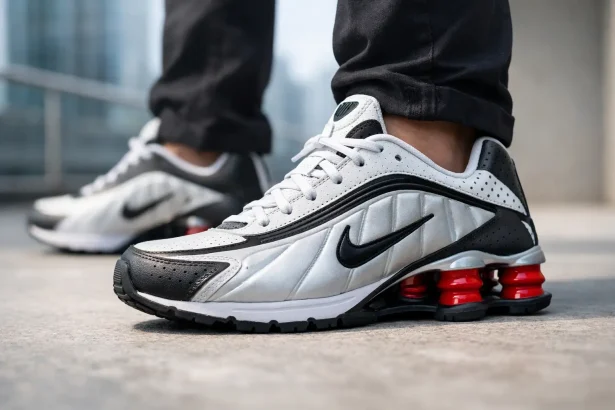
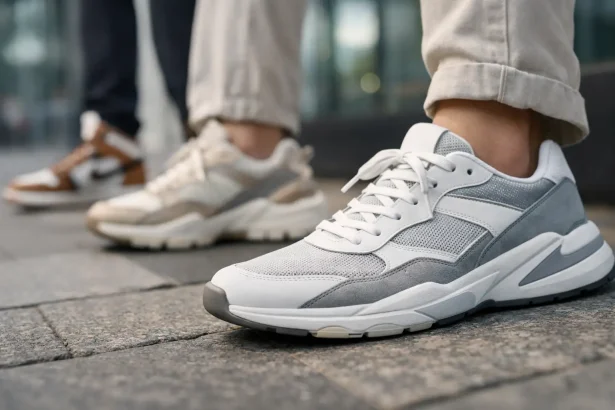
When shopping online, study the photos like you mean it. A sneaker with a rounded or squared-off front usually gives toes more room than one that narrows sharply toward the tip. Side views help too. If the upper looks like it is pulled tightly over a narrow sole, skip it.
A few design choices usually work in your favor:
We like flexible mesh for walking, casual wear, and easy runs because it is forgiving without feeling loose. But stretch has limits. If the sole is too narrow underneath your foot, soft fabric will not fix the problem. It may simply let your foot spill over the edge.
The right wide sneaker depends on your routine. A plush running shoe can feel brilliant for a mile and overly bouncy for heavy lifting. A flat, stylish court sneaker may look clean with jeans but can be a rough choice for eight hours on concrete. Some shoes look great but wear terribly. We are not going to pretend otherwise.
For running and long walks, prioritize a stable base, enough toe room, and a secure heel. You want the shoe to move with your foot without squeezing it. Brands such as Brooks, New Balance, Hoka, Asics, and some On models often offer dedicated wide options in performance lines. The specific model still matters more than the logo.
For gym training, look for a wider platform and a lower, steadier feel. A tall, soft foam stack can make squats and lateral work feel wobbly. For casual wear, you have more freedom. New Balance and Adidas have several silhouettes with naturally friendlier shapes, while many Nike lifestyle models run slimmer than people expect. If your forefoot is wide, do not force a narrow fashion shoe just because it looks good in a product photo.
Wide feet do not automatically mean wide heels. This is where many shoppers get stuck. They finally find room for their toes, then the heel slides up with every step.
Try a runner’s loop lacing pattern, which uses the extra top eyelets to hold the heel more firmly. It can make a surprisingly big difference without tightening the whole shoe. If that does not work, the shoe may simply have too much volume for your heel. A wide option is still supposed to feel secure at the back.
When your sneakers arrive, try them indoors on a clean surface. Wear your usual socks. Stand, walk, bend your knees, and take a few steps on one foot. That sounds basic, but a shoe reveals a lot once your weight shifts forward.
Your toes should not hit the front. The sides of your forefoot should not feel compressed. Your heel should stay mostly planted, and the arch should feel supported rather than aggressively poked. Do not expect every sneaker to feel like a pillow. A secure performance shoe can feel structured at first. Pain, numbness, rubbing, and pinching are different. Those are reasons to send them back.
Also, give both shoes a proper test. We have all tried one shoe, liked the color, and mentally checked out. Your feet deserve more effort than that.
If you are between widths, buy from a retailer with clear sizing information and a return process you understand before ordering. Wide-sneaker shopping is not the place for wishful thinking. Check the model’s width options, compare your measurements to the brand’s size chart, and keep the box until you know the fit works.
And if a sneaker only works when you wear thin socks, lace it painfully tight, or promise yourself it will stretch, it does not fit. Leave it. The right pair should give your feet room to work, while still feeling planted enough to move through the day with confidence.