Cart
No products in the cart.
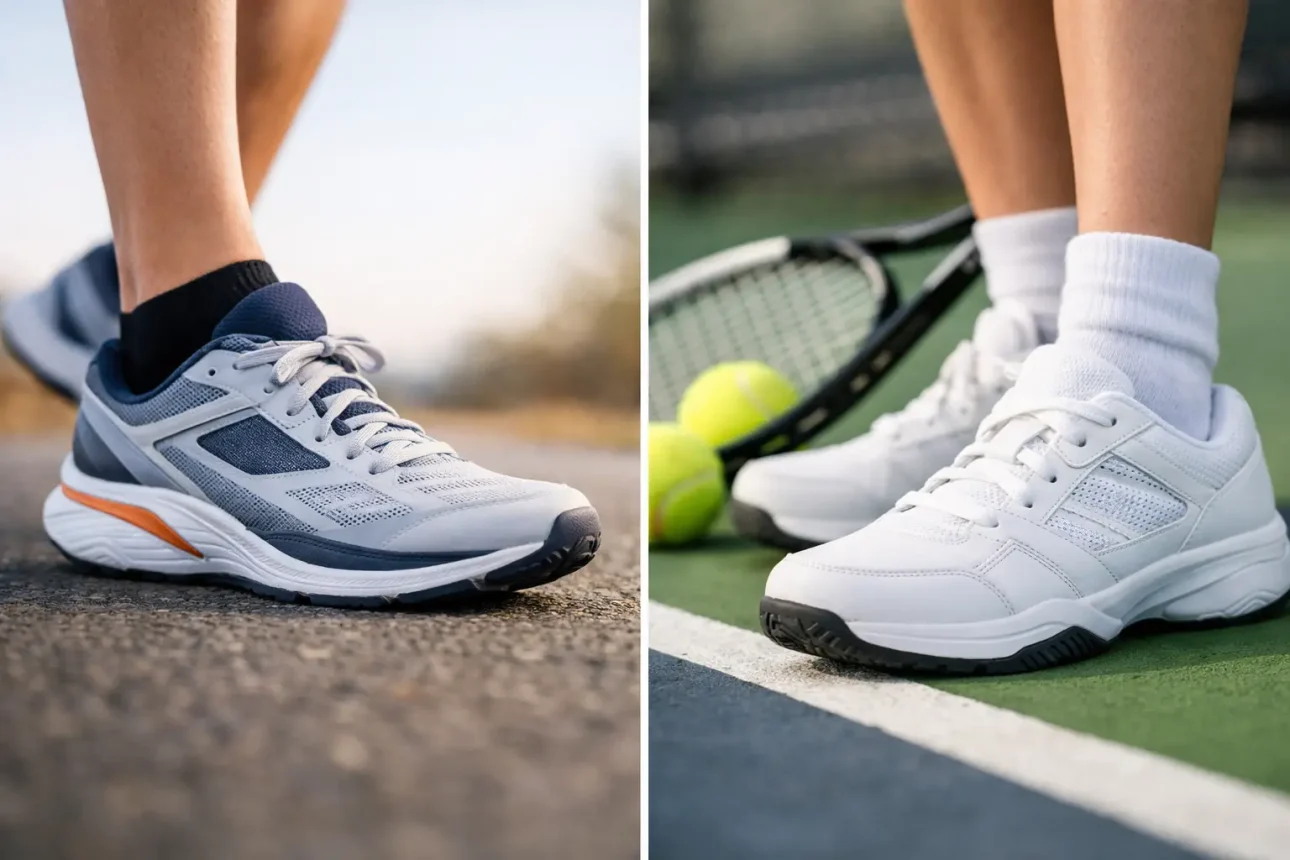
You feel the difference fast with running shoes vs tennis shoes. Wear the wrong pair for the wrong job, and your feet usually tell you before the day is over. Not in some dramatic way. More like sore arches, tired calves, cramped toes, or that annoying feeling that your shoe is fighting you instead of helping.
We get why people mix them up. From the outside, both can look sporty, cushioned, and close enough. But they are not built for the same movement. That matters whether you’re logging miles, playing doubles, hitting the gym, or just trying to buy one pair that can handle real life.
The shortest version is this. Running shoes are made to move you forward. Tennis shoes are made to keep you stable while you stop, cut, shuffle, and push sideways.
That changes almost everything about how each shoe feels on foot. A running shoe usually feels softer under the heel and smoother through the stride. You land, roll forward, and go again. A tennis shoe feels more planted. Firmer. Less bouncy. That’s not a flaw. It’s there so your foot doesn’t slide around when you change direction hard.
If we had to take a side, we’d say this: running shoes are usually more comfortable for walking and all-day casual wear, but tennis shoes are the smarter choice for court sports. Use each where it belongs, and both make sense. Swap them around too often, and things get sloppy.
A good running shoe is built around repetition. Forward motion, over and over. That means you usually get more cushioning, a rocker shape that helps you roll through your step, and a lighter upper that doesn’t feel bulky.
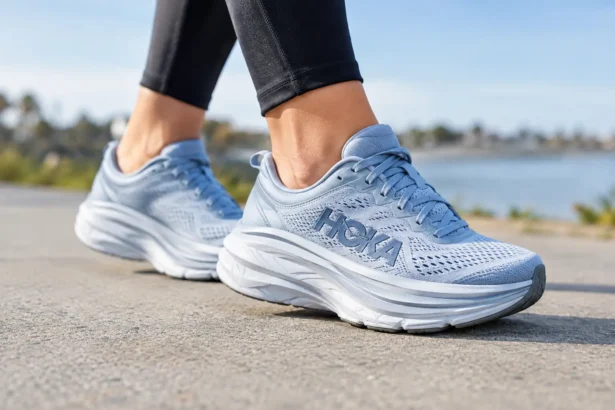
Some models from brands like Hoka, Brooks, Asics, and On can feel almost too easy to wear. Soft underfoot. Breathable. Great when you’re walking a lot or standing around the city. That’s why plenty of people buy running shoes and never run in them. Honestly, we get it.
But there is a trade-off. That soft, tall, cushioned feel can get unstable when you start moving side to side. If you’re playing tennis, pickleball, or doing fast lateral drills, a running shoe can feel wobbly. In some cases, it feels like standing on a padded mattress while trying to make sharp turns. Comfortable in a straight line. Less convincing when things get quick.
Running shoes also tend to have outsoles built for pavement, treadmills, and regular road use. They are not usually made for the stop-start drag of a hard court. So even if they feel good for the first few games, they can wear out faster in the wrong setting.
Tennis shoes don’t always win the first-try comfort test. That’s where people get fooled. You put on a running shoe and think, wow, soft. You put on a tennis shoe and think, a bit stiff. But stiffness is part of the point.
A tennis shoe needs to hold your foot in place during quick cuts. It needs a flatter, more stable base. It needs stronger sidewalls so your foot doesn’t roll over the edge of the midsole. It also needs a tougher outsole that can deal with court friction.
That means tennis shoes often feel lower to the ground and more secure, especially in the forefoot. If you play regularly, that secure feel matters more than plush step-in comfort. We would take stable over squishy every time on a court.
Brands approach this differently. Some make tennis shoes that feel fast and low, almost minimal. Others add a bit more cushion for long matches and harder surfaces. But the common thread is control. A tennis shoe should help you react, not just pad the landing.
You can. We probably wouldn’t choose to.
For a short jog, a tennis shoe is not going to fall apart on you. But it usually feels heavier, firmer, and less smooth than a proper running shoe. The ride is flatter. The transition from heel to toe is less fluid. On longer runs, that can feel clunky.
If your “run” means a few minutes on a treadmill before lifting, you’ll survive. If you’re training for distance, don’t do that to yourself. Your legs will notice. Not because tennis shoes are bad shoes, but because they’re built for a different job.
This is where we get less flexible. You really shouldn’t if you’re playing seriously or moving hard.
The problem isn’t just comfort. It’s support. Running shoes are not designed for repeated lateral movement, and many of them sit on taller, softer midsoles. That can make side-to-side cuts feel unstable. Best case, your foot slides around and you feel awkward. Worst case, you roll an ankle.
If you’re just knocking a ball around casually for ten minutes, fine. But for actual court play, tennis shoes are worth it. This is one of those cases where “close enough” usually isn’t.
This is where running shoes usually win.
Most people walking around all day want cushioning, low weight, and easy comfort. Running shoes tend to deliver that better than tennis shoes. They feel less rigid and more forgiving on concrete. If you’re commuting, traveling, or standing for long hours, we’d usually point you toward a running shoe first.
That said, some running shoes are too soft for people who like a firmer, more grounded feel. And some tennis shoes work surprisingly well for casual wear if you prefer stability over bounce. Especially if your day includes lots of quick movement, gym sessions, or a style setup that leans more court-inspired than runner.
This is the part people ignore: the best everyday shoe is not always the softest one. It’s the one that still feels good at 5 p.m. For some people, that’s a cushioned runner. For others, it’s a stable court shoe that doesn’t let the foot wobble around all day.
It depends on what “gym” means.
If your workout is mostly treadmill work, classes, or cardio machines, running shoes make more sense. They are lighter and better for repetitive forward movement.
If your workout includes strength training, lateral drills, or anything where you need to feel planted, running shoes can be too soft. In that case, a flatter tennis shoe can actually feel better. Not perfect for every lift, but often more stable than a max-cushion running shoe.
This is why one-shoe-for-everything rarely works as well as people hope. The more mixed your training is, the more obvious the compromises become.
Start with the activity you do most. Not the one you imagine doing. The real one.
If you run, walk a lot, or want an everyday pair that feels easy right away, buy running shoes. If you play tennis, pickleball, padel, or do workouts with lots of side-to-side movement, buy tennis shoes.
Then think about how you like your shoes to feel. If you want soft landings and a lighter feel, lean running. If you want security, grip, and a more connected feel to the ground, lean tennis.
Fit matters too. Running shoes often have roomier mesh uppers and a more forgiving fit through the top of the foot. Tennis shoes can feel more structured, especially around the midfoot. That’s good for control, but not everyone loves it straight away.
We’d also say this: don’t buy based on looks alone if you actually need the shoe to perform. Plenty of running shoes look sleek and fast. Plenty of tennis shoes look sharp off court. But the right silhouette means nothing if your feet are annoyed after an hour.
If you’re choosing one pair for casual life, walking, travel, and the occasional workout, we’d usually steer you toward running shoes. They are easier to wear, easier to like, and for most people, more comfortable out of the box.
If you’re choosing for court sports, stop trying to make running shoes do that job. Buy tennis shoes. They may feel firmer at first, but that’s exactly why they work when movement gets aggressive.
And if you’re stuck between both because your week is split, be honest about what matters more. Better running comfort or better lateral support. There isn’t a magic answer. There is just the better compromise for how you actually move.
At SneakerPrime, we like shoes that make sense the second you put them on. Not because the marketing says so. Because your feet know. If a pair helps you move the way you really move, that’s the one worth wearing.