Cart
No products in the cart.
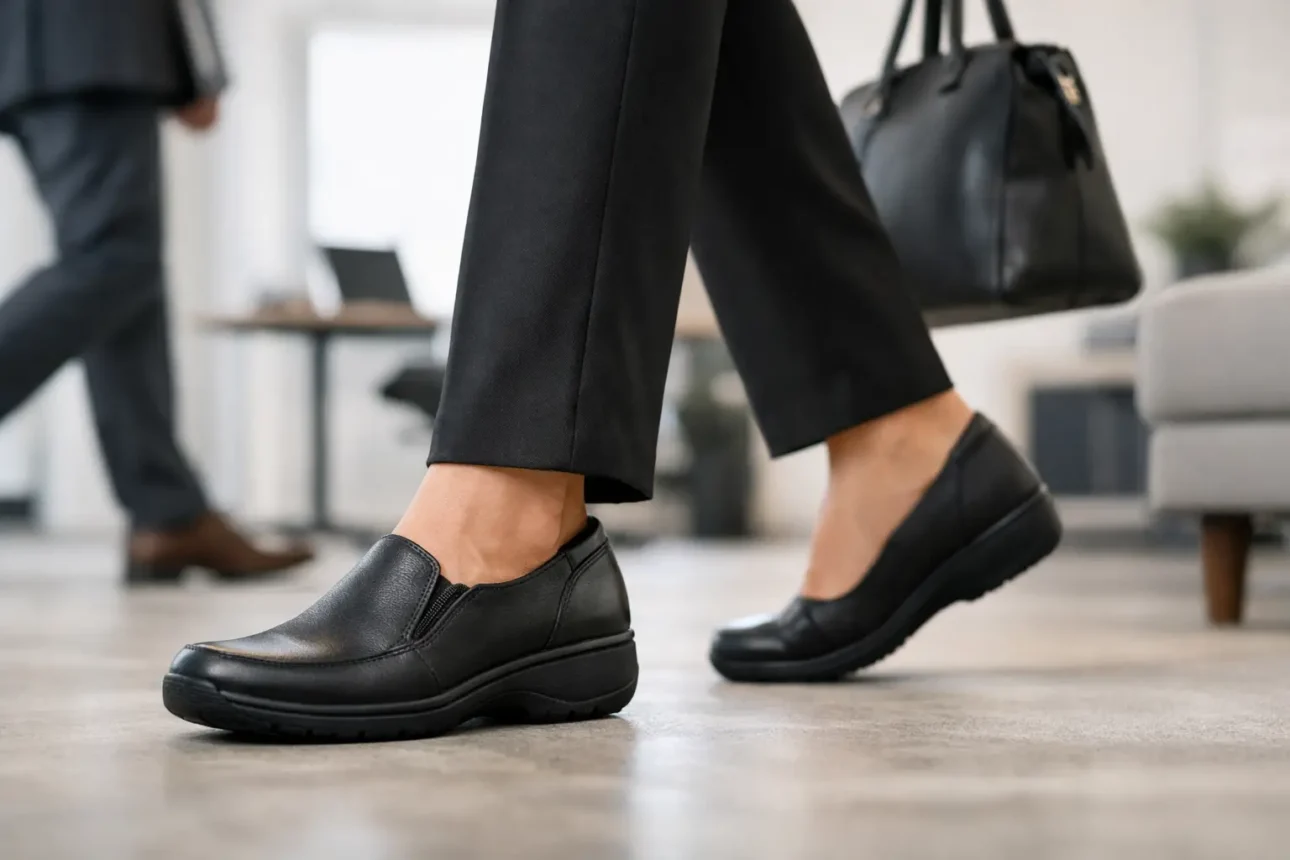
By hour three, your feet usually tell the truth. If your arches are aching, your heels feel beat up, or your toes are cramped before lunch, the issue is rarely just a long day. More often, it is the wrong pair. The best walking shoes for work are built to handle repetition, hard floors, and long hours without making you choose between comfort and style.
That matters whether you work retail, hospitality, healthcare, a warehouse role, a school, or an office where you still rack up serious steps. Work shoes are not just about soft cushioning. They need the right mix of support, stability, fit, durability, and a look you will actually want to wear five days a week. A shoe can feel great for twenty minutes and still fall apart by the end of a shift. That is where smart choices make the difference.
The short answer is balance. You want enough cushioning to soften impact, enough structure to keep your stride stable, and enough flexibility to move naturally. If one of those is missing, the shoe can start working against you.
Cushioning gets the most attention, but it is not always the top priority. Super soft foam can feel amazing at first, yet too much sink can make your legs work harder over a full day. For people who walk and stand for hours, moderate cushioning often beats the plushest option. It gives comfort without turning every step into extra effort.
Support matters just as much. That can mean decent arch support, a stable base, and a heel that keeps your foot secure instead of sliding around. If you overpronate, a neutral shoe may not be enough. If your feet are more neutral, an aggressive stability model can feel too controlling. The best shoe is the one that matches how you move, not just what is trending.
Then there is fit. A wide toe box can be a game changer if your forefoot gets squeezed. A padded heel collar can help if rubbing is your usual problem. Breathable uppers are great for hot shifts, but if you work around spills or bad weather, you may want something a bit more protective. There is always a trade-off.
Not every workday stresses your feet in the same way. The right choice depends on how you spend your hours.
If your job keeps you mostly in one place, look for stable cushioning and a supportive midsole. Standing for long periods puts pressure on your heels and lower back, so shoes that feel grounded tend to perform better than ultra-rockered or overly soft pairs. Many shoppers do well with dependable options from New Balance, Brooks, and Asics because they often deliver a more planted feel.
If your shift means nonstop movement, lightweight cushioning becomes more important. You want a shoe that keeps you moving without feeling bulky by the end of the day. On and Hoka have built a strong following here because they combine cushioning with a smooth ride. That said, some walkers love the forward-roll feel, while others prefer a more traditional step-through. It depends on your gait and what feels natural.
This is where shape matters more than hype. Many foot issues at work start with shoes that are simply too narrow. Brands like New Balance and Brooks often offer wider fits, which can make a huge difference if your pinky toe, bunions, or forefoot usually feel compressed. A roomy toe box does not mean a sloppy fit. The goal is space up front and security at the heel.
Some jobs call for a cleaner look. You still want comfort, but the shoe also has to work with your uniform or everyday outfits. Adidas, Nike, and certain On models can hit that sweet spot between sleek design and wearability. Just keep in mind that the most fashion-forward pair is not always the strongest performer for a ten-hour shift. If you are on your feet nonstop, comfort should still lead.
A big part of finding the right work shoe is knowing what different brands generally do well. No single brand owns the category, but some stand out for specific reasons.
Hoka is a strong pick for shoppers who want max cushioning and an easy rolling feel. Many people swear by it for long shifts on concrete. The flip side is that the thick, high-stack design is not for everyone. If you prefer a lower, more connected ride, Hoka can feel like too much shoe.
On has built momentum with people who want performance and a sharper look. The design language is clean, and many models feel quick underfoot. Some buyers love that crisp sensation, while others want a softer landing. It is a brand that often wins on style and modern feel.
New Balance is one of the safest all-around bets for work. It covers a wide range of fits, including wide options, and usually delivers a reliable blend of cushioning and support. It may not always be the flashiest choice, but it is one of the easiest brands to recommend for everyday wear.
Brooks is another dependable name if comfort is the priority. Its walking and running-inspired models often suit people who need straightforward support and consistency. If your current shoes feel unstable or too casual for serious daily mileage, Brooks is worth a look.
Asics works well for shoppers who want structure and a secure fit. It tends to appeal to people who like a more traditional performance feel, especially if mild stability is part of the brief.
Nike and Adidas still belong in the conversation because both brands offer lighter lifestyle-performance crossover options that can work well in less demanding work settings. If your day mixes commuting, light walking, and casual wear, they can be a strong match.
Start with your surface. Tile, concrete, carpet, and pavement all change how a shoe feels over a shift. Hard floors usually call for more shock absorption and support. If you walk indoors and outdoors, traction becomes more important too.
Next, think about your foot shape. If you have flat feet, higher arches, or a history of plantar fasciitis, generic comfort claims are not enough. You want a shoe that supports your specific mechanics. That may mean using an insole, sizing up slightly, or choosing a model known for stability rather than softness.
Pay attention to weight as well. Heavy shoes can feel secure, but after thousands of steps they may start to drag. Lightweight shoes feel faster, yet some lose points on durability or support. Again, balance wins.
And do not ignore the upper. Mesh keeps airflow moving, which is great if your feet run hot. Leather or more structured materials can look cleaner and hold shape better, but they may feel warmer and less forgiving at first. Break-in time matters when you are buying for work, not weekends.
The biggest one is buying for the first try-on instead of the eighth hour. A shoe that feels plush for a minute can become unstable later. Another mistake is assuming running shoes and walking shoes perform exactly the same at work. There is overlap, but not every running shoe is ideal for standing, pivoting, and moving across hard indoor floors.
People also underestimate sizing. Feet swell through the day, especially during long shifts. Trying shoes on later in the day usually gives a more honest fit. If you are between sizes, the right call depends on the model, your socks, and whether your toes need extra room.
Style-only buying is the other trap. A clean silhouette matters. Nobody wants a work shoe that looks clunky if they can avoid it. But if the shoe does not support your foot, the look stops mattering fast.
A good work shoe does not demand attention. You are not thinking about heel slip, hot spots, or sore arches halfway through the day. Your stride feels natural, your foot sits secure, and the shoe still feels good when the shift runs long.
That is why the best walking shoes for work are rarely just the softest or the most popular. They are the pair that match your job, your pace, and your foot shape. For some people, that means cushioned Hoka comfort. For others, it is the reliable support of Brooks, the roomy fit of New Balance, or the cleaner crossover style of Nike, Adidas, or On.
If you are shopping across multiple brands, that variety helps. SneakerPrime makes it easier to compare different fits, looks, and performance profiles in one place, which is exactly what most work-shoe shoppers need. You are not chasing one perfect brand. You are finding the pair that can keep up.
Your feet do a lot of work before the day is done. Give them a shoe that returns the favor.