Cart
No products in the cart.
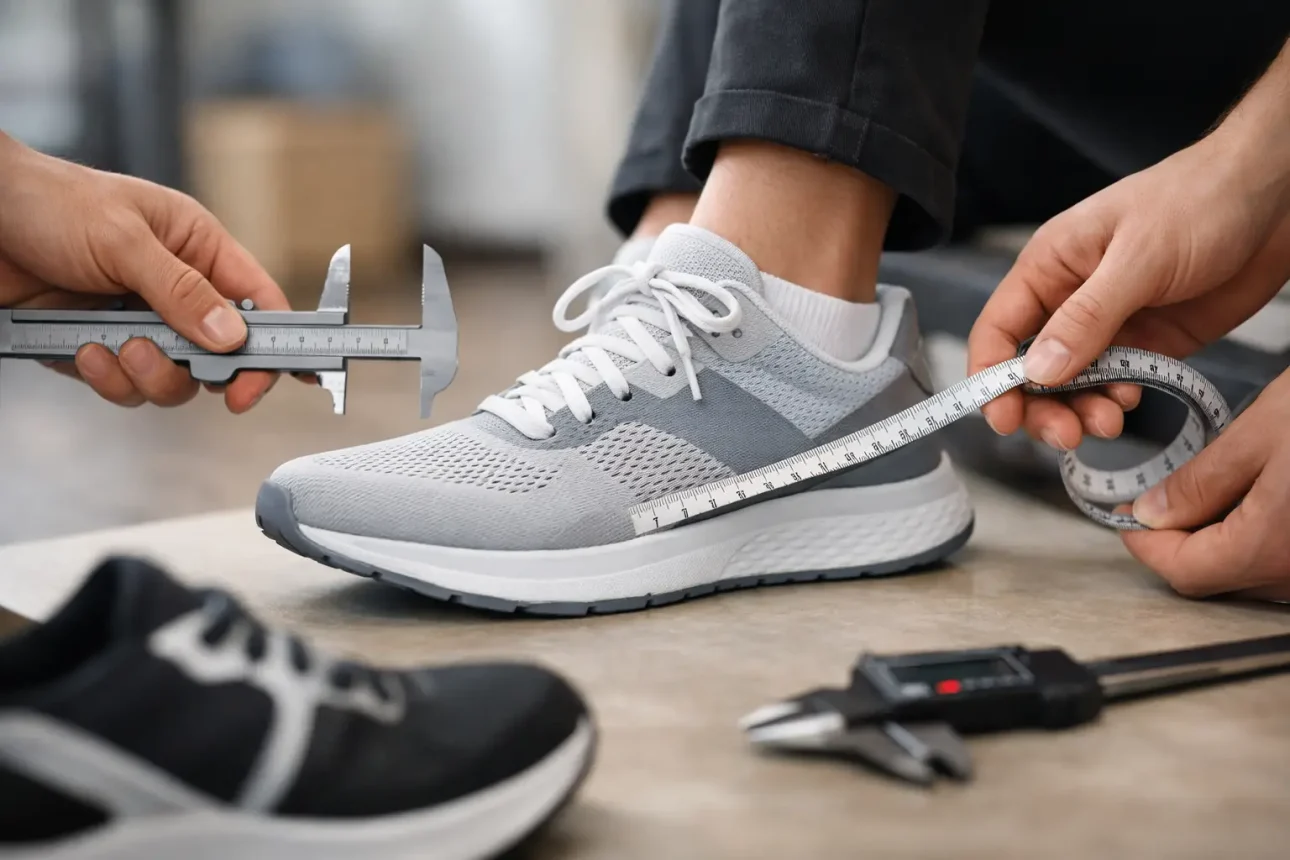
You can guess your sneaker size if you want. A lot of people do. Then the box shows up, the shoes look perfect, and five minutes later your big toe is getting crushed or your heel is doing laps around the collar. That is why knowing how to measure sneaker fit matters. Not in a fussy, overcomplicated way. Just enough to stop buying shoes that look right but wear badly.
We see this all the time. People think they are “a size 10” like that should settle it forever. It doesn’t. Brands fit differently. Models fit differently. Even within the same brand, a slim lifestyle sneaker and a max-cushion running shoe can feel like they belong to different planets.
You do not need fancy tools. A sheet of paper, a pen, socks you actually wear with sneakers, and five minutes is enough. If you measure barefoot and then wear thick athletic socks later, you are setting yourself up for a bad fit.
Put the paper against a wall and stand on it with your heel lightly touching the wall. Keep your weight evenly on both feet. Then mark the tip of your longest toe. For some people that is the big toe. For others, it is the second toe. Measure from the wall edge of the paper to that mark. That gives you your foot length.
Now do the same for the other foot. Yes, both feet. We wish more people did this. One foot is often a little longer than the other, and you should size for the bigger one. If your left foot is the problem child, let it make the decision.
Width matters too, and this is where people get caught out. Wrap a soft tape measure around the widest part of your forefoot, usually around the ball of the foot. If you do not have a tape measure, use a string and then measure the string. That number will not magically translate into every brand’s width category, but it tells you whether your foot runs narrow, average, or wide. That matters a lot once you start comparing models.
Knowing your foot length is useful. It is not the whole story. How to measure sneaker fit properly also means checking space, hold, and pressure once the shoe is on.
Start with toe room. We like about a thumb’s width of space between your longest toe and the front of the shoe for running and walking sneakers. For casual lifestyle pairs, you can go a little closer if the upper is soft and the shape is forgiving. Too much space is not great either. Your foot slides, your toes grip, and the shoe starts feeling sloppy.
Then check the width. Your foot should sit over the midsole, not spill over it like muffin batter. If the side of your foot is bulging hard against the upper, that is not a break-in issue. That is the shoe being too narrow. We would not try to negotiate with it.
Heel hold is next. A tiny bit of movement can be normal, especially in some running shoes with softer heel padding. Full-on heel lift is not. If your heel pops out every few steps, the fit is off, or the shape just is not right for your foot.
Finally, pay attention to pressure points. The top of the foot, the pinky toe side, and the arch area are the usual trouble spots. If a sneaker feels weird in the house after ten minutes, do not talk yourself into it. Some shoes soften. Some do not. We have learned the hard way that obvious pressure usually stays obvious.
This is where people get annoyed, and fair enough. You can measure perfectly and still end up between sizes. That is because size is just the starting point. Fit is about shape.
Nike often runs narrower in the forefoot on certain models. New Balance usually gives more room, especially in walking and running lines. Hoka can feel snug through the midfoot even when the length is right. Adidas varies wildly depending on whether you are looking at a retro terrace sneaker or a modern runner. On tends to feel neat and structured. Brooks and Asics are usually more honest about performance fit, which we appreciate.
That is why we never love the advice to “just buy your usual size.” Your usual size in a chunky lifestyle sneaker may feel terrible in a race-day runner. A shoe can be technically your size and still be wrong for your foot shape.
Feet swell. Not dramatically for everyone, but enough to matter. If you measure in the morning when your feet are at their smallest, then wear your sneakers after work, at the gym, or on a long city walk, the fit can change fast.
We think late afternoon or evening is the best time to measure and try on sneakers. That is closer to real life. Your feet are a little fuller, and the result is usually more accurate. If you are shopping for running shoes, this matters even more because feet tend to spread and swell during activity.
This sounds obvious, but people still measure in thin no-show socks and then wear padded crew socks with the shoes. That is like test-driving a car on one road and buying it for another.
If the sneakers are for the gym, wear your gym socks. If they are for daily use, wear your normal daily socks. If you switch between thin and thick socks a lot, aim for the setup you use most often. We would rather see you buy for your real routine than for some ideal version of yourself.
Not every sneaker should fit the same. This is where rigid sizing advice falls apart.
A running shoe should feel secure at the heel and midfoot, with decent toe room up front. Your toes need space when your foot expands on longer efforts. If a running shoe feels glove-tight in the toe box at try-on, we would pass.
A walking shoe can feel a bit more relaxed, especially if you wear it for long days on your feet. Comfort at hour six matters more than a sharp step-in feel. If you stand all day, skip anything narrow and flat unless you enjoy regretting your choices by lunchtime.
A fashion sneaker often has less forgiveness. Leather uppers, flatter soles, and more rigid sidewalls can mean less stretch and more pressure if the fit is off. These can look great and still wear terribly. We like a close fit here, but not one that punishes your toes.
A gym shoe depends on the workout. For lifting, people often want a more locked-in fit with less squish. For general training, you need hold but also enough room for lateral movement. If your foot slides side to side during lunges, the shoe is not doing its job.
The biggest mistake is trusting the number on your last pair more than what your feet are telling you now. Feet change. Age, activity, weight changes, and even just years of wearing different shoes can affect fit.
The second mistake is ignoring width. A lot of people size up when the real issue is that the shoe is too narrow. Then they end up with extra length, heel slip, and a weird clown-shoe feel. Not ideal.
The third is assuming break-in will fix everything. Soft materials may ease up a little. A too-short shoe will not become longer because you believed in it.
If you are shopping for running or walking sneakers and sit between sizes, we usually lean up half a size rather than down, especially if the shoe runs narrow. A little extra room is easier to manage than jammed toes.
For lifestyle sneakers, it depends on the shape and material. Soft knit uppers can forgive a snug fit. Stiff leather or narrow retro shapes usually cannot. If the shoe already feels tight in the store, we would not bet on a miracle.
If one foot is bigger, fit the larger foot and adjust the smaller one with lacing or a slightly thicker sock. That is a lot smarter than squeezing the bigger foot just to make both shoes feel equally bad.
Walk around indoors. Stand still. Go up on your toes. Shift side to side. Notice what your foot does without trying to talk yourself into the purchase. A good sneaker should not need a sales pitch from you.
We think the best fit feels boring in the right way. No rubbing. No pinching. No heel drama. No weird hotspot that you keep hoping will disappear. Just a shoe that feels like it belongs on your foot.
If you want one rule to remember, use this: measure your feet, then judge the shoe by feel, not by the size printed on the tag. That little shift saves a lot of money, a lot of returns, and a lot of disappointing first wears. Your feet do not care what size you usually buy. They care whether the shoe actually fits.