Cart
No products in the cart.
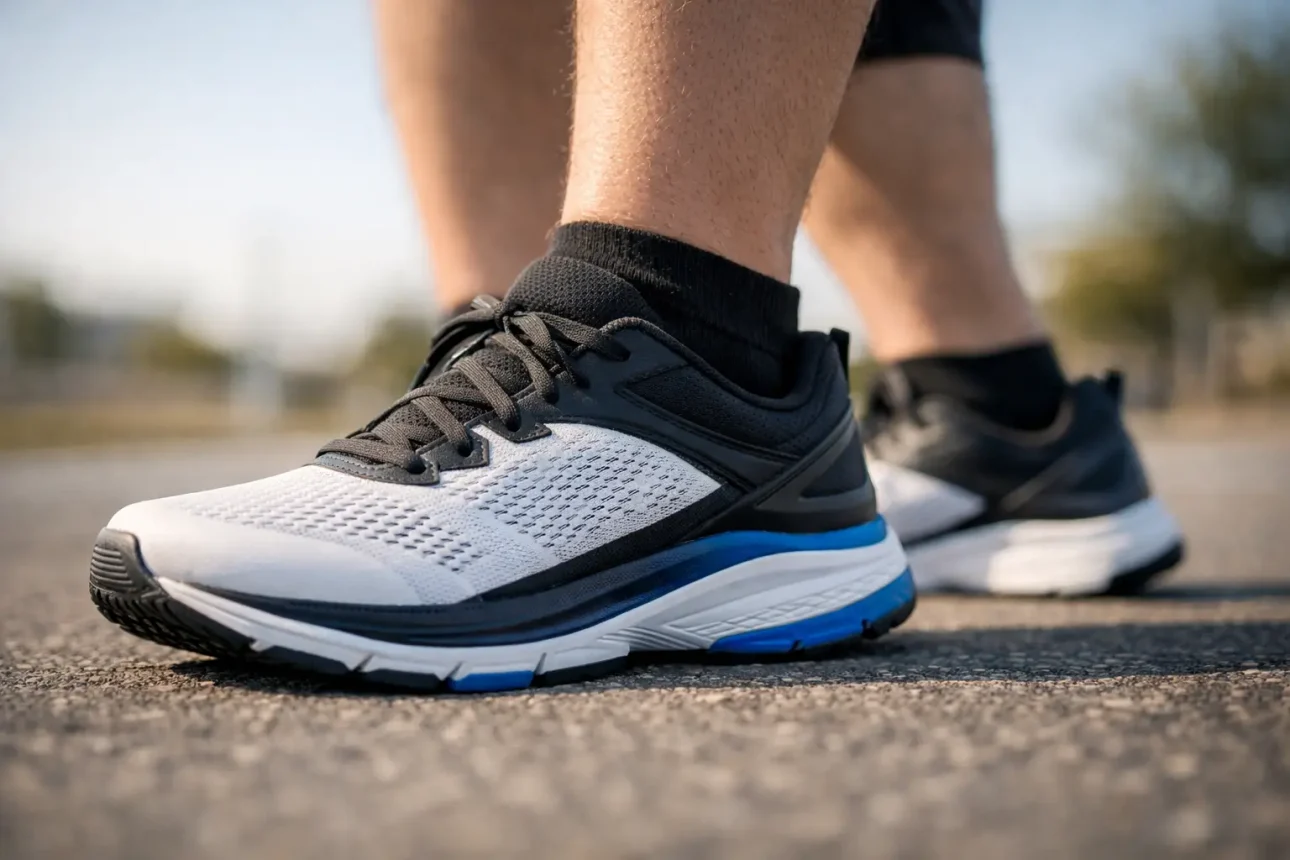
A bad running shoe lets you know fast. Usually around mile two, when your legs feel beat up and the ride turns from smooth to harsh. If you’re shopping for running shoes for heavy runners, that matters even more. The wrong pair can feel flat, unstable, or weirdly soft in all the wrong places.
We’re going to say this plainly – heavier runners do not need boring shoes, and they do not need to be pushed into the stiffest brick on the wall. What they do need is a shoe that can handle load well, stay stable when form gets messy, and still feel good when the run drags on.
A lot of shoe advice online gets too generic. “Get more cushion” is the usual line. Sometimes that’s true. Sometimes it’s lazy advice.
What actually matters is how the midsole behaves under your weight. The midsole is the foam underfoot. If it compresses too easily, the shoe can feel dead fast. If it’s too firm, every landing feels sharp. The sweet spot is a foam that gives a little, then holds its shape instead of collapsing.
Stability matters too, but not always in the old-school way. You do not automatically need a heavy motion-control shoe. Many runners just need a wider base, a secure heel, and a platform that does not wobble when they get tired. A stable neutral shoe can do the job better than a clunky support model.
Then there’s fit. This gets ignored way too often. A shoe can have all the right specs and still be wrong if your foot is hanging over the sidewall or your toes are jammed up front. For heavier runners, fit problems get amplified because the shoe is under more stress with each step.
We like to break this into use cases, not marketing categories. That’s how people actually shop.
This is where most runners should start. A daily trainer is the pair you grab for regular runs, walks, and general mileage. For heavier runners, this shoe should feel stable without being stiff and cushioned without turning mushy.
Models like the Brooks Ghost Max, New Balance 1080, ASICS Gel-Nimbus, and Hoka Bondi usually make sense here. Not because they’re trendy, but because they offer a lot of underfoot protection and a more forgiving ride over longer sessions.
That said, they do not all feel the same. The Bondi feels big and broad underfoot. Great if you want a lot of shoe between you and the road. The Nimbus feels softer and smoother. The Ghost Max is one we rate highly because it feels stable without making a huge deal about it. It just gets on with the job.
Some people know they roll inward a lot. Some just know their ankles feel sloppy late in a run. If that sounds familiar, a support shoe can help, but we still would not jump straight to the harshest option.
The ASICS Gel-Kayano, Brooks Adrenaline GTS, and Hoka Gaviota are strong picks in this lane. These shoes guide your foot without feeling like a correction device from ten years ago. That matters, because old support shoes often felt like orthopedic equipment pretending to be running shoes.
Our take? The Kayano is one of the safer bets if you want support plus comfort. The Adrenaline is more straightforward and dependable. The Gaviota is cushy, but it can feel bulky for some runners. If you like a lighter feel, it may not be your thing.
Not every bigger runner wants a giant max-cushion shoe. Some want a shoe that can pick up pace and not feel like a sofa strapped to their feet.
This is where things get tricky. A lot of lightweight trainers feel great in the store and terrible after 30 minutes if you put more force through them. We’d be careful with anything that feels too thin, too narrow, or too soft under the heel.
Shoes like the Saucony Endorphin Speed, ASICS Superblast, and some firmer New Balance trainers can work if you want bounce without losing control. The Superblast, in particular, has won over a lot of runners because it feels fast but still gives enough platform underfoot. It is not cheap, though, and we’re not going to pretend otherwise.
Brand matters less than fit, but some brands do have a clear personality.
Hoka usually works well for runners who want a lot of cushioning and a broad, planted feel. The downside is that some models can feel high off the ground, which not everyone loves.
Brooks is the safe choice in the best way. Not flashy. Not trying too hard. Just consistent. If someone asks us for a dependable daily trainer or support shoe, Brooks is often near the top.
ASICS has gotten much better in recent years. Their premium trainers feel less clunky than they used to, and models like the Nimbus and Kayano now feel genuinely enjoyable instead of just sensible.
New Balance is strong if fit has been an issue for you. They tend to offer better width options, and that matters more than people think.
On is more divisive. Some runners love the firmer, snappier ride. Others find it too harsh for easy miles. If you are a heavier runner and you like a softer landing, we probably would not start there.
Nike and Adidas both make good running shoes, but not every popular model is a smart pick for heavier runners. A shoe can be cool, light, and responsive, and still not be durable enough or stable enough for regular training under a higher load. Looks do not carry a run.
This part is simple. Skip shoes that feel unstable when you stand in them. If your heel is wobbling in the store, it will not get better outside.
Be careful with very soft foams in narrow shoes. They can feel amazing for five minutes, then start feeling sloppy once your stride breaks down. Soft is nice. Too soft is work.
We’d also avoid choosing based on weight alone. People get obsessed with a shoe being an ounce lighter. Fine. But if that lighter shoe leaves your legs feeling cooked, it is not helping.
And do not force yourself into a racing shoe for everyday miles. Carbon-plated shoes are fun, but many of them are too aggressive, too unstable, or too expensive to be your main pair. For most heavy runners, a solid daily trainer will do more good than a hyped race-day shoe.
You should feel supported, not trapped. Cushioned, not sunk. Locked in at the heel, but with enough room in the forefoot that your toes can spread a little.
The ride should stay consistent as you move. That is a big one. Some shoes feel nice when you walk around the house, then fall apart once you actually run in them. We trust shoes that still feel balanced when your pace changes or your form gets tired.
If you are between categories, lean slightly more stable rather than slightly softer. Most runners regret shoes that feel sloppy more than shoes that feel a touch firm at first.
If someone asked us where to start, we’d keep it simple.
For the most people, we like the Brooks Ghost Max. It is stable, cushioned, and easy to get along with. Not exciting. Just good.
If you want plush comfort, the ASICS Gel-Nimbus is one of the better options right now. Soft, but not useless.
If support is your priority, the ASICS Gel-Kayano is still one of the strongest all-around choices. It does a lot without feeling like a punishment.
If you want maximum cushion and do not mind a bigger shoe, the Hoka Bondi is worth a look. Some people swear by it. Some think it feels too bulky. That’s the trade-off.
If fit has been a headache, start with New Balance. The width options alone make it easier to get the right shoe instead of settling.
Your shoe does not need to be perfect. It needs to be right for your runs, your body, and the way you actually move. That might mean more cushion. It might mean more support. It might just mean a wider base and better fit.
We’d rather see you in a slightly less exciting shoe that keeps you comfortable for months than a flashy pair that feels amazing for one week and then lives in the closet. Your feet are not grading style points at mile four. They just want a shoe that still feels good when the easy run stops being easy.
If you start there, you’ll usually end up in a much better pair.