Cart
No products in the cart.
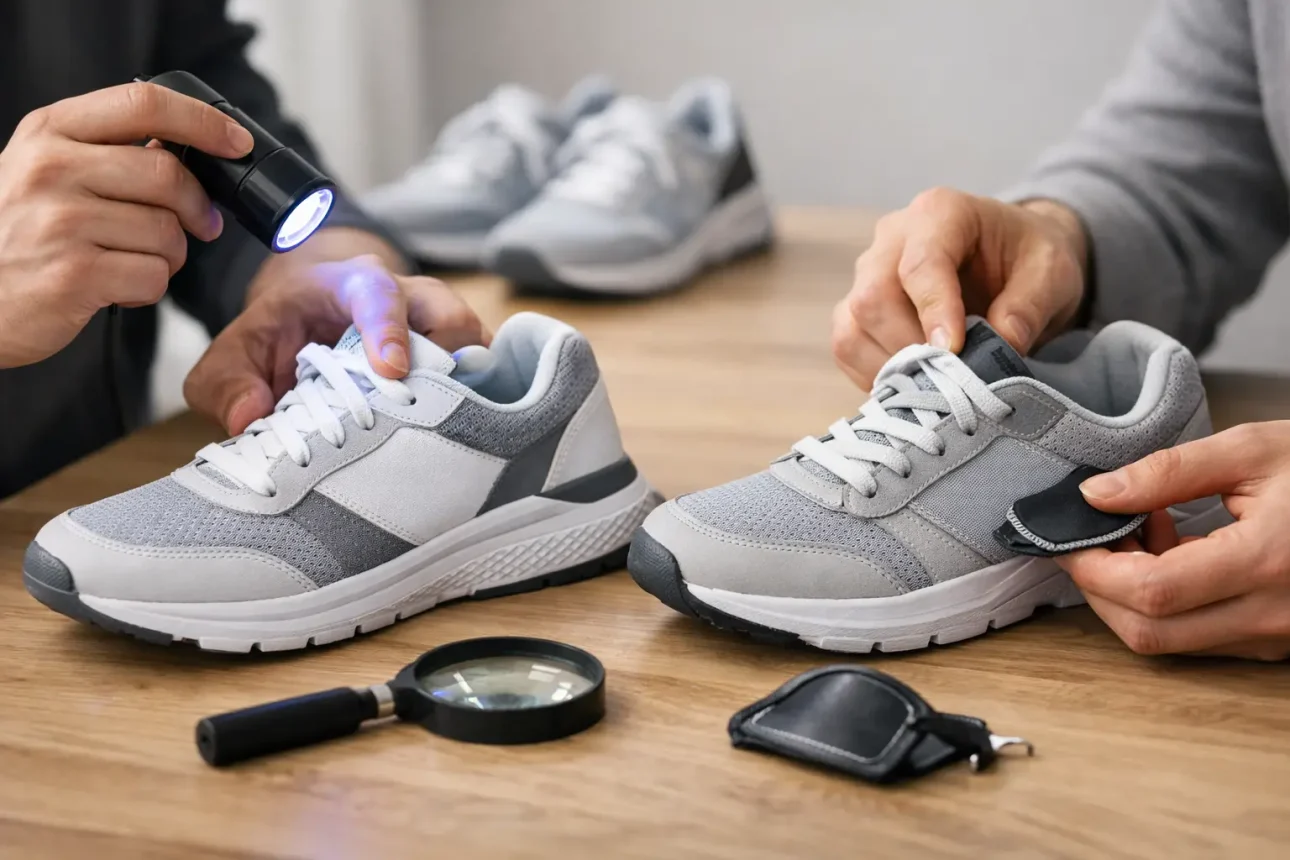
A convincing fake can look fine in one blurry listing photo, then feel wrong the second it lands in your hands. The heel sits crooked. The glue smells strong. The cushioning feels like packed cardboard. Knowing how to spot fake sneakers is not about acting like a sneaker detective. It is about slowing down before a cheap-looking deal turns into an expensive mistake.
We sell shoes because we like shoes, but we are also honest about this: not every pair needs a forensic inspection. If you buy from a trusted retailer with clear policies, detailed product pages, and real customer support, the risk is much lower. Trouble usually starts when the price is suspicious, the seller is hard to pin down, or the photos look copied from somewhere else.
Before you inspect a stitch, inspect where the shoes came from. This is the fastest filter, and honestly, it catches more bad listings than staring at a box label ever will.
A real retailer should make it easy to find basic information: a business name, contact details, return policy, shipping terms, and actual product photos. A seller who only communicates through direct messages, refuses returns, or wants payment through an unprotected method is asking you to take all the risk. We would skip that.
Check the price with some common sense. Discounts happen. Older colors get marked down. Stores clear out seasonal inventory. But a pair that normally sells for $180 listed at $45 in every size is not a bargain we would chase. It is usually a warning sign wearing a sale sticker.
Also look at the range of sizes. Fakes are often listed with every size available, including hard-to-find sizes, long after a popular release has disappeared elsewhere. That alone does not prove anything, but it adds context. Authentic stock is messy. It sells unevenly.
Stock photos are not automatically shady. Plenty of legitimate stores use them. The issue is when stock photos are the only proof the seller has a pair at all.
Ask for clear pictures of the exact shoes you will receive. You want to see both sides, the toe box, heel, tongue, outsole, size tag, box label, and any accessories that should be included. If the seller avoids this request or sends photos that look like they were taken on a different phone every time, walk away.
Pay attention to proportions. Fake sneakers often get the broad idea right but miss the shape. A Nike swoosh may be too thick or sit at a strange angle. An Adidas heel tab may be too tall. A New Balance “N” may look bulky. On running shoes, the midsole can be the giveaway: the foam may be too tall, too flat, or shaped without the clean lines of the real model.
Do not rely on one detail from a social media post. Brands change factories, materials, and small design details between production runs. A tiny difference can be normal. Several differences together are where we start getting suspicious.
The box and the shoe should agree. That sounds obvious, yet mismatched labels are common with counterfeit pairs and with shoes that have been put in the wrong box.
Compare the style code on the box label with the style code on the size tag inside the shoe. This code is usually a mix of letters and numbers. It should match exactly. Then search the code alongside the brand and model name. If it brings up a completely different colorway, a different shoe, or nothing useful at all, pause before buying.
A clean label is not proof of authenticity. Counterfeiters can print labels too. But a label with fuzzy text, strange spacing, misspellings, incorrect sizing formats, or a crooked barcode is a bad sign. Major brands can have minor factory variation. They do not usually misspell their own names.
The size tag should also look properly attached and readable. On many fakes, the print is too bold, too light, or poorly aligned. QR codes and serial-style numbers can be copied, so do not treat a scannable code as a magic answer. It is one checkpoint, not the whole case.
Photos can lie. Your hands are harder to fool.
Start with the shape. Put both shoes together on a flat surface and look from the front and back. The collars should sit at a similar height. The toe boxes should have the same curve. The heel counters should not lean like they have had a long night out.
Then check the stitching and glue. A little visible glue is not automatic proof of a fake. Even authentic pairs can leave a factory with small cosmetic flaws, especially on busy, layered designs. What matters is excess. Thick glue smears, loose threads, uneven panels, and stitching that wanders across the upper are not things we would brush off on an expensive pair.
Material feel matters too. Genuine leather should not feel like shiny plastic. Suede should have some movement when you brush it with a finger. Mesh should feel consistent, not thin and brittle in one spot and thick in another. This varies by model, so compare against official product images and descriptions rather than assuming every premium sneaker uses buttery-soft materials. Some real performance shoes are deliberately lightweight and minimal.
The outsole is another useful check. Look at the tread pattern, logo placement, and rubber finish. Fakes often have rough edges around molded sections or patterns that are not as sharp. Flex the shoe gently. It should bend where a foot bends, near the forefoot. If it folds in the middle like a cheap flip-flop, that is not promising.
People love saying fake sneakers have a chemical smell. Sometimes they do. Fresh glue, cheap dyes, and low-grade plastic can be obvious the moment you open the box.
But smell is supporting evidence, not a verdict. Authentic shoes can smell strongly after shipping or sitting in a sealed box. A fake can also smell neutral. Use your nose, sure, but do not make it the main event.
The same goes for weight. Some counterfeits feel unusually light because they use less material. Others feel heavy because they use dense, cheap foam. But modern running shoes from brands like On, Hoka, and Nike can be surprisingly light on purpose. Compare the pair to the expected construction, not to a vague idea that real shoes must feel heavy.
Counterfeits are rarely exposed by one dramatic flaw. They get caught by a stack of small things: an odd price, copied photos, a style code mismatch, stiff materials, and a seller who suddenly stops answering questions.
That is why we do not recommend buying based on a box alone, a QR code alone, or an authentication card alone. Those extras can be faked too. What you want is a consistent story. The seller is credible. The price makes sense. The photos are real. The labels match. The shoe is built like the model it claims to be.
If you already own a confirmed authentic pair from the same brand, compare them carefully. Focus on logos, panel shapes, tongue construction, insole printing, and outsole pattern. Just remember that different models will not match exactly. Comparing an older Nike lifestyle sneaker to a newer running model tells you almost nothing about authenticity.
Do not wear them outside. Keep the box, tags, receipt, order confirmation, and screenshots of the original listing. Take clear photos of every issue you notice, especially mismatched style codes or obvious construction flaws.
Contact the seller through the platform or payment method you used. Keep your message simple and factual. Explain that the product appears inconsistent with the advertised authentic item and ask for a return or refund. If the seller refuses, use the buyer-protection process available through the marketplace, card issuer, or payment service.
Avoid trying to resell a pair you believe is fake. Even if you label it as questionable, passing the problem to someone else is not the move. If you are unsure, get a second opinion from a reputable authentication service or an experienced sneaker shop.
At SneakerPrime, we think the best fake-check is boring: buy from a seller you can actually hold accountable. Then use the box, tags, materials, and shape to confirm what your gut already noticed. A deal should feel lucky, not confusing.