Cart
No products in the cart.
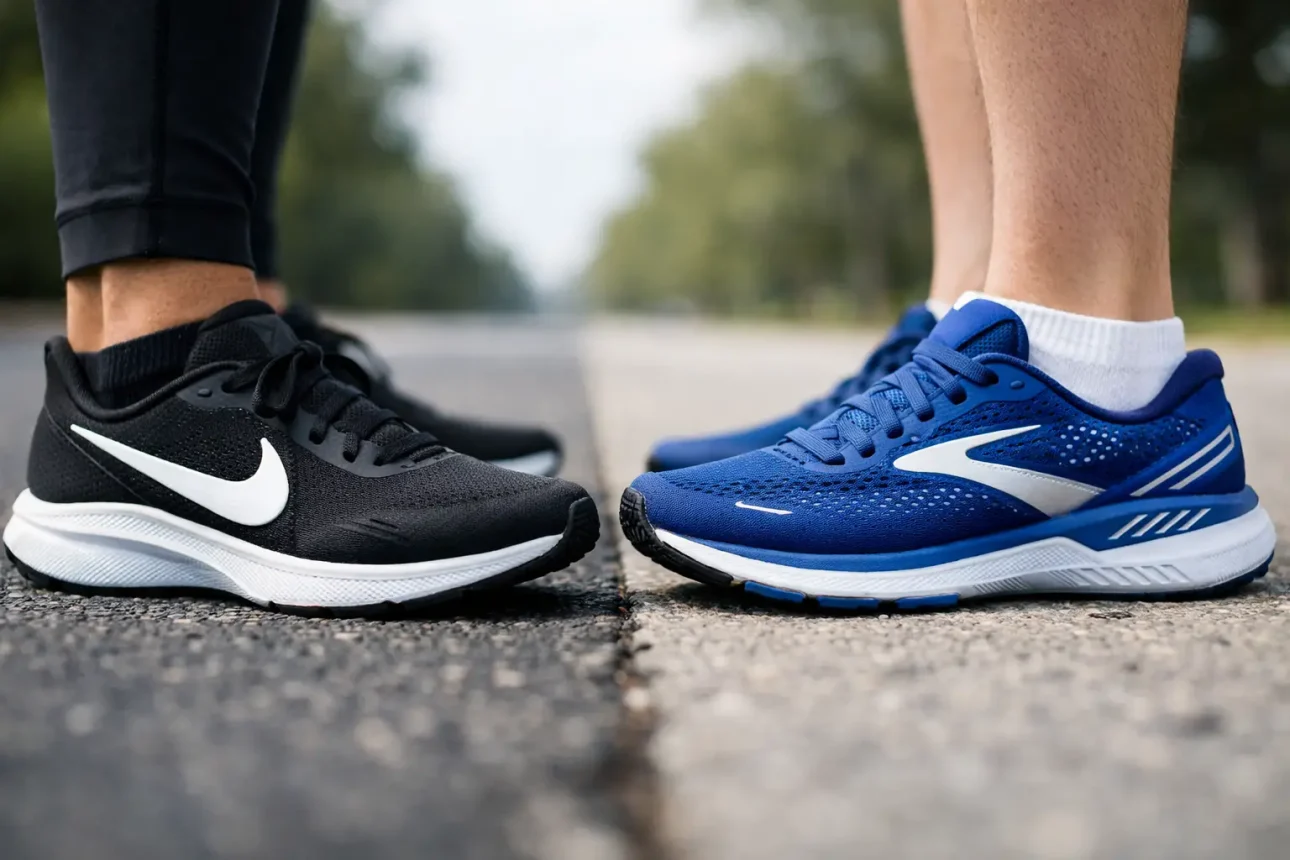
Nike vs Brooks running is not really a fight between a good brand and a bad one. Both make shoes worth wearing. The real difference is personality. Nike usually wants your run to feel fast, lively, and a little more exciting. Brooks wants it to feel steady, protected, and predictable. Neither approach is wrong. But putting a Nike shoe on when what you really need is a Brooks can make a normal run feel like hard work.
We see this all the time. Someone buys the shoe that looks best in a photo, then wonders why their arches are tired by lunchtime or why their easy runs feel oddly unstable. Looks matter. We sell sneakers, we get it. But once you are logging real miles, your feet get the final vote.
If you want a running shoe that also looks good with jeans, gym clothes, and a big hoodie, Nike usually has the stronger style edge. Its running lineup tends to look sharper, lighter, and less like something issued at a physical therapy office. Nike also makes some seriously quick shoes for workouts and race day.
If you want a shoe that disappears under your feet while you run, walk, or stand around all day, Brooks is often the safer bet. The fit is usually more accommodating, the ride is more controlled, and the brand puts less energy into trying to make every shoe look futuristic. Some Brooks models are not pretty. Plenty are. But their best quality is that they tend to make sense.
Our blunt take: Nike wins for runners who want energy and style. Brooks wins for runners who want consistency and a calmer ride. The right answer changes with the model, your stride, and what your feet do after mile five.
Nike running shoes often feel more playful than Brooks. Even in its daily trainers, there is usually some bounce or forward roll that makes you want to pick up the pace. The brand’s foam compounds can feel soft without being dead, especially in models built for road running. You get a little spring back instead of the flat, packed-down feeling cheaper foam can have.
That can be great. If your easy pace has turned into the same tired shuffle every week, a lively Nike can make running fun again. Shoes in the Pegasus family have long been a solid middle ground for runners who want one pair for casual miles, treadmill sessions, and everyday wear. The Invincible line leans much softer and more cushioned. It feels plush, almost pillowy, but that much soft foam is not for everybody.
Nike is also very good when speed is the priority. Its lightweight workout and race shoes are made to feel quick. The catch is that fast-feeling shoes can be less forgiving. A narrow platform, a high stack of soft foam, or a more aggressive shape may feel amazing for an hour and annoying for an all-day shift.
Fit is where we would slow down before blindly ordering Nike. Many Nike models run narrower through the midfoot and toe box than people expect. If you have wider feet, a high instep, or toes that like room to spread out, check the width options and do not assume your usual size will work. A shoe can be light and good-looking while still squeezing your forefoot like a bad handshake.
Nike makes the most sense for runners who enjoy a responsive feel, like mixing workouts into their week, or want a shoe that does not look out of place away from the track. It is also a strong pick for the person who cares about running performance but refuses to wear an ugly shoe just because it is comfortable.
Brooks takes a different route. Most of its running shoes feel grounded, stable, and easy to trust from the first mile. That does not mean boring. It means the shoe is less likely to surprise you halfway through a long run. The cushioning tends to be more controlled than wildly bouncy, which many runners prefer when their legs are already tired.
The Ghost is the classic example. It is not trying to win a fashion contest or set a track record. It is trying to be the pair you reach for when you do not want to think about your footwear. For daily mileage, dog walks, travel days, and long hours on your feet, that is a stronger selling point than people give it credit for.
Brooks also does stability especially well. Stability shoes use design features that help guide the foot through each step instead of letting it roll around too much. That does not mean they lock your foot in place. Good stability feels more like a firm hand on your shoulder than someone grabbing your ankle. The Adrenaline GTS is a popular choice for runners who want that extra guidance without wearing a stiff, clunky brick.
Brooks fits tend to be friendlier for more foot shapes, particularly because many models come in multiple widths. That matters more than trendy foam names. If your pinky toe goes numb, your heel slips, or your feet swell during longer runs, having a real width option is useful. Not glamorous. Useful.
We would point you toward Brooks if comfort and reliability are your main goals, especially for easy miles, walking, recovery runs, or standing all day. It is also a smart place to start if you have tried flashy running shoes and found them too narrow, too unstable, or too fussy.
This is where comparisons get messy, because neither brand has just one type of shoe. Nike has soft daily trainers, stable options, and firm race shoes. Brooks has cushioned shoes, lighter trainers, and models that can handle faster days. Still, their overall tendencies are clear.
Nike cushioning often feels softer and more energetic. It can make a short run feel fun and a tempo session feel easier to attack. But softer is not automatically better. Very soft shoes may feel wobbly when you turn corners, walk slowly, or land unevenly. If your ankles prefer a planted feeling, some Nike models can be too much shoe.
Brooks cushioning is usually more measured. You still get impact protection, but you are less likely to feel like you are balancing on foam. For long, steady runs, that controlled ride can be a relief. We would take Brooks over Nike for a runner who wants to stop overthinking every landing.
For pure speed, Nike has the deeper reputation and more exciting options. If race-day performance is your obsession, Nike deserves a hard look. But do not buy a race shoe as your only running shoe. That is like driving a sports car to pick up groceries every day. It works, but it is not the point.
Let us not pretend style is irrelevant. You are more likely to wear shoes you actually like, and that includes running shoes. Nike has an obvious advantage here. The colors, logos, and shapes usually translate better into everyday outfits. A black or white Nike running shoe can go from a morning run to coffee without looking awkward.
Brooks has improved, but it still leans practical. Some colorways are clean. Others look like they were designed by a committee that really loves fluorescent accents. We are not saying that as an insult. A lot of runners do not care. But if you want one pair to cover running and casual wear, Nike makes that choice easier.
Choose Nike if you want a springier feel, plan to run faster workouts, or care a lot about how the shoe works with the rest of your closet. Just be honest about fit. If Nike feels tight in the toe box during a five-minute try-on, it will not feel better after four miles.
Choose Brooks if you want dependable daily comfort, need more width choices, or prefer a stable platform over a flashy ride. It is our pick for the runner who wants to put on a shoe, get out the door, and forget about it. That is not boring. That is the whole point.
Before choosing, think about the run you actually do, not the runner you imagine becoming. A cushioned Brooks may be the better buy for three easy runs a week and long workdays. A responsive Nike may be exactly right if you are chasing a faster 10K and want a shoe with some attitude. Try to match the shoe to your real life. Your feet will be much more honest than the marketing.