Cart
No products in the cart.
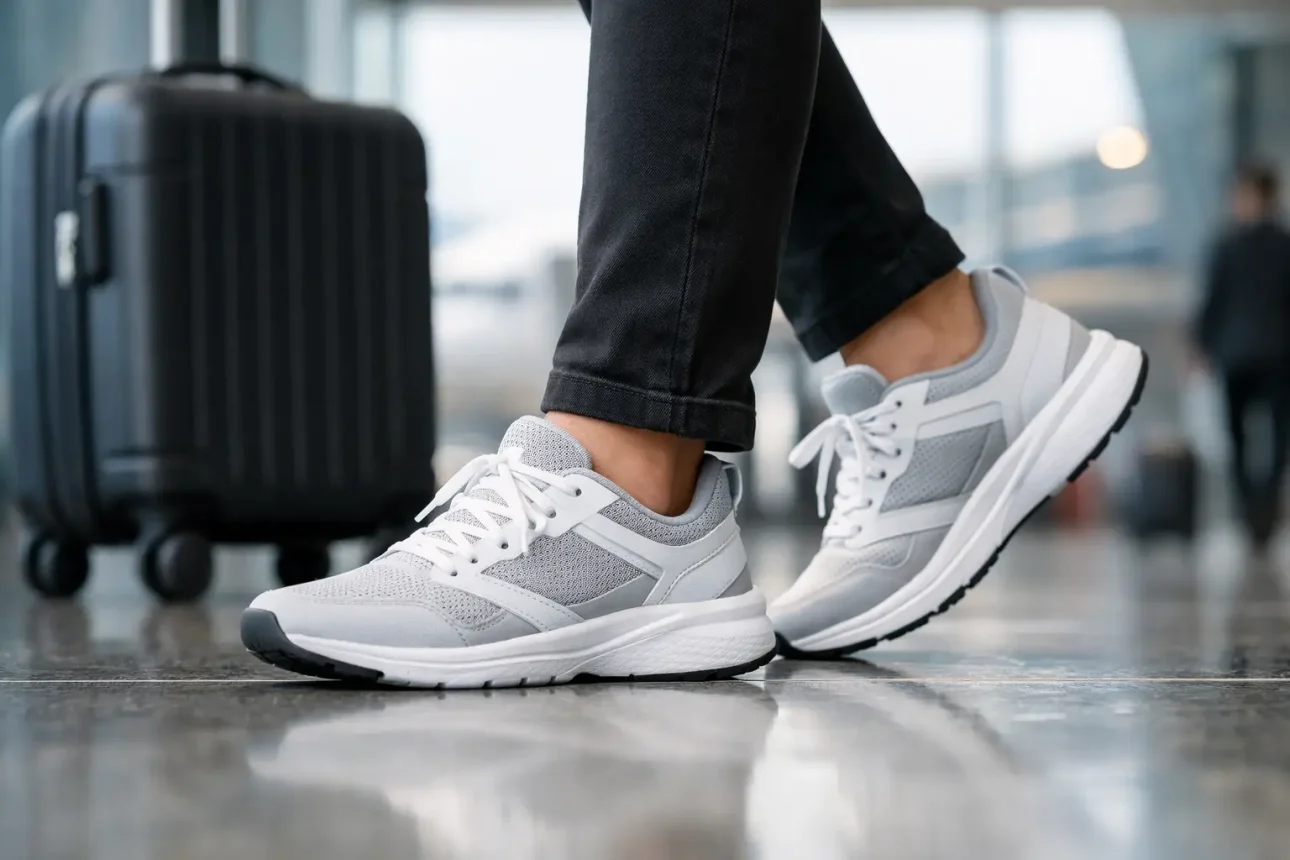
A bad airport shoe usually reveals itself at the worst possible moment: halfway through a connection, coffee in one hand, carry-on pulling at your shoulder, gate somehow 18 minutes away. Comfortable airport walking shoes are not about looking like you’re headed to a hiking trail. They are about getting through a long travel day without thinking about your feet every 30 seconds.
We’d take a supportive sneaker over a stiff fashion shoe every time. Airports involve more walking than people expect, plus standing in security lines, sprinting for gates, and sitting still long enough for feet to swell. The right pair handles all of it without making your outfit feel like an afterthought.
The first thing we look for is cushioning that stays comfortable after a few hours. Soft foam is nice, but overly squishy shoes can feel unstable when you’re dragging luggage or moving quickly through a crowded terminal. We prefer a shoe with a cushioned midsole and a stable base – soft enough to reduce the pavement-like feel of airport floors, firm enough that you are not wobbling around.
A secure heel matters too. If your heel lifts every time you walk, the shoe will rub eventually. That little slip may seem harmless when you try them on at home. Add a long layover and it becomes annoying fast.
Breathable uppers are another quiet win. Air travel can make feet feel warmer and puffier than usual, especially when you have been sitting for hours. Mesh or knit uppers give your feet more room to breathe than thick leather. Leather can still work, but we would save a rigid leather sneaker for a short flight or a day with minimal walking.
Then there is the boring but necessary part: security. Shoes that are easy to slip on and off make life easier, whether you have to remove them or just want to loosen the laces at the gate. That does not mean you need a flimsy slip-on. It means avoiding footwear that takes two minutes and a small engineering degree to get back on.
The best choice depends on how you travel. Some people want one shoe that can handle airport miles and a full day exploring a new city. Others need something clean enough for business travel. Here is where we stand on the major sneaker styles.
If your priority is taking pressure off tired feet, Hoka is hard to ignore. Models with a thick foam midsole feel noticeably more protective on long terminal walks. They are not subtle. Some have that stacked, oversized look that people either love or hate. We think that is a fair trade when you have a six-hour layover and a city walk planned after landing.
Hoka works best for travelers who value comfort over a sleek, low-profile sneaker. If you mostly wear slim jeans or want a shoe that disappears into a dressier outfit, the bulk may not be your thing. But for long travel days, the cushioning earns its space in your suitcase – or better yet, on your feet.
New Balance is one of our safer picks for airport travel because the brand does not force you to choose between a comfortable ride and a normal-looking sneaker. A well-cushioned New Balance running-inspired model can handle terminals, public transit, and a full afternoon on foot without looking like pure gym gear.
We especially like New Balance for people who need a little more room through the forefoot. Not every model is wide, so check the specific fit, but the brand generally has better options than the narrow, fashion-first sneaker crowd. If your toes feel cramped in most shoes, do not gamble on a slim silhouette just because it looks good in photos.
On shoes suit travelers who want a modern, lightweight sneaker that does not scream running shoe. Their cushioning often feels responsive rather than deeply soft. Think springy and tidy, not pillow-like. That is a good fit for someone moving fast through an airport who wants a shoe that still works with chinos, denim, or a simple travel outfit.
The trade-off is that some On models can feel a bit firm compared with Hoka or Brooks, particularly if you want maximum softness underfoot. We would choose On for a cleaner look and a light feel. We would choose Hoka if our feet were already complaining before boarding.
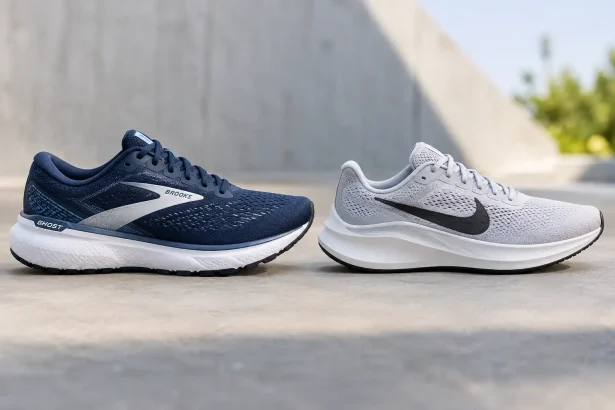
Brooks and Asics are not always the flashiest airport choices. Good. Your feet do not care what is trending when you are walking from one end of a terminal to the other. Both brands make dependable running shoes with cushioning, heel security, and support that translate well to travel.
Brooks tends to be a strong pick if you like a steady, supportive feel. Asics gives you plenty of cushioned options too, including models that feel soft without being loose or sloppy. These are the shoes we would lean toward for an itinerary that starts at the airport and ends with ten miles of sightseeing.
They may not be the pair you wear to a formal dinner. That is fine. Travel shoes do not need to do every job. They need to get you there without blisters and aching arches.
Nike and Adidas have plenty of comfortable options, but you need to choose carefully. A lifestyle classic can look perfect with an airport outfit and still feel flat after an hour. We love plenty of iconic silhouettes. We just would not pretend they are all built for a terminal marathon.
For travel, look toward their cushioned running or walking-inspired models rather than thin-soled retro pairs. Nike models with a supportive foam platform can be a smart middle ground. Adidas shoes with a softer, more forgiving midsole can work well too. The key is simple: do not buy based on the side profile alone. Try to imagine standing in the TSA line, then walking to a gate that has moved across the airport.
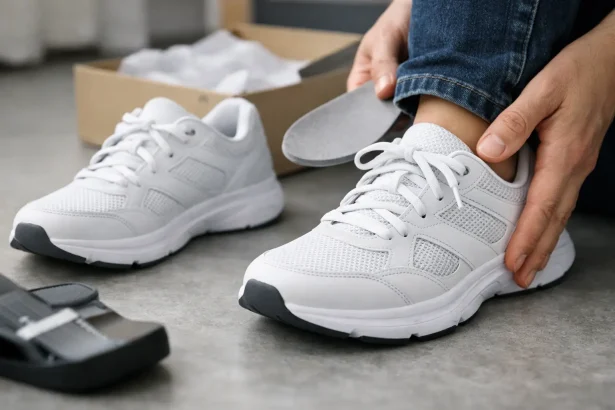
A comfortable shoe in the wrong size is still the wrong shoe. Travel makes this more obvious because feet often swell during a flight. We like about a thumb’s width between the longest toe and the front of the shoe. Your toes should not hit the end when you walk downhill or hurry down an escalator.
Do not size up so much that your heel slides around, either. That creates friction, and friction is where blisters start. The goal is secure at the heel, relaxed at the toes, and no pressure across the top of the foot.
If you wear thick socks on flights, try the shoes with those socks. This sounds obvious, but people regularly test travel sneakers in thin ankle socks, then wonder why the fit feels different at 6 a.m. on departure day. A slightly thicker sock can add comfort and reduce rubbing, but it also changes the available space.
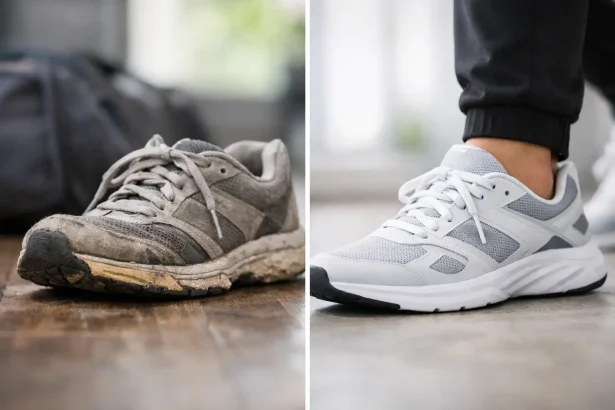
We would skip brand-new shoes. Even a comfortable model needs a few short walks before it becomes your airport pair. You do not need to beat them up, but wearing them around the neighborhood or on errands lets you spot rubbing, pressure points, or a heel that does not agree with you.
We would also skip completely flat sneakers if you know you will be walking a lot. A flat sole is not automatically bad, but it gives you less cushioning and less support over a long day. Save the minimal retro sneaker for a direct flight, a short terminal, and a seat close to the gate.
Heavy boots are another common mistake. They can look sharp, especially in cooler weather, but they are tiring, slow to remove, and take up more space if you decide to change. Wear them only if they are truly broken in and your trip calls for them.
Our honest rule is simple: choose the pair you would still want to wear after landing. If you immediately plan to change out of your shoes at the hotel, they are probably not the right travel shoes. Comfortable airport walking shoes should carry you from curb to gate to arrival without drama, while still looking like something you chose on purpose.
Pick cushion if you are logging serious miles. Pick a cleaner running-inspired sneaker if style matters just as much. But do not let a nice-looking flat shoe ruin the first day of your trip. Your itinerary is more fun when your feet are not negotiating with you by lunchtime.