Cart
No products in the cart.
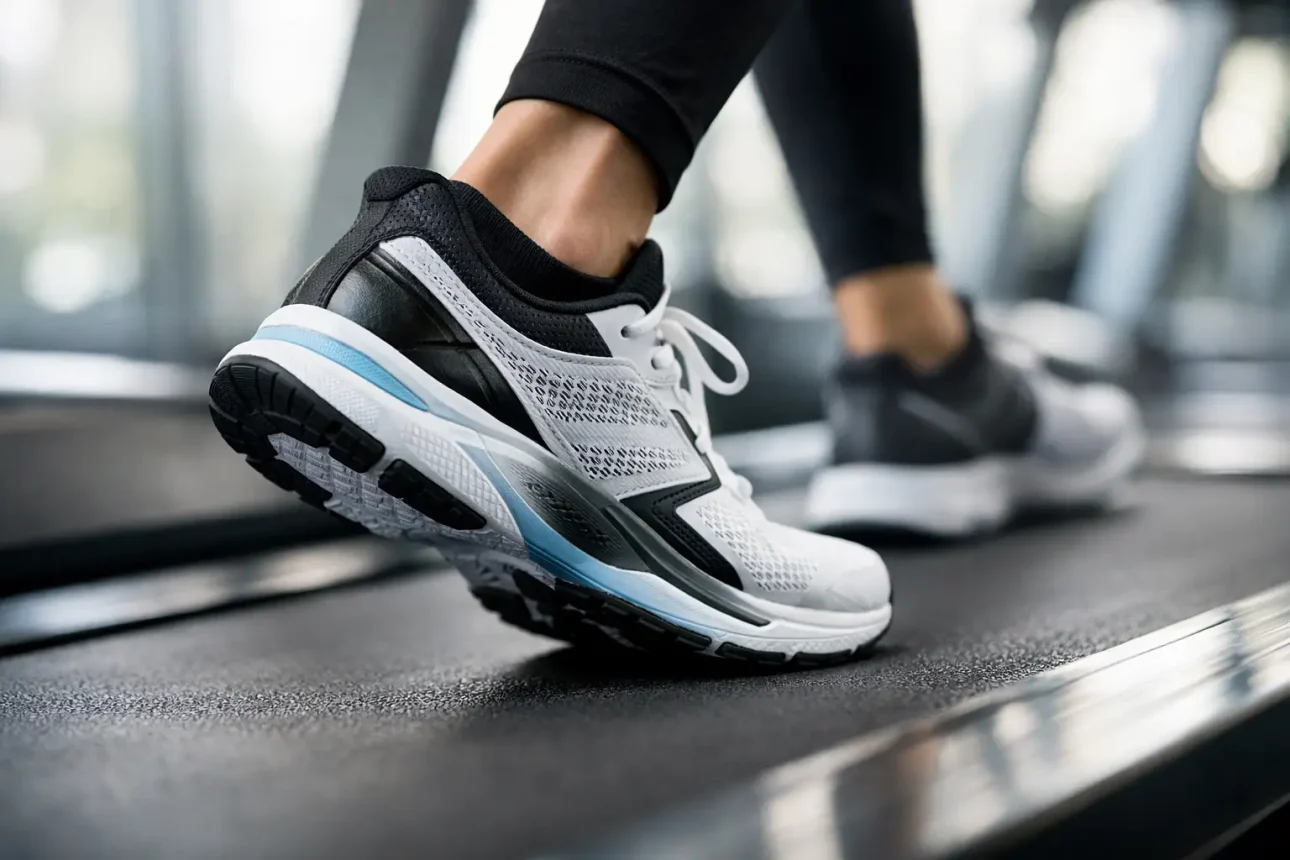
Your treadmill does not care if your shoes look fast. Your feet do. If you are asking what shoes are best for treadmill workouts, start with a running shoe that feels stable, fits cleanly through the heel, and has enough cushioning for the time you actually spend on the belt. Not the shoe with the loudest ad. Not the one your friend bought for a 5K three years ago.
A treadmill is softer and more predictable than pavement, which changes the answer a little. You usually do not need a tank-like outsole built for rough roads. But you still need a shoe that handles thousands of repeated landings without letting your foot slide around or your calves do all the work.
At SneakerPrime, we think most people should buy a comfortable daily running shoe for treadmill sessions. It is the sensible pick. Save the super-stiff racing shoes and flat lifestyle sneakers for another day.
For most runners and walkers, the best treadmill shoe is a lightweight neutral running shoe with moderate cushioning, a secure heel, and a flexible enough forefoot to move naturally. Think of models made for daily miles, not trail runs or fashion photos.
Neutral means the shoe does not aggressively push your foot in one direction. It works well for many people with a normal stride. Moderate cushioning means there is enough foam underfoot to soften impact, without making you feel like you are balancing on a mattress.
We like this middle ground because treadmills already remove some of the punishment of hard concrete. An extremely soft, towering shoe can feel fun for easy walking, but it may feel wobbly when you pick up the pace or add incline. A very firm shoe, on the other hand, can make a 45-minute jog feel longer than it needs to.
The right choice depends on how you train. A person walking at 3 mph, a runner doing intervals, and someone using a treadmill for rehab-style easy movement should not all buy the same shoe.
If your treadmill work is mostly walking, choose soft-to-moderate cushioning and a stable base. Hoka walking-friendly runners, New Balance daily trainers, Brooks cushion models, and certain On shoes are often strong options here. The best feeling is a gentle roll forward, not a squishy shoe that lets your ankle wander.
Walking places less demand on the shoe than fast running, but fit still matters. Your toes need room to spread, especially if you walk after work when your feet are a little swollen. If the front of the shoe feels tight in the store or at home, do not convince yourself it will magically become roomy later. It probably will not.
For long incline walks, we would lean toward a stable shoe with decent heel cushioning. Incline work loads the calves and Achilles more. A shoe that feels too low and flat can make that session unnecessarily harsh.
This is where a daily trainer earns its keep. Shoes from Brooks, Asics, New Balance, Adidas, Nike, Hoka, and Puma all have models built for exactly this job: regular runs at regular speeds, without drama.
Look for a shoe that feels cushioned but not sleepy. When you land, the foam should take the edge off and then move you forward. If it feels like your foot sinks and gets stuck, it may be too soft for your stride. If every step feels like slapping a thin gym mat, it is probably too firm.
Asics Gel-Cumulus-type shoes, Brooks Ghost-style trainers, Nike Pegasus-style runners, and New Balance 880-type daily shoes are the kind of category we mean. They are not always the flashiest pairs on the wall. That is fine. A treadmill shoe does not need to impress anyone. It needs to feel good at minute 38.
For speed work, a lighter shoe with a more responsive foam makes sense. Responsive simply means it springs back quickly instead of feeling flat and dead. You want to turn your legs over without fighting a heavy shoe.
This does not mean you need a carbon-plated race shoe. Those shoes can be fun, but they are expensive, often less stable, and overkill for many treadmill sessions. If you run a few fast intervals once or twice a week, a lighter daily trainer is usually the smarter buy.
Adidas models with lively foam, lighter Nike road runners, certain Asics performance trainers, and faster New Balance options can work well. Try them on carefully. Fast shoes often have a snugger fit and a higher, more curved sole. Some people love that rolling feeling. Others feel like they are standing on a diving board. We would not force it.
If your foot rolls noticeably inward, or you have been told you benefit from stability shoes, choose a model with guidance built into the midsole. That guidance is not a hard plastic wall. In modern shoes, it is often a wider base or firmer foam placed where it helps keep the foot centered.
Brooks, Asics, Hoka, and New Balance all make dependable stability runners. They can be excellent for treadmill training because the belt repeats the same motion over and over. A little extra control may feel better when fatigue hits.
But do not buy a stability shoe just because someone said it is more supportive. If a neutral shoe feels stable and natural on your feet, that is a better sign than a label. Shoe categories are useful. Your actual comfort is more useful.
A treadmill belt is smooth and predictable, so aggressive grip is not a priority. What matters is how the shoe holds and supports your foot during repeated motion.
Breathability also deserves a mention. Indoor running gets sweaty fast, especially in a warm apartment or packed gym. Mesh uppers are not exciting, but they help keep the shoe from feeling like a damp box halfway through your workout.
Flat casual sneakers are the obvious no. A Nike Dunk, Adidas Samba, or similar low-profile lifestyle shoe can look excellent with jeans. For a quick walk to get coffee, no problem. For regular treadmill runs, they are usually too flat, too firm, and too unsupportive. Style has its place. Repeated impact does too.
We would also skip heavy trail shoes unless you are using the treadmill only as a warm-up before heading outside. Their deep lugs are wasted on a belt, and their firmer, more protective build can feel clunky indoors.
Old running shoes are another bad bargain. If the midsole is visibly creased, compressed, or leaning to one side, the shoe has done its job. You do not need to count every mile like a scientist, but pay attention to feel. When a familiar shoe suddenly feels flat, unstable, or oddly harsh, it is probably time.
Try shoes on later in the day if you can, when your feet are closer to their workout size. Wear the socks you train in. Walk, jog lightly if possible, and pay attention to the annoying details right away.
Your heel should stay planted. The midfoot should feel held without being squeezed. Your toes should have space, but your foot should not slide forward when you lean into an incline. A comfortable shoe can feel snug at first. A painful shoe does not become a comfortable shoe because you wanted the color.
If you are between sizes, we usually favor the slightly roomier option for running. Just make sure the heel still locks down. You can fine-tune a little with lacing, but no lacing trick can rescue the wrong size.
If you run or walk on the treadmill two or three times a week, one good daily trainer is enough. Spend your money there. You do not need a separate shoe for every workout category because social media says you do.
If you train more often, adding a second pair can be useful. Keep one cushioned, easy-day shoe and one lighter pair for faster work. Rotating them changes the feel underfoot and gives each pair time to dry out. More importantly, it stops you from trying to make one shoe do everything badly.
Choose the pair that makes you want to press start, not the pair that looks best sitting beside the treadmill. Your feet will be the ones finishing the workout.