Cart
No products in the cart.
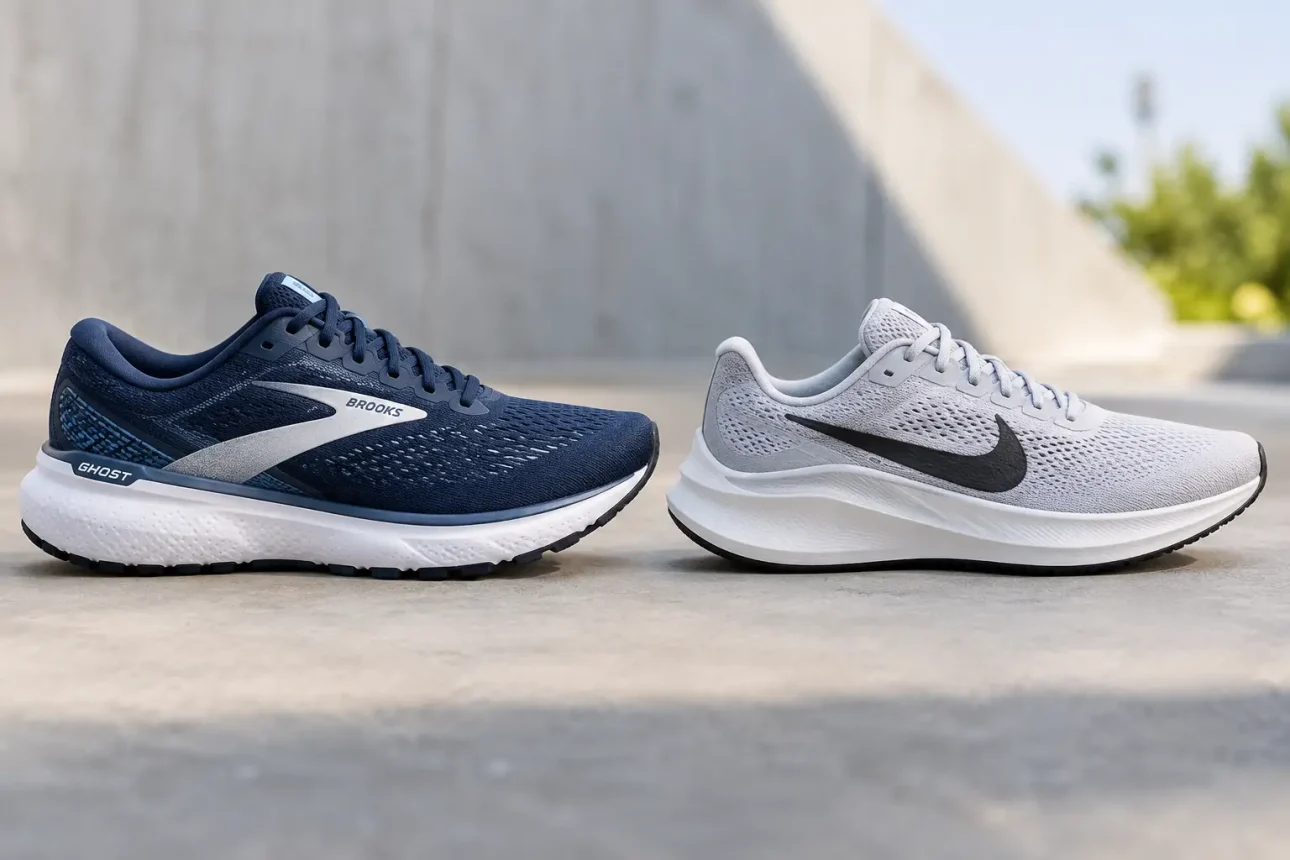
You can run a lot of happy miles in either shoe. But the Brooks Ghost vs Nike Pegasus choice is not a coin toss. The Ghost is the calmer, more predictable pick. The Pegasus has more bounce, more personality, and a fit that can feel brilliant or annoyingly snug depending on your foot. We would not choose them the same way.
Both are classic daily trainers. That means they are built for the runs most of us actually do: easy miles, lunch-break jogs, steady weekend efforts, and the occasional longer run when motivation shows up. Neither is a stripped-down race shoe. Neither needs a complicated routine. Put them on, head out, and they get on with it.
If you want a soft, steady shoe that disappears under your feet, choose the Brooks Ghost. It is our safer recommendation for new runners, walkers, people on their feet all day, and anyone with a wider forefoot.
If you want your daily trainer to feel a little quicker and more alive, choose the Nike Pegasus. It suits runners who like a firmer, springier ride and a closer, more athletic fit. We especially like it for runners who mix relaxed runs with pickups, strides, or gym sessions.
Our honest take? The Ghost wins for easy comfort. The Pegasus wins for versatility and a more energetic feel. Fit is the tiebreaker.
The Ghost has a smooth, balanced ride. It is cushioned without being squishy, and stable without feeling like a corrective shoe. You land, roll forward, and keep going. There is no dramatic bounce and no strange rocker shape pushing you onto your toes.
That sounds boring on paper. On tired legs, it is exactly the point.
We like the Ghost for runners who do not want to think about their shoes halfway through a run. It handles easy pace well and feels dependable when your form gets a little messy near the end. It is also one of the better running-shoe options for people who spend hours walking, commuting, or working on hard floors. Your feet are not begging to get out of it by 5 p.m.
The trade-off is excitement. If you love a shoe that gives something back when you push the pace, the Ghost can feel a little flat. It is not dead underfoot. It just does not have much urgency.
The Pegasus feels different right away. It sits closer to the ground than many plush daily trainers and usually feels firmer through the midsole. Nike uses air cushioning in the Pegasus line, but do not expect a bouncy castle. The sensation is more of a subtle pop when you toe off.
That firmer ride is why some runners swear by it and others quit after one run. If you like feeling the road a bit and want a shoe that stays composed when you run faster, the Pegasus makes sense. It feels at home on everyday runs, tempo sections, and casual gym work.
But it is less forgiving than the Ghost. On a very easy, slow recovery run, especially if your legs are cooked, the Pegasus can feel a touch hard. It works best for runners who enjoy a responsive shoe rather than runners chasing the softest landing possible.
The Ghost generally has the friendlier fit. Its toe box gives most feet more breathing room, and Brooks commonly offers width options in many Ghost releases. That matters more than flashy midsole tech. If your toes feel cramped, you will not care how good the cushioning is.
The Pegasus has a more locked-in, streamlined shape. It often fits narrower through the midfoot and forefoot, with a secure heel. For narrow or average-width feet, that can feel excellent. Your foot stays put when you turn a corner or pick up the pace. For wide feet, it can feel like the shoe is arguing with you.
Do not size up automatically to solve a narrow fit. A longer shoe can create heel slip and leave too much empty space in front of your toes. If you already know Nike running shoes pinch your forefoot, the Ghost is the smarter first choice. If you have a narrow foot and Brooks tends to feel roomy, the Pegasus may give you that better held-in feeling.
Both shoes are neutral daily trainers. In plain English, they are designed for runners who do not need a shoe built to control heavy inward rolling of the foot. They offer normal structure, but neither is a dedicated stability model.
The Ghost feels more planted because its platform is broad and its transition is controlled. It is the kind of shoe we would choose for long walks, easy miles, or a runner returning after time away. It does not force the pace. It lets you settle in.
The Pegasus feels more flexible and lively through the forefoot. That makes it easier to turn over your stride when you want to run faster. It also means it can demand a little more from your calves and feet than the Ghost, especially if you are used to softer, taller shoes.
If you have recurring pain, major gait concerns, or have been told you need specific support, do not let a shoe comparison replace professional advice. Comfort still matters, but the right answer may be more specific than Ghost or Pegasus.
Choose the Brooks Ghost if your priorities are comfort, consistency, and room to breathe. It is the better pick for beginner runners because it feels intuitive. It is also our pick for easy-paced runners, bigger runners who want a stable base, walkers, and anyone buying one pair for running plus daily life.
Choose the Nike Pegasus if you want a daily shoe that can handle more than easy miles. It is better for runners who like a firmer ride, have a narrow-to-average foot, and want one trainer for runs, light gym sessions, and occasional faster workouts. The Pegasus also has a more street-ready look. If you care how your running shoes work with jeans, cargos, or shorts, Nike usually has the edge.
For long runs, it depends on what “long” feels like to you. A runner doing six to 10 relaxed miles may prefer the Ghost’s calmer cushion. A runner who likes to finish strong may enjoy the Pegasus because it feels less sleepy. Neither choice is wrong. Your legs will tell you pretty quickly.
Both lines have earned their reputation because they usually last well for regular training. Outsoles are grippy enough for normal pavement, and both are built to take repeated use rather than look pretty for two weeks and quit.
The Ghost’s softer, smoother ride makes it an easy shoe to wear outside of running, which can be good or bad. Good because it is comfortable. Bad because people end up wearing it everywhere and burn through their running mileage without realizing it. If you track your miles, keep that in mind.
The Pegasus is a little more of a do-it-all sneaker. We would still not call it a serious lifting shoe, since a running midsole is not ideal under heavy barbell work. But for light strength training, travel, errands, and a run afterward, it handles the mixed schedule better.
Model updates happen often, so the exact upper, foam feel, and sizing can shift from one version to the next. The family traits usually stay the same: Ghost equals smooth and accommodating; Pegasus equals secure and responsive. If you loved an older version, check the fit notes before assuming the newest one will feel identical.
If we had to recommend one shoe to the widest range of people, we would take the Brooks Ghost. It is less polarizing. It fits more feet comfortably, handles easy running beautifully, and makes a strong case as an all-day walking shoe too.
But for runners who hate soft, pillowy shoes and want a little snap underfoot, the Nike Pegasus is the more fun choice. It has earned its long-running status for a reason. Just do not buy it hoping it will feel plush like the Ghost. It will not.
The best move is simple: start with the feel you want after three miles, not the logo you like most. If you want your shoes to stay out of the way, go Ghost. If you want them to give you a nudge forward, go Pegasus.