Cart
No products in the cart.
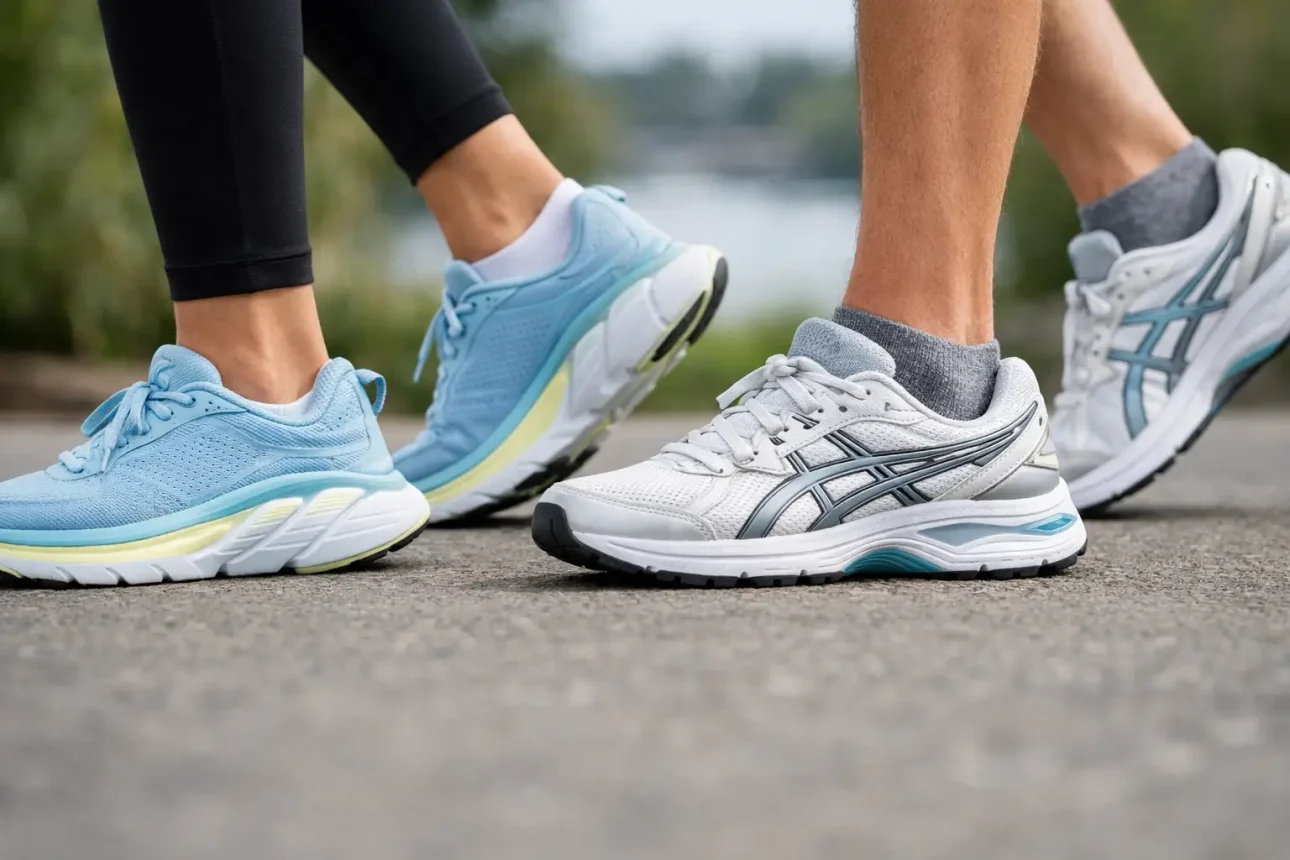
You can tell pretty fast if a walking shoe is right. Not in the first 30 seconds. Usually around hour three, when your arches start talking and your heel feels every sidewalk crack. That’s why hoka vs asics walking is a real comparison, not just a brand debate. Both make solid shoes. Both have loyal fans. But they do not feel the same on foot, and that matters more than the logo.
We’ve worn enough pairs to say this plainly: if you want soft, high-stack comfort and a more cushioned ride, Hoka usually wins. If you want a more grounded, stable, and familiar feel, Asics often makes more sense. That’s the short version. The longer version is where things get useful.
Hoka feels like the brand started with one question: how do we make hard pavement feel less annoying? Most Hoka walking-friendly models have a thick midsole, meaning there’s a lot of foam between your foot and the ground. You notice it right away. The ride is soft, sometimes very soft, and the shoe tends to roll you forward in a smooth way.
That rolling sensation is great for some walkers. If you spend a lot of time on concrete, it can make long days feel easier. Your feet take less of a beating. The flip side is that not everyone likes standing that high off the ground. Some people feel a little disconnected from the surface. If you like to feel stable and planted, Hoka can feel like a lot.
Asics usually comes in with a more controlled feel. Still cushioned, yes, but less marshmallow, less platform. More traditional. For walking, that often means the shoe feels easier to trust right away. You step in, and it feels normal in a good way. No adjustment period. No weird bounce. Just support that does its job.
We tend to recommend Hoka for people who say, “My feet are cooked by the end of the day.” We lean Asics for people who say, “I want comfort, but I don’t want a giant shoe.”
This is where people get tripped up. They try on a very soft shoe and assume it’s automatically the best walking shoe. Not always.
Hoka is usually softer and thicker underfoot. That can feel amazing for long walks, travel days, and jobs where you’re moving for hours. But super soft foam is not always better if you need a shoe to feel steady when you’re turning corners, standing still, or walking at a slower pace. Some Hokas feel great in motion and slightly awkward when you’re just standing around.
Asics tends to be better at balancing cushion with control. The underfoot feel is often firmer than Hoka, but firmer does not mean harsh. It usually means the shoe keeps its shape better and feels less wobbly. For a lot of walkers, especially people who don’t want that oversized look or feel, that balance is the sweet spot.
If we had to simplify it, Hoka is often the more instantly plush option. Asics is often the one that feels better over time if you care about stability as much as softness.
We’ll say it straight: a great shoe with the wrong fit is a bad shoe. And Hoka and Asics fit differently enough that this can decide the whole thing.
Hoka often fits a bit snug through the midfoot, depending on the model, with a roomy enough toe box on some pairs but not all. The upper can feel structured, and the shoe itself often looks bulky because of the thick sole. If you like that secure, wrapped-in feeling, good. If you have wider feet, you need to pay attention to the exact model and width options.
Asics usually feels more traditional in shape. For a lot of people, that means easier sizing and fewer surprises. The heel hold is often solid, the midfoot feels secure without being overbuilt, and the forefoot shape tends to work for a wide range of feet. Not every Asics shoe is wide-friendly, but the brand usually feels less extreme overall.
If your feet are picky, don’t shop by hype. Shop by shape. A shoe can be loved by half the internet and still annoy your pinky toe by lunchtime.
If your main thing is dedicated walking for exercise, both brands can work. The better choice depends on how you walk and what bothers your feet most.
For long, steady walks on pavement, we often give Hoka the edge. The extra foam helps take the sting out of repetitive impact. If you finish walks feeling beat up in your heels or forefoot, Hoka can feel like relief. The ride also encourages a smooth stride, which some walkers really enjoy once they get used to it.
For mixed use, we lean Asics. And by mixed use, we mean real life. Walking the dog, commuting, standing around, errands, travel, maybe a little treadmill time. Asics tends to feel more versatile because it doesn’t force as much of a specific ride. It just works.
That’s why we don’t think this is a clean knockout. Hoka is often better for max-cushion walking. Asics is often better for everyday walking when you want fewer trade-offs.
This is a different test than a 45-minute walk. All-day wear is about what your feet feel like at 5 p.m., not mile three.
Hoka can be excellent here, especially if your job keeps you moving. Nurses, retail staff, hospitality workers, warehouse teams – people in those roles often like that big cushion because hard floors are unforgiving. The shoe helps reduce that constant pounding feeling. But again, some Hokas can feel bulky, and not everyone wants that much shoe on their foot for 10 hours.
Asics is usually the safer pick for all-day wear if your day includes a mix of walking and standing. The lower, more controlled feel can be easier to live with for long stretches. You don’t get as much of that oversized softness, but you also don’t get as much of the unstable feeling that some people notice in max-stack shoes.
Our honest take? If your feet mainly hurt from impact, start with Hoka. If they mainly hurt from fatigue and lack of support, Asics may suit you better.
Let’s not pretend looks don’t matter. You might be buying for comfort, but you still have to want to wear the shoe.
Hoka has a distinct look. Thick sole. Bigger profile. Sometimes sporty in a good way, sometimes a little orthopedic if we’re being blunt. Some people love that chunky shape. Others feel like they’re wearing small boats.
Asics usually looks easier to style. Cleaner lines. Less exaggerated sole shape. More options that can pass as casual everyday sneakers without screaming performance shoe. If you want one pair for walking and regular outfits, Asics often has the easier lane.
We wouldn’t pick a walking shoe on looks alone. But if two pairs both feel good, you’ll reach for the one that doesn’t make you second-guess your outfit.
Neither brand is cheap-cheap, and both have models that earn their price and a few that feel a bit overrated.
Hoka can feel worth it when the cushioning solves a real problem for you. If that thick foam genuinely helps you handle long days better, the extra cost makes sense. If you buy Hoka because everyone says it’s comfortable, but you end up feeling unstable or disconnected from the ground, it won’t feel worth the money at all.
Asics often gives a more dependable value. Not always more exciting. Not always the pair people post about. But dependable matters. We like shoes that do the job without demanding that your feet adapt to them.
That’s a big reason we recommend Asics so often to first-time buyers who just want a reliable walking shoe. It’s the lower-risk choice.
If you want our actual opinion, here it is. Pick Hoka if your top priority is soft cushioning and you spend a lot of time walking on hard surfaces. It’s the brand we’d point to for people who want to feel more protected from the ground.
Pick Asics if you want a walking shoe that feels more stable, more versatile, and easier to wear all day without that towering foam sensation. It’s the brand we’d choose for most people who want comfort without the drama.
If you’re torn, think less about brand and more about what annoys you in your current shoes. If you hate harsh impact, go Hoka. If you hate wobble, bulk, or overly soft soles, go Asics.
That’s usually the answer people were trying to find all along. Not which brand is better on paper. Which one will still feel good when the day drags on and your feet stop being polite.