Cart
No products in the cart.
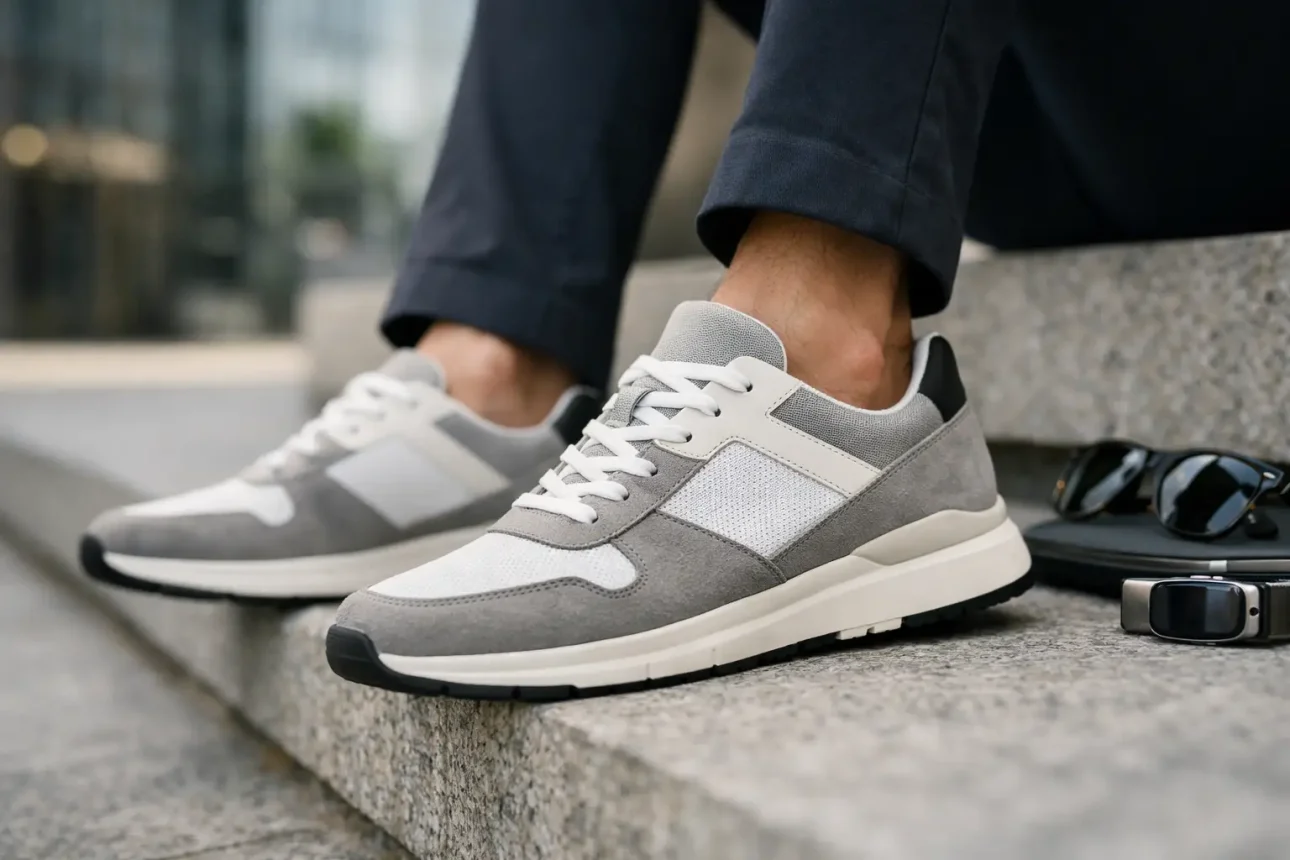
Some men’s fashion sneakers look perfect in photos, then feel like punishment by lunchtime. We’re not into that. If a pair only works for a ten-minute coffee run and falls apart for the rest of your day, it’s not a good buy. Style matters, sure. But what actually matters is whether you still want them on your feet at 5 pm.
That’s the line we use when we look at fashion sneakers. Not hype. Not resale chatter. Not whatever got pushed hardest on social this week. We care about the mix – shape, comfort, versatility, and whether the shoe makes sense for real life. A good pair should work with jeans, cargos, relaxed trousers, and your usual weekend rotation without needing a whole new personality to pull them off.
The short answer: they need to earn their spot. A lot of sneakers look decent on a shelf. Fewer look right on foot, feel good after hours of wear, and still hold up after a month of regular use.
We usually start with the shape. If the silhouette is too bulky, it can feel costume-like fast. If it’s too flat and stripped back, it might look clean but wear hard. The sweet spot is a sneaker with enough structure to feel current, but not so much going on that it becomes hard to style. Think balanced proportions, a toe shape that doesn’t look clownish, and a sole that gives you some support without turning the shoe into a platform.
Materials matter too, but not in the way brands often sell them. Suede looks great. Mesh feels lighter. Leather can clean up easier. None of that means much if the shoe creases badly, runs hot, or feels stiff where your foot bends. We’d take a well-built mixed-material upper over a shiny premium claim any day. Real wear tells the truth fast.
Then there’s comfort. Not performance-run comfort. Different thing. For fashion sneakers, we want cushioning that feels easy and stable, not mushy. If the midsole is too soft, the shoe can feel sloppy by the end of the day. If it’s too firm, you’ll notice every sidewalk crack. The best pairs disappear on foot. That’s usually a good sign.
This is where a lot of people overthink it. A fashion sneaker does not need to be loud to stand out. In fact, the pairs that get worn the most are usually the ones that quietly work with everything.
Clean retro runners are a safe bet for a reason. New Balance does this well. So do Asics and Adidas. You get shape, texture, and enough visual detail to make an outfit feel finished, without drifting into try-hard territory. These are the pairs we keep coming back to because they solve a real problem – they make getting dressed easier.
Low-profile court sneakers can work too, but this is where honesty matters. Some of them look sleek and sharp, then feel flat as cardboard after two hours. If you mostly sit, fine. If you commute, walk, stand around, and actually live in your shoes, be picky. We like court-inspired models when they have a little give underfoot and a shape that doesn’t squeeze the forefoot.
Chunkier lifestyle sneakers are still around, just not in the same way they were a few years ago. The huge, overbuilt dad shoe look has cooled off. That’s probably for the best. Some of those pairs had presence, sure, but they also swallowed outfits whole. Right now, the better move is moderate chunk. Enough sole and shape to feel modern, not so much that your sneakers enter the room before you do.
We’ll be blunt. No brand gets everything right all the time. Every label has great pairs and lazy ones. That’s why shopping by logo alone is a bad habit.
Nike usually wins on recognizable style. They know how to make a silhouette that people want to wear outside of sport. But some Nike lifestyle pairs lean more into looks than long-day comfort, so we’d be selective.
New Balance has been on a strong run because the brand understands proportion. Their better lifestyle models tend to look current without trying too hard, and they usually feel more forgiving underfoot than flatter fashion-first shoes. If you want one pair that can do a lot, this is often where we’d start.
Adidas is strong when it keeps things simple. The clean terrace and retro runner side of the brand still works. The downside is that some models can feel narrower or firmer than people expect, especially if you’re used to more cushioned shoes.
Asics has quietly become one of our favorite picks for people who want style without giving up comfort. A lot of their lifestyle options still carry that runner DNA, which means they often feel better on a long day than sneakers built only for looks.
On and Hoka are more divisive in the fashion lane. Some people love that technical look. Some think it’s all a bit too “I just came from a wellness startup meeting.” We get both sides. Still, if comfort is high on your list and you like the modern sporty feel, they can work well with casual outfits.
Puma and Brooks are a little more hit or miss for pure fashion use, but that doesn’t mean skip them. It means choose carefully. Some models look better in motion than in product photos. Others are the reverse. That’s why shape matters more than brand reputation.
Start with what you actually wear, not what you wish you wore. If your closet is mostly denim, cargos, hoodies, and easy outerwear, a retro runner or simple lifestyle sneaker will carry more weight than a sleek minimalist court shoe. If you lean cleaner with straight-leg pants, knitwear, and overshirts, then a lower-profile pair might make more sense.
Color is where people either play it too safe or get weird too fast. White is clean, but it’s not always practical. Black is easy, but it can kill the shape of a shoe if the design relies on panel detail. Gray, off-white, navy, and muted green tend to be the sweet spot. They’re easy to wear and forgiving when the shoe gets real use.
We’d also think about sole height. A slightly thicker sole can help a shoe sit better with wider pants and relaxed fits. Slimmer soles look better with more tailored casual outfits. Neither is better across the board. It depends on your clothes and how much visual weight you want on foot.
And please don’t ignore fit. A great-looking sneaker in the wrong size becomes an expensive mistake fast. Some shoes run long. Some pinch at the toe. Some are perfect for narrow feet and annoying for everyone else. If you’re between sizes, the upper material matters too. Mesh tends to give a bit. Stiffer leather usually doesn’t.
We’d skip any shoe that needs too much explaining. If you have to build your whole outfit around it every time, it’s probably not versatile enough to be your main pair.
We’d also skip sneakers that are all trend and no function. Tiny flat soles, cartoonishly oversized midsoles, overly busy paneling, fake vintage distressing – some of these can look cool for a minute, but they date quickly. Worse, they often wear badly. Trend-led is fine. Trend-trapped is not.
Another red flag is a shoe that feels good only standing still. Soft step-in comfort can fool people. You try them on, walk ten feet, and think they’re perfect. Then an hour later your arch is tired, your heel is rubbing, and the upper has started digging in. That’s not comfort. That’s a good first impression.
Most guys don’t need ten pairs of men’s fashion sneakers. Two or three solid choices do more work than a pile of impulse buys.
We like one clean everyday pair in gray, white, or off-white. That’s your default. Then one pair with a little more shape or color for outfits that need something stronger. If your life includes a lot of walking, add a comfort-first lifestyle sneaker that still looks sharp enough for daily wear. That’s the real-world rotation.
At SneakerPrime, that’s how we think about it. Not as collectible objects. As shoes you’ll actually use. The best pair is the one you keep reaching for because it looks right, feels right, and doesn’t make your day harder.
If you’re choosing between a sneaker that photographs well and one you’ll still enjoy wearing six hours later, pick the second one. Your feet usually know the truth before your outfit does.