Cart
No products in the cart.
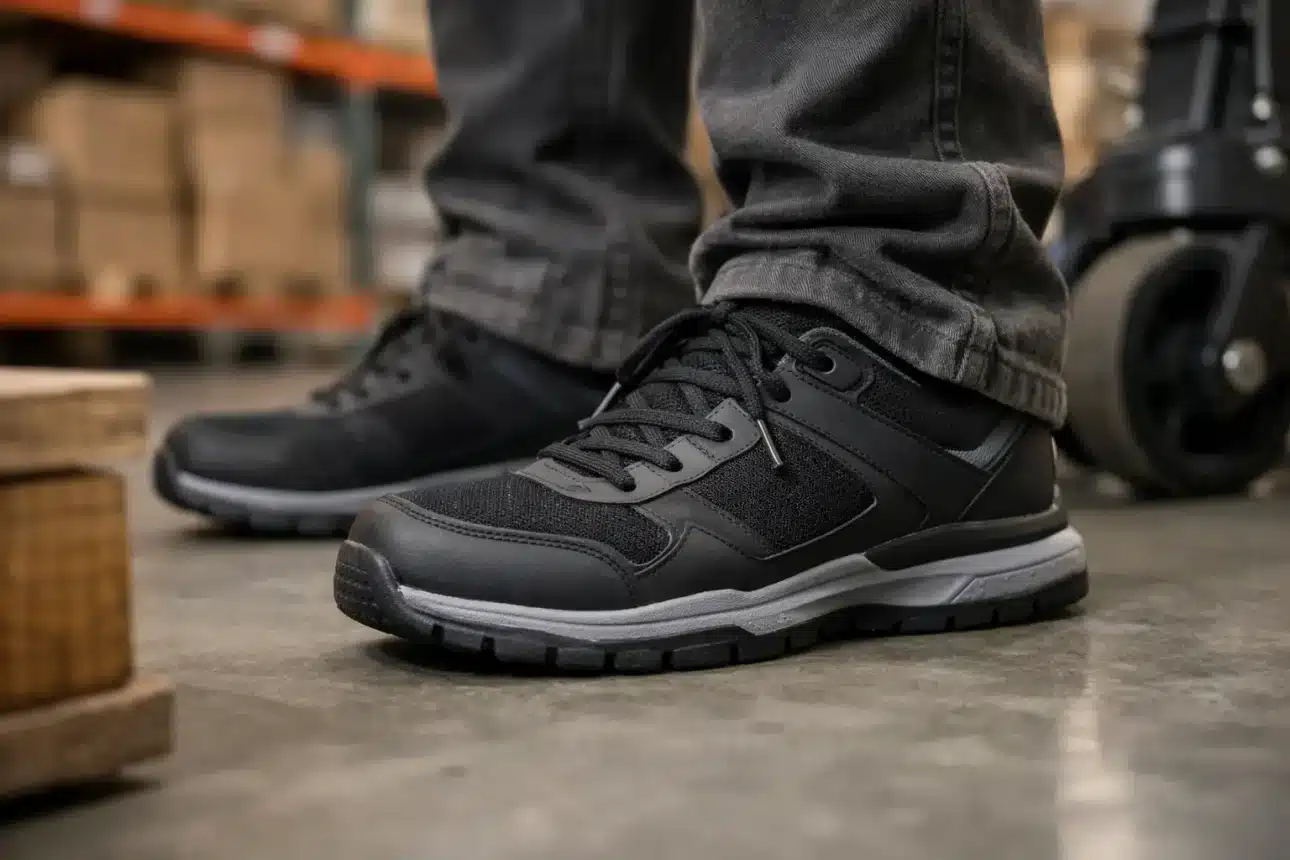
A warehouse shift exposes bad shoes fast. You feel it in your heels by lunch, your arches by the last pallet, and your knees on the drive home. The right sneakers for warehouse work will not make an eight- or ten-hour shift feel short, but they can stop your feet from taking the full hit.
We’ll say this upfront: a flat fashion sneaker is usually the wrong call. It may look clean with work pants, but thin soles and little support get old fast on concrete. For warehouse work, we’d choose a stable running or walking shoe with real cushioning, a secure upper, and enough grip for the floors you actually walk on.
Warehouse work is not one activity. You may be walking aisles for miles, standing at a station, climbing ladders, moving cartons, or turning quickly around equipment. That means the shoe has to handle repetition more than speed. A shoe built only for a quick gym session often feels fine for an hour, then gives up.
Cushioning matters, but not in the way people think. The softest shoe on the shelf is not automatically the best choice. If the foam is too squishy or the shoe sits too high, it can feel wobbly when you’re carrying a box or pivoting around a corner. What we want is cushioning that takes the edge off concrete while keeping your foot planted and centered.
A decent outsole matters too. Most warehouses have dry concrete, but dust, shrink wrap, wet entryways, and loading areas can change the picture quickly. Look for rubber coverage under the forefoot and heel, with a tread pattern that is more substantial than smooth lifestyle-sneaker rubber. If your workplace requires slip-resistant footwear, check the requirement before buying. “Grippy” and certified slip-resistant are not the same thing.
Then there’s the upper. Breathable mesh feels better during a hot shift, especially if you run warm. But a very thin, race-day-style upper can feel flimsy when you’re making lateral moves or catching the side of a pallet. We like shoes that use mesh but still have structure around the heel and midfoot. You want air, not a shoe that folds around your foot like a sock.
Before you shop, find out whether your job requires a protective toe, puncture-resistant sole, electrical hazard rating, or a specific slip-resistant standard. If it does, ordinary sneakers are not an alternative. Full stop. A comfortable running shoe cannot replace required safety footwear, and no amount of foam changes that.
If safety toes are required but your employer allows athletic-style work shoes, that is usually the better lane. Look for a safety sneaker from a workwear brand or a model specifically rated for the job. They tend to be heavier than regular sneakers, but they give you the protection your workplace asks for.
If your warehouse does not require safety footwear, then performance sneakers make a lot of sense. They are lighter, more breathable, and usually more comfortable for high-step-count shifts. That is where brands like Brooks, Hoka, Asics, New Balance, On, Nike, and Adidas earn their place. Not because a logo makes a shift easier, but because these brands build shoes around repeated impact and long wear.
If you spend most of the day walking or standing on unforgiving concrete, max-cushion running shoes are often the comfort-first pick. Hoka, Brooks, Asics, and New Balance all make options with thick foam underfoot that can make a hard floor feel less harsh.
The trade-off is stability. Some highly cushioned models feel tall, especially if you move heavy items, climb frequently, or turn sharply all day. We like max cushioning for pickers, packers, and people logging serious steps. We like it less for jobs where you need to feel locked in while handling awkward loads.
A wider base helps. So does a heel that does not sway side to side. Try the shoe on and walk around your home with a few turns. If your heel feels like it is floating, skip it. Your feet will not become more patient after six hours on concrete.
For many warehouse workers, the best option is not the softest shoe. It is a stable daily trainer. These are the dependable running shoes designed for ordinary miles, not race day. They usually have moderate cushioning, a broader platform, and enough upper structure to keep you from sliding around.
Brooks is a strong place to start if you like a secure, steady feel. New Balance often works well for people who need more width options. Asics tends to suit shoppers who want a planted ride without a bulky-looking shoe. These are not always the flashiest pairs. Honestly, that is part of the appeal. A warehouse shoe should earn its spot by feeling good at 5 p.m., not by looking dramatic in a product photo.
If your work is mostly standing at a bench, register, packing station, or inspection point, a walking-focused shoe can be smarter than a super-soft running shoe. Walking shoes often have a smooth heel-to-toe transition and a stable base that feels less tiring during slow, repetitive movement.
Look for a firm heel counter – the cup around the back of your heel. Give it a squeeze. It should have some resistance, not collapse instantly. That little bit of structure helps keep the rear of your foot from working overtime when you stand and walk all day.
For workers moving quickly through aisles, a lighter shoe can feel great. Nike, Adidas, Puma, and On have plenty of athletic trainers that feel quick and less bulky than traditional work shoes. We like that feeling when the job involves constant walking and you do not need protective toe gear.
Just do not confuse light with supportive. Some lightweight sneakers have thin foam, narrow bases, and slick outsoles. They are fine for errands and rough for a warehouse. Check the bottom of the shoe and the shape of the midsole before choosing based on looks alone.
A good model in the wrong size is still a bad work shoe. Your feet expand during a long shift, so do not buy a pair that feels “perfectly snug” first thing in the morning. You need a little space in front of your longest toe, roughly a thumb’s width. Your toes should not touch the front while walking downhill or stopping suddenly.
Heel slip is another deal-breaker. A tiny amount of movement can turn into rubbing, then blisters, then a pair you avoid wearing. Lace the shoe firmly through the top eyelets, but do not crank it down so hard that the top of your foot goes numb.
Width deserves more attention than it gets. If the sides of your forefoot bulge over the midsole, or your pinky toe feels pressed in, do not hope the shoe will stretch enough. Mesh may loosen a bit, but a narrow platform stays narrow. New Balance and Brooks are often worth a look if standard-width sneakers regularly feel cramped.
The biggest mistake we see is wearing the same pair until the outsole is bald and the foam feels dead. Warehouse work breaks down shoes faster than casual use. The upper may still look decent while the midsole has lost the bounce and support that made it comfortable.
If you work full time on concrete, rotating two pairs is a practical move. It gives the foam time to rebound and gives you a backup when one pair gets wet, dirty, or starts feeling flat. You do not need two identical shoes. A cushioned pair for high-step days and a steadier pair for loading or stationary work can be a smart setup.
Replace them when you notice new foot fatigue, uneven outsole wear, a leaning heel, or cushioning that now feels like a slab. Do not wait for a hole. By then, the shoe has been asking for retirement for a while.
If your job allows regular athletic footwear, we would prioritize a stable daily trainer or a cushioned walking shoe over a classic lifestyle sneaker every time. A pair of Air Force 1s, Sambas, or similarly flat icons can look good, but concrete has a way of exposing their limits. Save those for days off unless your shift is short and mostly seated.
If you walk huge distances, lean toward Hoka, Brooks, Asics, or New Balance cushioning. If you need a more grounded, locked-in feel, choose a stable trainer with a broad base rather than the tallest foam stack. And if your employer requires safety protection, buy for the rating first, then hunt for the most athletic fit within that category.
Your warehouse floor does not care what is trending. Your feet do care what happens after hour seven. Pick the pair that still feels dependable when the shift gets long.