Cart
No products in the cart.
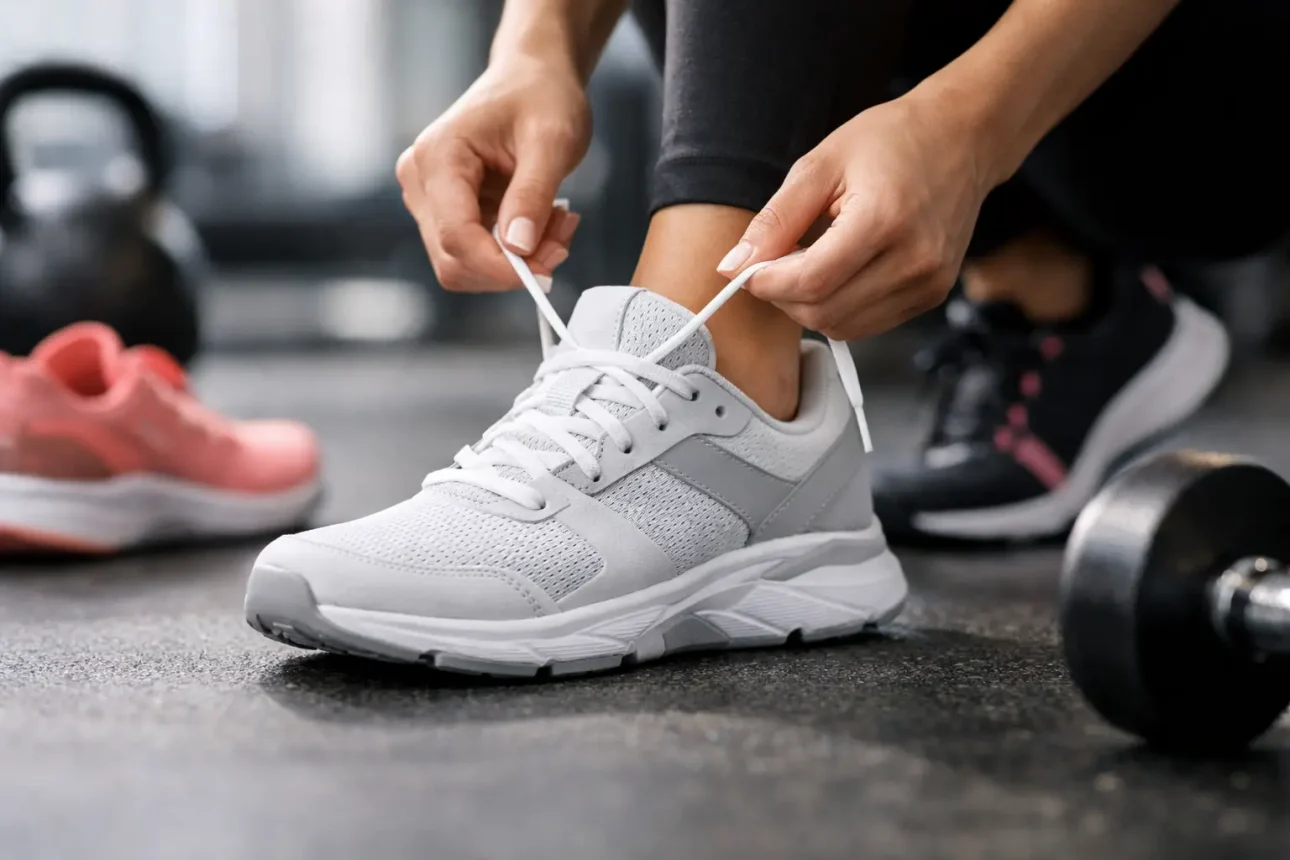
Your old running shoes might be the reason leg day feels shaky. The best gym shoes for women are not simply the softest pair on the wall or the pair with the loudest colorway. They need to match what happens in your workout. Squats, sled pushes, treadmill intervals, dance cardio, and strength circuits ask very different things from your feet.
We see people make the same mistake all the time: buying a plush running shoe for a lifting-heavy routine because it feels amazing for the first five steps. Then they try a deadlift and feel like they are standing on two foam mattresses. That is not a confidence boost. It is annoying.
Start with your training, not the logo. A good gym shoe should feel secure, stable enough for your movements, and comfortable when the session runs long. The right pair is not always the prettiest one. Luckily, you do not have to choose between shoes that work and shoes you actually want to wear.
If your gym time is mostly strength training, choose a flatter shoe with a firm base. You want your foot close to the floor, especially for squats, lunges, deadlifts, and machines. A stable base helps you feel planted instead of wobbly. Nike Metcon, Reebok Nano, and Adidas Dropset-style training shoes are built for this job. They can feel stiff when you first try them on, but that firmness is the point.
If you do HIIT, bootcamp classes, or a little bit of everything, look for a cross-trainer. These sit in the middle: enough cushioning for jumps and short runs, enough support for lateral moves, and a base that will not fold under you during strength work. This is where a versatile trainer earns its keep.
If you mostly run on the treadmill, a proper running shoe is the better call. Hoka, Brooks, On, Asics, and New Balance make options with more cushioning and a smoother heel-to-toe roll. Your joints may appreciate that during longer miles. Just do not expect that same shoe to feel brilliant under a heavy barbell. It can work for light weights, but it is not our first pick for serious lifting.
For dance fitness, incline walks, and light gym sessions, comfort can take the lead. A flexible, lightweight running or walking shoe often makes more sense than a rigid training shoe. There is no prize for wearing a lifting shoe to a class where you are moving nonstop.
This is the decision that matters most.
A stable gym shoe has a lower, firmer platform. It lets you feel the ground and push into it. Think of it like standing on a solid floor. That is why we like firm cross-trainers for strength sessions. They are not trying to bounce you forward. They are trying to keep you steady.
A soft running shoe has more foam underfoot. That foam absorbs impact and can make walking or running feel easier, especially when your legs are tired. It is closer to walking on a cushioned track. Great for cardio. Less great when you need a locked-in base for heavy compound lifts.
Neither is better across the board. If you lift three times a week and jog ten minutes to warm up, buy the stable trainer. If you run several miles before touching a dumbbell, buy the running shoe. Trying to force one pair to do everything usually means it does two jobs only okay.
The shoe should hold your heel without rubbing it raw. Your toes need room to spread when you squat or land from a jump, but your foot should not slide around inside the upper. A shoe that feels loose in the store will feel worse once you start moving fast.
Grip matters too. Gym floors can be dusty, slick, or covered in the mystery residue of a busy evening class. A rubber outsole with a wide contact area gives you more confidence during lunges, planks, and lateral shuffles. We would take good grip over an extra flashy upper every time.
Pay attention to side-to-side support. Running shoes are designed to move forward. Gym workouts rarely stay in one lane. If you do lateral lunges, box jumps, burpees, or court-style drills, a shoe with a wider base and a supportive upper will feel much more controlled.
Heel height is another small detail with a big effect. A raised heel can help some lifters get deeper into squats, particularly if ankle mobility is limited. But it is not necessary for everyone, and it can feel strange during running or jumping. For general training, a moderate or low heel is easier to live with.
We like these because they do not pretend to be soft runners. They are firm, grounded, and made for training sessions where strength comes first. The Metcon has a locked-in feel and a stable heel that works well for squats, deadlifts, and functional strength work. The Dropset is also a strong choice if you want a roomy, gym-focused shoe that feels planted under load.
The trade-off is simple: neither is fun for long runs. A short warmup? Fine. A 5K on the treadmill? Skip it.
For classes that bounce between dumbbells, jumps, short sprints, and floor work, we prefer a trainer with more flex than a lifting-first shoe. Reebok Nano models have built a loyal following for a reason. They are stable enough for weights but not so stiff that every burpee feels like work before the workout.
Puma training shoes with a supportive frame are often worth a look too. They tend to bring a sportier, less bulky feel while still giving your foot some structure for quick changes of direction.
If cardio is the main event, go with a running shoe and stop overthinking it. Brooks Ghost is a dependable choice for people who want balanced cushioning without a squishy, unstable feel. Asics Gel-Nimbus leans softer and works well when your runs are longer or your feet want more padding. Hoka Clifton gives you that light, cushioned ride many people love for walking and steady running.
We would not wear these for heavy squats. They are excellent at what they do, and that is enough.
Some of us go straight from the gym to errands, work, or whatever else the day throws at us. If that is you, On and New Balance are often easy wins. They can look clean with everyday clothes while keeping walks, light cardio, and basic gym work comfortable.
Be honest about the “basic” part. These are good for machines, walking, and lighter sessions. If your workout involves loaded barbell work or aggressive HIIT, choose a more purpose-built trainer instead.
A model can be popular and still be wrong for your foot. That is not a personal failure. It is just fit.
Try gym shoes later in the day if you can, when your feet are a little more swollen from normal activity. Wear the socks you train in. Walk, squat, and do a few side steps before deciding. Your heel should stay put, your arch should not feel attacked, and your longest toe should have about a thumb’s width of room at the front.
Do not buy a shoe hoping it will stretch into comfort. Some uppers loosen slightly, but a cramped toe box and a slipping heel usually stay exactly what they are. Cute shoes that make your feet miserable by 5 p.m. are not a bargain.
If you train in different ways, two pairs make more sense than one expensive compromise. Keep a firm cross-trainer for strength and HIIT, then use a cushioned running shoe for treadmill days, outdoor miles, and walks. You will get better use from both pairs, and each will feel right when you put it on.
If you only want one pair, choose based on the workout you do most often, not the workout you keep promising yourself you will start next month. That small bit of honesty leads to a much better choice.
The shoe that works best is the one that lets you focus on the next rep, the next interval, or the next mile – not the one that has you thinking about your feet the whole time.