Cart
No products in the cart.
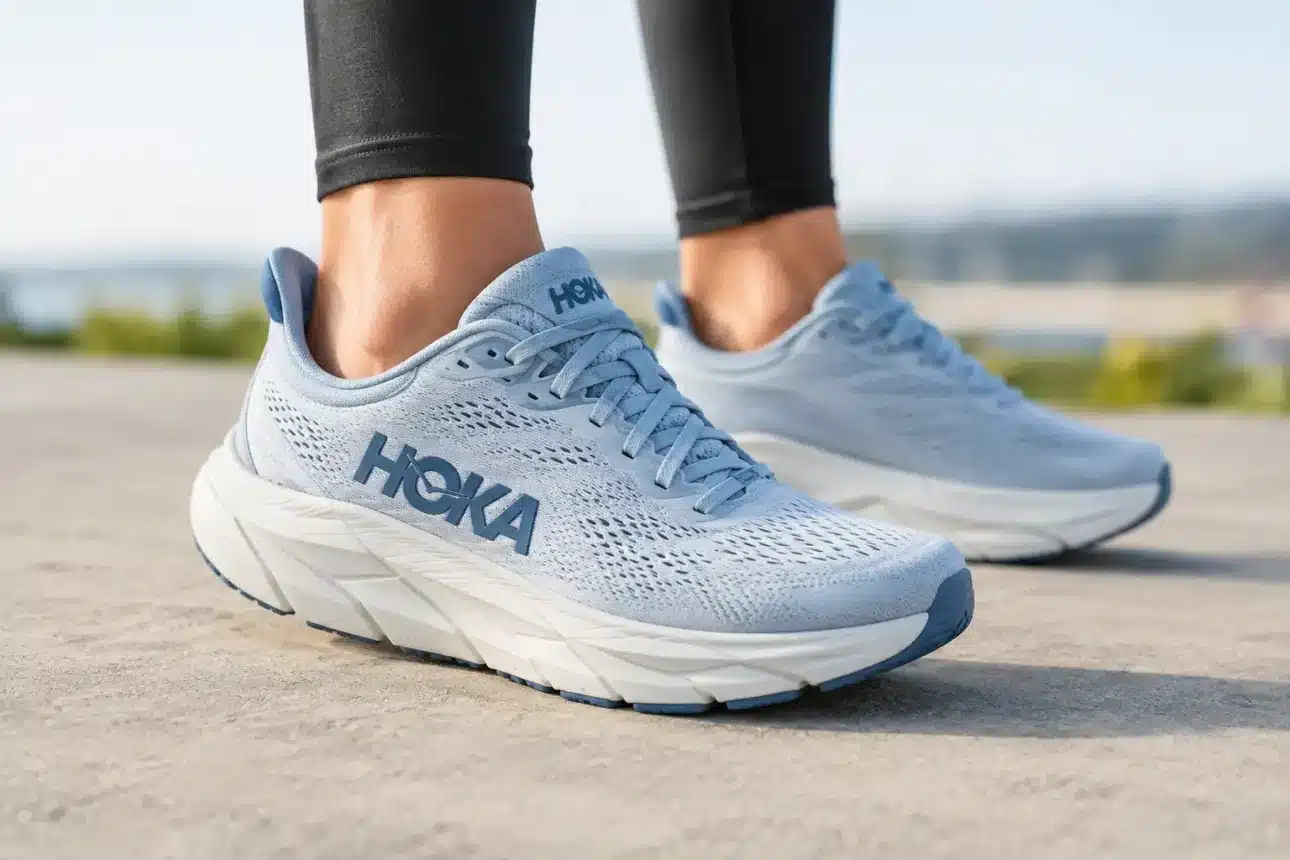
The Hoka Clifton is the shoe people buy after deciding their old runners feel like pavement with laces. That sounds dramatic, but the appeal is simple: the Clifton gives you a noticeably softer ride without turning every step into a wobbly mess. In this Hoka Clifton review, we’re getting past the chunky sole and telling you where it genuinely works, where it doesn’t, and whether it deserves a spot in your rotation.
We like the Clifton because it knows its job. It is a daily trainer for easy miles, recovery runs, walking, commuting, and long days when your feet have had enough. It is not trying to be a lightweight race shoe or a gym shoe that can deadlift. That focus is why it has stayed popular for so long.
The first thing you notice is the cushion. Hoka uses a thick foam midsole, meaning there is a lot of material between your foot and the road. The feeling is soft and protective, more like landing on a dense foam mat than sinking into a sofa.
That distinction matters. Some heavily cushioned shoes feel bouncy for five minutes, then loose and tiring once you pick up the pace. The Clifton is softer than a traditional running shoe, but it still moves forward cleanly. Its curved sole helps your foot roll from heel to toe instead of making each stride feel flat and stuck.
For easy running, we think it is excellent. The Clifton takes the edge off rough sidewalks and repetitive road miles. On a relaxed five-mile run, your legs feel less beaten up than they would in a firmer, lower-profile shoe. On a recovery day, when the goal is to move without proving anything, that is exactly what we want.
It also works surprisingly well as an all-day walking shoe. If your commute involves stairs, trains, city blocks, or standing around at work, the extra cushion earns its keep. What actually matters is how your feet feel at 5 p.m., not how impressive the foam sounds on a product page. The Clifton is built for that late-day test.
Here is the trade-off. The Clifton is not our first choice for speedwork, sharp intervals, or race day. It can handle a faster section of a run, but it does not feel eager when you really push it. The soft foam and tall platform favor comfort over a quick, snappy toe-off.
That is not a flaw. It is just a lane. Runners who want one shoe for easy miles and daily life will get more out of the Clifton than runners hunting personal records. If you own a quicker shoe for workouts, the Clifton makes a lot of sense as the pair that handles everything between them.
We would also skip it for serious gym training. The thick, cushioned base is pleasant on a treadmill, but it is not stable enough for heavy squats, deadlifts, or lateral drills. A flatter training shoe gives you a better connection to the ground. Don’t buy a soft road runner and expect it to do every job in your closet.
For a neutral daily trainer, yes. Neutral means it does not use a firm post or rigid piece to force your foot into a particular path. The broad base and sidewalls around the foot give the Clifton more structure than its soft look suggests.
Still, this is not a stability shoe. If your ankles tend to roll inward a lot, or you know you need guidance from a supportive running model, test the fit carefully or choose a shoe designed for that need. Cushion can feel supportive at first because it is comfortable. Those are not always the same thing after an hour on your feet.
The higher stack height can also feel a little awkward on uneven ground. On smooth roads and sidewalks, the Clifton is right at home. On rocky trails, wet grass, or broken pavement, we would rather wear something lower and more planted.
The Clifton usually feels true to size in length for most people. There is enough room up front for everyday running, while the heel holds on without feeling overly locked down. But the fit is not equally generous for every foot shape.
The standard version can feel narrow through the midfoot, especially if you have wide feet or a high instep. If your little toe often feels squeezed in regular running shoes, do not assume a bigger size will solve it. Sizing up can create heel slip and leave too much empty space at the front. Look for a wide option when available.
The upper is light and breathable. That is good news on warm runs and for daily wear, because your feet do not feel wrapped in a thick, stiff shell. The downside is that it is more about comfort than armor. If you tend to drag your toes or beat up shoes on trails, this is not the most durable-looking upper in the world.
One practical note: the Clifton has a noticeable heel-to-toe drop. That simply means the heel sits higher than the forefoot. Most runners will adapt without thinking about it, but people coming from very flat shoes may feel the difference in their calves and stride. Wear them for shorter outings first instead of making the Clifton your 15-mile shoe on day one.
We would recommend the Clifton to runners who want their everyday miles to feel easier on the body. It is especially good for newer runners building consistency, experienced runners adding a soft recovery option, and walkers who cover real distance rather than just walking from the car to the store.
It is also a strong pick if you want one pair that looks sporty without looking like a full-on race shoe. The silhouette is chunky, yes, but it has become normal enough that you can wear it with joggers, shorts, jeans, or work-casual clothes. Some colorways are loud. Others are clean and easy to wear. Pick the one you will actually reach for.
At SneakerPrime, we think the Clifton earns its popularity because it is useful, not because the logo says Hoka. It makes slow runs more comfortable. It makes long walks less punishing. And it does that without requiring you to understand a pile of running-shoe jargon.
Skip the Clifton if you want a firm, connected-to-the-road feeling. Some runners hate tall cushioning because they want to feel every push-off and corner. Fair enough. The Clifton will probably feel too soft and too high for them.
We would also pass if your main activity is lifting, court sports, hiking on technical trails, or fast racing. There are better tools for each of those jobs. The Clifton is at its best when the route is predictable and the pace is relaxed to moderate.
Runners who need strong motion control should not buy it blindly either. The shoe has a stable platform for its category, but it does not replace a true stability model. Comfort is personal, and a few minutes standing in a shoe cannot tell you everything. Pay attention to pressure around the arch, heel movement, and any rubbing around the toes before committing to long mileage.
The Clifton is not exciting in the way a featherweight racing shoe is exciting. It is better than that for most people: dependable. It is the pair you pull on when your legs are tired, the weather is average, and you still want to get out the door.
That makes it easy to underrate. Plenty of shoes feel good when you first try them on. Fewer still feel good after a long walk, an easy run, a grocery stop, and the walk home. The Clifton’s real strength is that it keeps doing its job without demanding much from you.
If soft, protective daily miles sound right, this is one of the safer Hoka choices. Just buy it for the work it does best. Let it handle the everyday miles, and let another shoe chase the stopwatch.