Cart
No products in the cart.
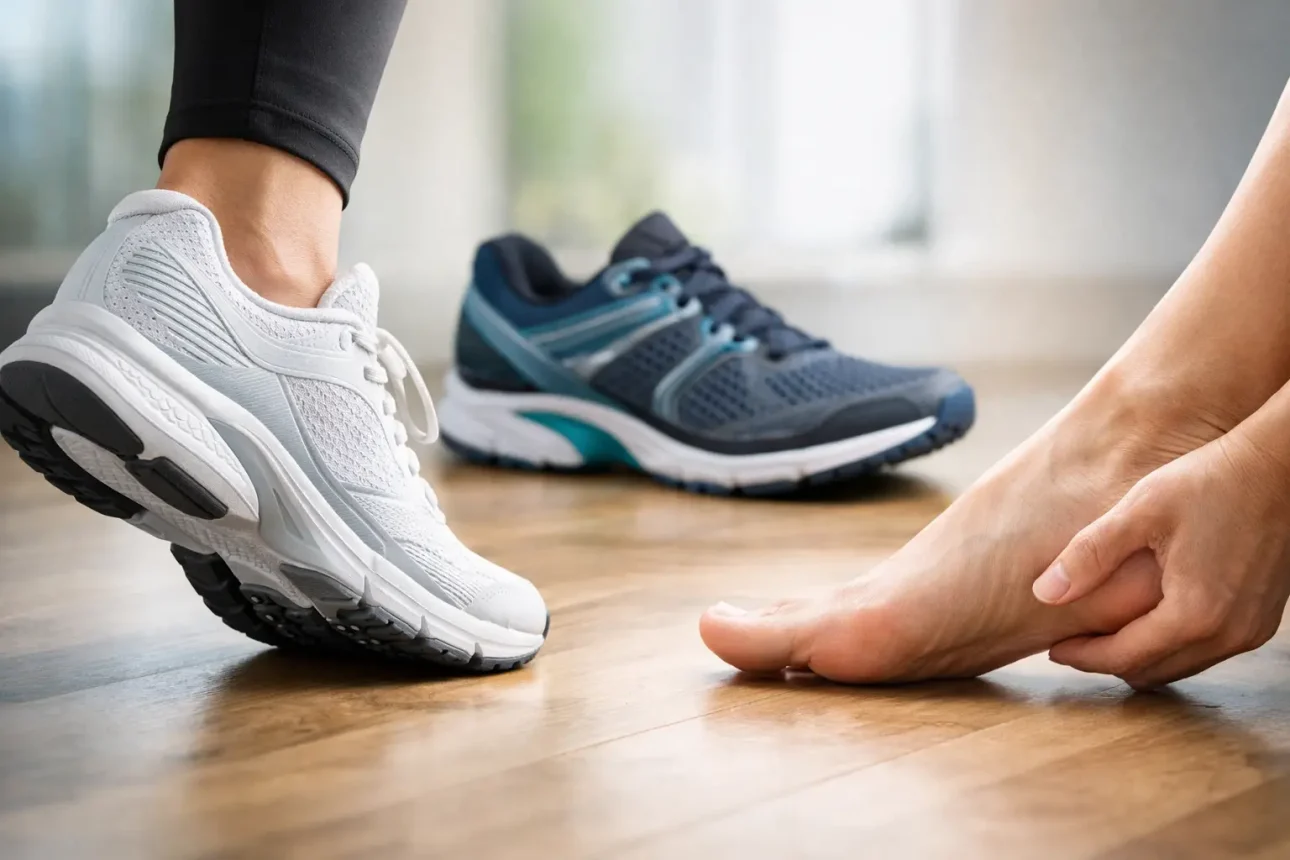
High arches can make shoe shopping weirdly annoying. A pair can look great, feel fine for ten minutes, then start pressing in all the wrong places by lunch. If you’re asking which shoes support high arches, the short answer is this: shoes with real cushioning, a stable base, and enough structure through the midfoot usually work best. Flat, flimsy shoes usually don’t.
That sounds simple, but the details matter. High arches are not the same as needing the hardest support possible. In fact, some people with high arches do better in shoes that feel softer and more forgiving, because high-arched feet often don’t absorb impact as well as flatter feet. So when we say support, we don’t just mean a stiff chunk under your arch. We mean a shoe that helps spread pressure, keeps your foot from feeling beat up, and doesn’t force your stride into something awkward.
We’d start with neutral running and walking shoes that have decent cushioning and a secure midfoot fit. That’s the sweet spot for most people. Brands like Brooks, Hoka, Asics, New Balance, and On usually have more options that feel good for high arches than super-flat lifestyle sneakers do.
The reason is pretty straightforward. High-arched feet tend to put more pressure on the heel and forefoot. If the midsole feels thin or dead, you notice it fast. A good shoe gives you impact protection without feeling sloppy. It should feel like your foot is sitting in the shoe, not balancing on top of it.
A lot of people assume motion-control shoes are automatically the answer. We don’t fully agree. Those shoes are built mainly for heavy inward rolling of the foot. Some high-arched feet do the opposite and stay fairly rigid. If that sounds like you, a neutral shoe with good cushioning may feel much better than something overly corrective.
The first thing we look at is cushioning. Not marshmallow softness for the sake of it. We mean cushioning that takes the edge off pavement, gym floors, and long days on your feet. Hoka does this really well if you like a plush ride. Brooks and New Balance often land in a nice middle ground where the shoe feels soft enough but still controlled.
Next is arch shape and midfoot hold. This is where some shoes win and some fail badly. A shoe can have a thick sole and still feel wrong if the midfoot is too flat or too loose. For high arches, that middle section should feel secure but not like it’s jabbing upward. If you can feel a hard pressure point under your arch right away, don’t talk yourself into it. That usually gets worse, not better.
Then there’s the base of the shoe. Wider platforms tend to feel more stable. That’s useful because high-arched feet can be less naturally shock-absorbing, and a wobbly shoe just adds to the problem. We like shoes that feel planted when you walk, especially for everyday wear.
Finally, pay attention to upper fit. A lot of high-arched feet also have more volume through the top of the foot. If the tongue and laces are digging in, the shoe may technically fit your length but still be wrong. This is a common issue people miss.
Brooks is one of the safer bets. Their running and walking models often feel balanced rather than extreme. Not too soft, not too stiff, and usually kind to the midfoot. If you want something dependable for daily wear, Brooks is hard to argue with.
Hoka is great if impact protection is your top priority. If you spend hours walking, standing, or doing high-mileage running, that extra cushioning can feel like a relief. The trade-off is that not everyone loves the tall stack. Some people feel a little disconnected from the ground.
Asics has a strong case too, especially if you like shoes that feel structured without being harsh. A lot of Asics pairs hold the foot nicely through the middle, which can be a big win for high arches.
New Balance tends to do well because the fit range is often better. If your high arches come with a wider forefoot or a high instep, that matters. Some shoes feel good underfoot but are too cramped on top. New Balance is often better at avoiding that problem.
On is more divisive. Some people love the firmer, snappier feel. Others find it a little too stiff. We like On for people who want a cleaner look and a more responsive ride, but not if you’re chasing pure softness.
Nike and Adidas can work, but they are less automatic for this category. Some models are excellent. Some are style-first and support-second. That’s fine if you want a casual sneaker for short wear. It’s not fine if you’re on your feet all day and expecting the shoe to do real work.
For walking and all-day wear, we’d lean toward cushioned daily trainers or walking shoes over fashion sneakers. This is where Hoka, Brooks, Asics, and New Balance really make sense. The goal is easy comfort from morning to evening, not a cool shape on a shelf.
For running, it depends on how you move. If you have high arches and like a softer landing, go for a neutral cushioned trainer. If you want more snap and speed, a firmer model can still work, but only if it doesn’t feel harsh under the forefoot. We think a lot of runners overestimate how much firmness they can tolerate.
For the gym, be a little careful. Super-soft running shoes are not always ideal for lifting or side-to-side work. If you’re mostly doing treadmill sessions, fine. If you’re squatting, lunging, or doing classes with lateral movement, a more stable training shoe makes more sense. Arch comfort matters, but so does not rolling around on a giant foam platform.
For casual wear, this is where people get tricked. Plenty of lifestyle sneakers look better than they feel. If the sole is flat and the insole feels paper-thin, high arches usually won’t love it for long wear. You might still wear them for style. We get it. Just don’t pretend they’ll feel like a good walking shoe.
We’d skip shoes that are very flat, very stiff, or weirdly narrow through the midfoot. Minimal cushioning can feel clean and low-profile in hand, but on foot it often means more pressure where you least want it.
Be cautious with shoes that have aggressive built-in arch bumps too. People hear support and assume more is better. Not always. If the arch shape doesn’t match your foot, that support just becomes irritation.
Another red flag is heel slip combined with midfoot pressure. That usually means the shape is wrong for your foot, not that you need to lace it tighter and hope for the best.
When you first try a pair on, don’t just stand there. Walk long enough to feel what the arch is doing. The right shoe should feel stable, cushioned, and calm. It should not feel like it’s poking, forcing, or collapsing.
We’d also pay attention to how your forefoot feels. High arches often shift pressure forward, so if the front of the shoe already feels thin or slappy indoors, it’ll be worse outside.
And yes, insoles can help. But we don’t think they should be your first fix for a bad shoe. Start with a shoe that works on its own. Then add an insole if you need a little more shape or volume adjustment.
If you’re stuck on which shoes support high arches, stop chasing labels and start chasing feel. “Arch support” stamped on a product page doesn’t mean much by itself. What matters is whether the shoe cushions impact, holds your midfoot without digging in, and still feels good after a few hours.
If we had to steer most people in one direction, we’d say start with cushioned neutral shoes from Brooks, Hoka, Asics, or New Balance. That’s the safest place to begin. Then narrow it down based on what you actually do all day. Running, walking, gym work, commuting – they each change the answer a bit.
Your feet usually tell the truth fast. If a pair feels off in the first few minutes, trust that. There are too many good shoes out there to settle for one that only looks right.