Cart
No products in the cart.
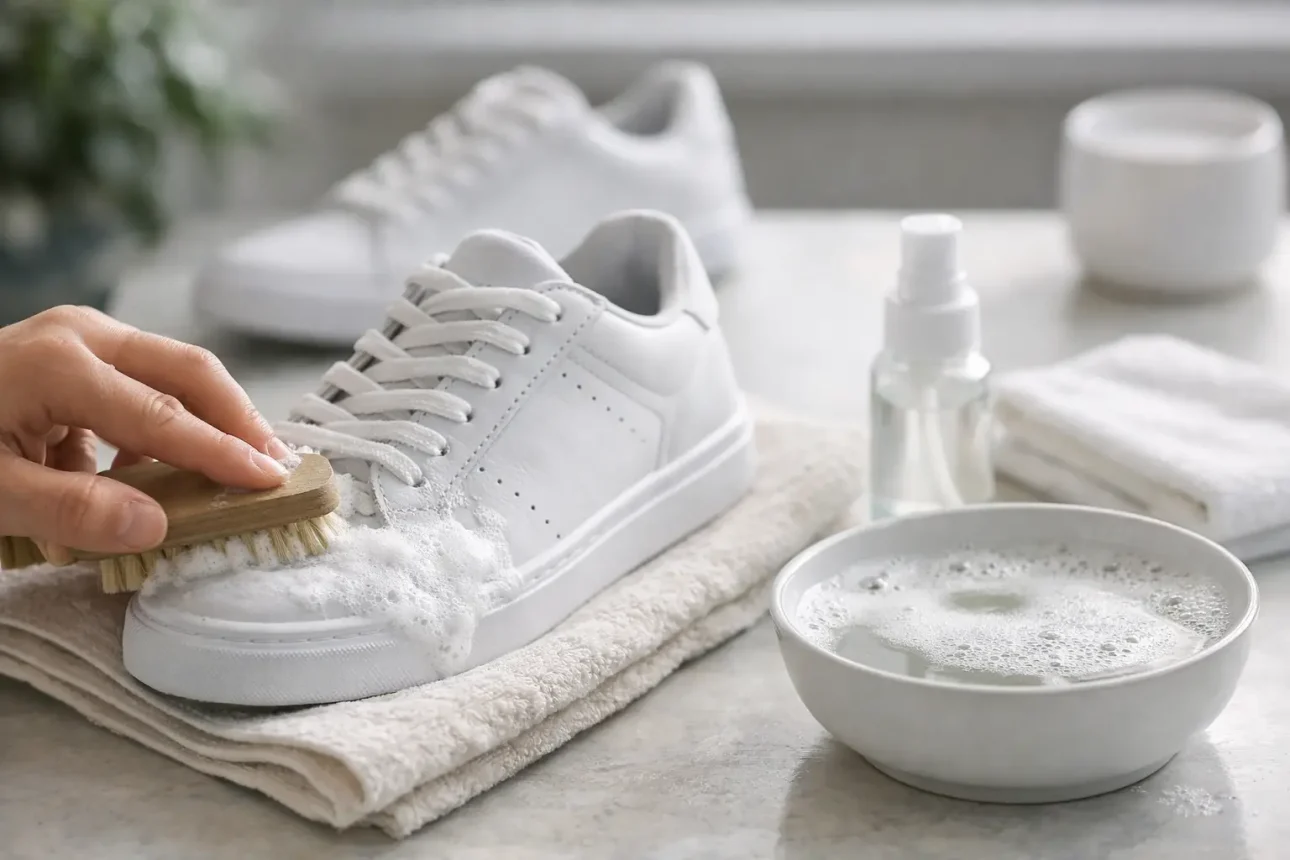
White sneakers look amazing for about five minutes. Then someone steps on your toe box, you catch a mystery sidewalk stain, or the midsoles start going yellow and sad. That’s why knowing how to clean white sneakers matters. Not because we’re obsessed with spotless shoes, but because a good pair looks better, lasts longer, and doesn’t make the rest of your outfit work overtime.
The first thing we’ll say is this: stop throwing every pair into the washing machine and hoping for the best. Sometimes you get away with it. Sometimes you turn a solid pair of Adidas, Nike, or New Balance into a warped, stiff mess. White sneakers need a little more sense than that.
The safest approach is boring, but it works. Start dry. Brush off loose dirt before you add water. If you wet dusty sneakers right away, you’re basically making mud and rubbing it deeper into the fabric.
Take out the laces first. If the insoles come out easily, remove those too. Use a soft brush or even an old toothbrush to knock off surface dirt from the upper, tongue, and sole. Pay attention to seams and the edge where the upper meets the midsole. That line collects grime fast.
Next, mix a small amount of mild detergent or dish soap with warm water. Not a lot. You want lightly soapy water, not a bubble bath. Dip a soft cloth or brush into the mix and clean in small circles. Gentle pressure is enough. Scrubbing like you’re sanding a deck usually does more harm than good.
Wipe as you go with a clean damp cloth. That part matters. If you leave soap sitting on white material, it can dry weird and attract more dirt later.
Once the upper is clean, move to the midsole and outsole. This is where you can be a little firmer. Rubber can handle more pressure than mesh or knit. A melamine sponge can work well on midsoles, but use a light hand. It’s mildly abrasive. Great for marks. Not great if you go at it like you’re angry.
Let the sneakers air dry. Stuff them with paper towels or a clean cloth to help them hold shape and pull out moisture. Don’t put them next to a heater. Don’t blast them with a hair dryer. Heat can warp glue, shrink some materials, and make white shoes age badly.
This is where people mess up. “White sneakers” sounds like one category, but leather, mesh, canvas, and suede do not want the same treatment.
Leather is the easiest to live with. That’s one reason we still rate white leather sneakers so highly for everyday wear. They wipe down fast and usually bounce back better than softer materials.
Use a soft cloth, mild soap, and warm water. Clean gently, then wipe dry. If there are stubborn scuffs, a melamine sponge can help on the rubber sole and sometimes on coated leather, but test a small spot first. Finish by drying with a clean towel.
What we don’t recommend is soaking leather or using harsh cleaners. Bleach is the big mistake here. People see white shoes and think bleach equals bright. It can actually yellow the material, weaken it, and mess with stitching.
Mesh looks clean and sporty when it’s fresh. It also grabs dirt like it’s trying to prove a point. Running shoes from brands like Asics, Brooks, Hoka, and On often use breathable mesh, so you need to be more careful.
Use a very soft brush and minimal water. Too much soaking can push dirt deeper and make drying take forever. Dab, don’t drench. For knit uppers, a microfiber cloth is often better than a stiff brush.
If the stain doesn’t come out on the first pass, do a second light clean after the shoe dries. That’s better than attacking it with too much force while it’s wet.
Canvas can handle a bit more scrubbing than delicate mesh, but it also stains easily and shows everything. A mild soap solution works well here. Use a soft brush, clean section by section, then blot with a damp cloth.
We’re not fully anti-washing-machine for canvas, but we still think hand cleaning is smarter. Machine washing can loosen glue and leave the shoes looking slightly twisted, especially if they were already worn hard.
If your white sneakers are suede, slow down. Water and suede are not close friends. Use a suede brush or dry cloth first. For marks, a suede eraser is your best bet. If you absolutely need moisture, use very little and clean only the affected area.
Honestly, white suede looks great but asks a lot from you. We like it, but we don’t pretend it’s low maintenance. If you want easy care, buy leather next time.
Laces make a bigger difference than people think. You can clean the upper perfectly, but if the laces still look gray, the whole shoe looks tired.
Remove them and soak them in warm water with a little detergent for 15 to 30 minutes. Rub any stained spots between your fingers or with a soft brush, then rinse and air dry. If the laces are still dingy after that, replace them. No shame in it. Fresh white laces can make old sneakers look way better for very little effort.
Soles are usually the easiest win. Most dirt on the outsole and midsole can be cleaned with warm water, soap, and a brush. For black scuffs on white rubber, a melamine sponge works well if you go gently. We keep saying gently because these things really can strip finishes if you overdo it.
Not every stain needs a special product. Most of the time, simple cleaning done quickly works best. Still, some marks need a little extra help.
Grass stains can respond well to a mild soap mix and patience. Mud should always dry first before brushing off. Don’t smear wet dirt around. Oil stains are tougher. A little cornstarch or baking soda can help pull some oil out if you catch it early, before a gentle clean.
For salt marks in winter, wipe the area with a mix of water and a small splash of white vinegar, then wipe again with plain water. The key is not leaving residue behind.
What we don’t love are random internet hacks involving toothpaste, bleach, hairspray, or mystery powders from the back of a cabinet. Some work once. Some damage the shoe. Most are less reliable than basic soap, water, and patience.
A few shortcuts keep showing up because they sound easy. We’d skip them.
Don’t use straight bleach. It can yellow white shoes and weaken fabric.
Don’t soak sneakers for hours. That’s rough on glue and shape.
Don’t scrub delicate uppers with a hard-bristle brush. If the material starts fuzzing or roughing up, you’ve already gone too far.
Don’t dry them in direct high heat. Fast drying sounds smart until the shoe stiffens, shrinks, or starts separating.
And don’t wait forever to clean them. Old stains settle in. Fresh dirt is easier to deal with.
The best cleaning trick is doing less heavy cleaning. A quick wipe after wear beats a full rescue job later.
If your sneakers got dusty or picked up light dirt, wipe them down the same day. Store them somewhere dry. Don’t toss them in a pile by the door under gym bags and jackets. That’s how white turns gray fast.
A protective spray can help on some materials, especially canvas and suede, but read the label and test first. We think these sprays are useful, not magic. They buy you time. They do not make white sneakers invincible.
It also helps to be honest about which pair you’re wearing where. White leather sneakers for everyday city wear? Smart. White knit runners for a rainy festival or dusty trip? That’s asking for trouble.
This part matters more than people admit. White sneakers do not need to look factory-fresh to look good. There’s a difference between worn-in and beat-up.
We like a pair that looks cared for, not overly precious. Clean uppers, decent laces, soles without layers of grime – that usually gets you 90 percent of the way there. Chasing perfect white on an older pair can turn into over-cleaning, and over-cleaning ages shoes faster than normal wear does.
So yes, learn how to clean white sneakers properly. But also know when to stop. A few tiny marks are part of wearing your shoes like a real person, not keeping them in a box for decoration.
If you treat the material right, clean them early, and skip the chaos methods, your white sneakers will stay in rotation a lot longer – and they’ll still look like a pair you actually want to wear tomorrow.