Cart
No products in the cart.
A sneaker can look perfect in the mirror and feel terrible by the time you grab a coffee at 3pm. That is the problem with a lot of fashion sneakers for everyday wear. They nail the photo, then punish your feet on the walk to work, through the airport, or halfway around town. We think you should not have to choose between a shoe with some personality and one you actually want to keep on.
The best everyday pair earns its place because it handles boring real life well. It works with jeans, loose pants, shorts, and the occasional outfit you put effort into. It has enough cushioning for long days, enough support to avoid that flat, tired feeling, and a shape that does not make every outfit look like gym gear.
Forget the product-page buzzwords for a minute. What actually matters is how your feet feel at 5pm. An everyday sneaker has to survive hard sidewalks, standing in line, quick errands, commutes, and whatever plans show up after work.
We look for three things first: a comfortable underfoot feel, a stable base, and an upper that does not fight your foot. Cushioning is the soft material under your foot. More is not always better. A very soft shoe can feel nice for ten minutes but wobbly when you are moving quickly. A firmer shoe can feel more planted and last longer, but it may not be your friend if you spend all day on concrete.
The sweet spot is a shoe that feels protective without feeling like you are balancing on foam. That is why plenty of running-inspired sneakers have become everyday favorites. Brands such as New Balance, Asics, On, Hoka, Nike, Adidas, Puma, and Brooks all make pairs that bring real comfort to a casual outfit. The trick is choosing the right model for your routine, not buying a shoe because it is popular online.
A sneaker can be comfortable and still be the wrong shoe for how you dress. This is where people waste money. They buy a chunky runner, then realize they mostly wear slim jeans and want a cleaner look. Or they buy a low-profile court shoe, then wonder why it feels flat on a day with 12,000 steps.
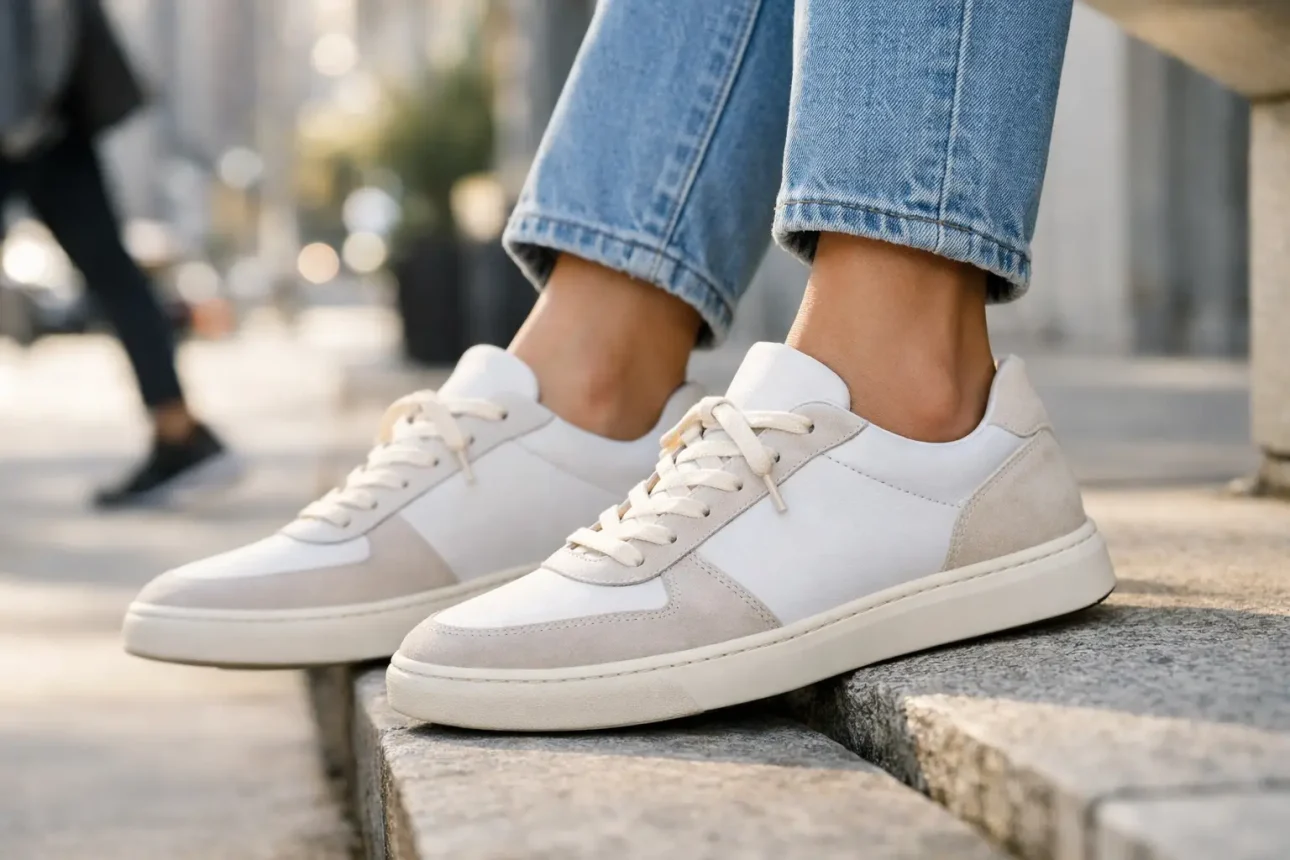
Low-profile court styles work when you want the sneaker to stay out of the way. Think straight-leg denim, chinos, shorts, casual button-downs, or a plain tee. They are easy, familiar, and usually lighter-looking than a running shoe.
Our honest take: they are great for shorter, lower-impact days. If you commute by car, work in a relaxed office, or want one clean pair for dinners and weekends, this shape makes sense. If you walk a lot or stand for hours, skip the completely flat versions. A nice-looking sole is not much comfort when it feels like cardboard by lunchtime.
Retro running silhouettes are usually the safest middle ground. They have more cushioning and structure than a court sneaker, but they do not look like you are headed to track practice. They pair easily with denim, cargos, sweats, relaxed trousers, and athletic basics.
This is the category we recommend most often for people who want one pair to do nearly everything. New Balance and Asics are especially strong here because many of their lifestyle runners have a stable, easygoing feel. Nike and Adidas have plenty of classics too, though fit can vary more from model to model. Do not assume your size is identical across brands.
If your day involves serious walking, travel, or being on your feet, a modern running-inspired sneaker is hard to beat. Hoka, On, Brooks, and several Asics models bring thicker midsoles and lighter uppers. In plain English, they take more of the edge off hard pavement.
There is a trade-off. These shoes can look more technical, especially with oversized soles or bold color blocking. We like them with relaxed pants, athletic wear, wide-leg denim, or a simple monochrome outfit. They may clash with tailored clothing or a more minimal wardrobe. Comfort matters, but pretending every shoe goes with every outfit is how you end up wearing something that feels off.
A famous logo does not make a shoe fit your foot. We wish it did. Some sneakers run narrow through the toe box, which is the front area around your toes. Others have a snug heel, a high arch, or a padded collar that feels secure to one person and annoying to another.
Start with your usual size, then think about how you wear sneakers. If you prefer thicker socks, have wider feet, or hate your toes touching the front, you may need more room. If your heel lifts when you walk, a bigger size is not the answer. Try a different shape instead.
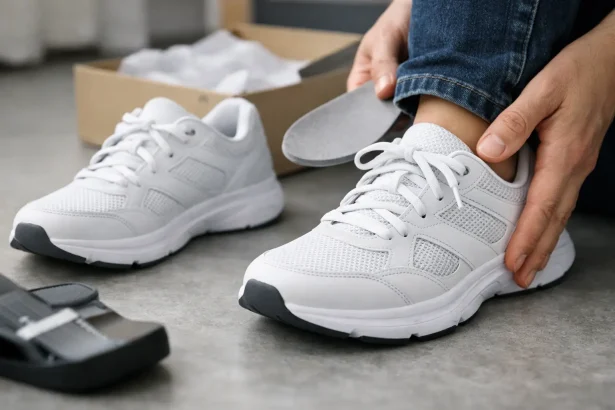
When a shoe arrives, do not judge it sitting down. Walk indoors on a clean floor for a few minutes. Your heel should stay reasonably locked in, your toes should have a little space, and the side of the shoe should not squeeze your forefoot. A brief break-in period is normal with leather or suede. Numbness, pinching, or heel rubbing is not. Do not talk yourself into keeping a pair that already feels wrong.
Leather, suede, mesh, knit, and synthetic uppers all have different strengths. Leather gives a clean, structured look and can soften with wear, but it may feel warm in summer. Suede has more texture and makes basic outfits look better, but rain and spilled drinks are not its friends.
Mesh is breathable and usually lighter, which makes it a smart choice for walking and warmer weather. The downside is that it can look sportier and shows dirt faster. Knit uppers can feel flexible and sock-like, but some lack the side-to-side structure that helps when you are on your feet all day.
For one everyday pair, we usually lean toward mixed materials: mesh for breathability, suede or synthetic overlays for shape, and a solid rubber outsole. It is not the flashiest answer. It is the one that keeps working after the new-shoe excitement fades.
White sneakers are easy because they work with almost everything. They also get dirty fast. That is not a reason to avoid them, just a reason to be realistic. If you know you will not clean them, choose off-white, gray, navy, black, olive, or a mix of neutral tones. They hide daily wear better and still go with most of your closet.
A loud colorway can be fun, but it should be a second pair, not the pair you expect to wear five days a week. We have seen too many people buy bright sneakers because they looked good online, then leave them in the box because they only match one outfit. Start with a color you will reach for without thinking.
Ask yourself where you really walk. Are you moving between classes? Standing at work? Traveling often? Taking the dog out twice a day? Or are you mostly driving and want something better than basic casual shoes?
For a lower-mileage routine, a clean court sneaker or retro low-top is enough. For regular city walking, choose a retro runner with a supportive midsole and a grippy outsole. For long shifts, travel, or days when you rack up steps without trying, choose a lighter performance-inspired option with more cushioning. You do not need to dress like a runner to benefit from a shoe built for movement.
At SneakerPrime, we would rather help you find the pair you wear constantly than sell you the pair that looks coolest for one weekend. The right everyday sneaker is not always the loudest one. It is the shoe you pull on when you have no time to think, then forget about because your feet are fine.
One versatile sneaker is a good place to start. But if you walk a lot and care about style, two pairs make life easier: one clean casual option and one cushioned walking-focused option. Rotate them, let them air out, and you will usually get more life from both.
If you only buy one, choose the shoe that suits the hardest part of your normal week. A sneaker that handles your longest day will handle your easy days too. The reverse is rarely true.