Cart
No products in the cart.

Your walking shoes can look perfect in the mirror and still feel awful by 5 p.m. That is the trap. If you are figuring out how to choose walking sneakers, start with what happens after an hour on your feet, not what looks best in a product photo.
A good walking sneaker should make a long grocery run, commute, or city day feel less like work. It does not need to be the softest shoe on the shelf. In fact, some of the softest shoes feel great for 10 minutes and sloppy by lunchtime. We would take stable, well-fitting comfort over a squishy sole every time.
First, be honest about where and how far you walk. A person doing 3,000 steps between work and errands needs something different from someone walking four miles every morning. The shoe does not need to do everything. Trying to buy one pair for walking, lifting, trail hikes, office wear, and a night out usually ends with a pair that is only okay at all of it.
For mostly pavement, sidewalks, and indoor floors, look for a sneaker with enough cushioning to take the edge off hard ground, plus a sole that bends where your foot bends. For park paths or uneven streets, grip and a secure upper matter more. If you stand for long shifts, prioritize a stable base and a fit that does not squeeze your toes as your feet swell through the day.
Style matters too. We sell sneakers, not orthopedic furniture. But do not let a slim, flat lifestyle silhouette talk you into a bad purchase if your days involve serious walking. Some classic sneakers are icons. They are not automatically good walking shoes. A thin, rigid sole can be fine for coffee runs. It is not our first pick for eight hours on concrete.
The right size is not just the number printed on the box. Your heel should sit securely without lifting on each step, while the front of the shoe needs a little breathing room. Aim for about a thumb’s width between your longest toe and the end of the sneaker. Your longest toe is not always your big toe.
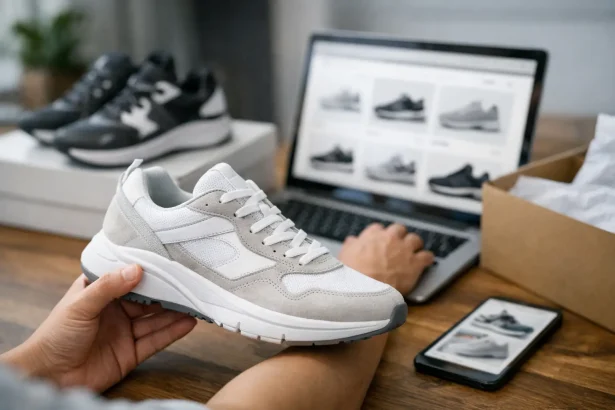
Try sneakers later in the day if you can. Feet tend to spread and swell after walking around, especially in warm weather. A pair that feels neatly snug at 9 a.m. can feel like a clamp by evening. We would rather see you buy a shoe that feels comfortably secure from the start than one you hope will stretch into shape.
Width is where many people get it wrong. If the sides of your foot bulge over the midsole, or the upper pulls tight across the forefoot, sizing up half a size may not solve it. You may need a wider model. New Balance and Brooks are often worth a look for people who need more room up front. On the other hand, some Nike and Adidas models can feel more streamlined. That clean shape looks good, but it is not for every foot.
Pay attention to the heel collar too. That is the padded rim around your ankle. If it rubs or lets your heel slide during a quick try-on, it will not magically become charming on a two-mile walk.
Cushioning is the foam under your foot. More foam can soften the impact of sidewalks, but bigger is not always better. Very soft shoes can make your foot work harder to stay balanced, especially if you turn corners quickly, carry a bag, or walk on uneven surfaces.
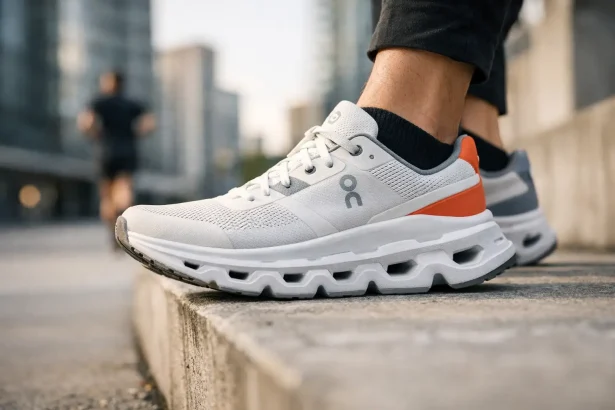
For daily walking, we like cushioning that feels protective but not wobbly. Think supportive mattress, not beanbag. Hoka is popular for a reason: many of its models offer a generous, easygoing ride for pavement-heavy days. But their taller soles are not everyone’s thing. If you feel perched up high or unstable in them, skip them. There is no prize for wearing the most foam.
ASICS, Brooks, and New Balance often hit a useful middle ground with models that feel cushioned without becoming overly soft. On tends to have a firmer, springier feel in many styles. Some walkers love that responsive snap. Others just find it hard. Neither reaction is wrong. Your body gets the final vote.
A walking sneaker should not twist easily through the middle. Grab the shoe at the heel and forefoot, then gently try to twist it. A little movement is normal. If it folds like a towel, we would pass for regular walking.
Also look at the base of the sole. A wider platform generally feels more planted than a narrow one, especially around the heel. This matters if you are on your feet all day or tend to feel tired through your ankles and arches. Stability is not flashy, but it is the part you appreciate when you are crossing a wet street with a coffee in one hand.
Do not confuse stability with stiffness. You still want the front of the shoe to bend near the ball of your foot. If the whole sneaker is rigid, it can make your stride feel clunky. The best walking shoes guide your foot forward without fighting it.
The upper is everything wrapped around your foot. Breathable mesh is usually our pick for warm weather and high-step days because it lets heat escape. Knit uppers can feel soft and sock-like, but some stretch too much over time. Leather or synthetic leather holds its shape better and can look sharper with everyday outfits, though it often runs warmer.
Then flip the shoe over. The outsole is the rubber that meets the ground. You do not need an aggressive trail tread for sidewalks, but you do need actual rubber in key contact areas and grooves that help the shoe flex. A smooth, mostly foam bottom may feel light in hand, yet wear down faster if you walk daily on pavement.
If rain is part of your commute, take traction seriously. A fashionable sneaker with a flat sole can become sketchy on wet tile and painted crosswalks. It is a small detail until it is not.
You will see terms like neutral, stability, arch support, and motion control. Here is the plain-English version: neutral shoes suit many walkers who want a balanced feel. Stability shoes add structure to help keep the foot from rolling inward too much. Motion-control models are firmer and more structured still.
Do not buy the most supportive option just because support sounds good. Too much structure can feel restrictive if you do not need it. If you have recurring foot, ankle, knee, or back pain, or you use orthotics, a medical professional or qualified footwear specialist can give more personal guidance than a shoe description ever will.
For everyone else, focus on comfort. Walk around indoors with both shoes on. Notice whether pressure builds under your arch, whether your heel shifts, and whether one foot feels cramped. Small annoyances in the store become loud complaints on a long walk.
Buy for the routine you actually have. If your main goal is daily errands, travel, and getting more steps in, a comfortable everyday walking model makes sense. If you run occasionally, a running shoe can work well for walking too, especially if you like more cushion. Just know that running shoes often look more athletic and may wear differently under a walking stride.
If you want one pair that handles walking and casual outfits, choose a clean, comfortable performance-inspired sneaker in a color you will actually wear. Black, white, gray, and muted neutrals earn their place because they go with almost anything. Bright colors are fun, but only if you will reach for them after the first week.
At SneakerPrime, we think the right walking sneaker is the one you forget about while wearing it. Not because it is boring, but because your feet are busy doing their job without demanding your attention. Pick the pair that feels good on a normal Tuesday. That is the pair you will keep wearing.