Cart
No products in the cart.
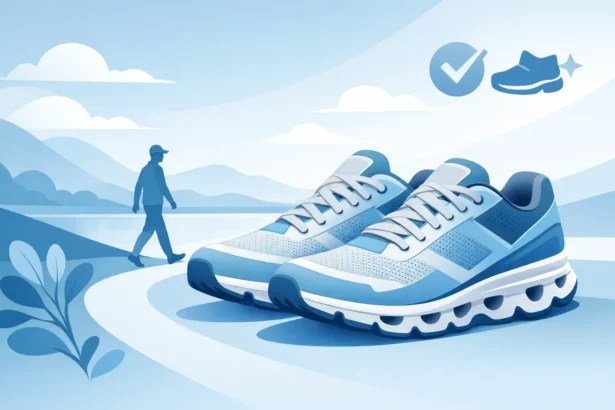
Your walking shoes have a hard job. They need to handle the commute, the grocery run, a full shift on your feet, and the random extra mile you did not plan for. They also need to look normal with jeans. That last part matters more than some brands want to admit.
We think the best pairs sit in the middle: enough cushioning that your feet are not begging for mercy at 5 PM, enough support that the shoe feels stable, and a shape you would actually choose to wear outside the gym. A lot of shoes nail one of those things. Fewer nail all three.
Walking is not running at a slower pace. Your heel usually hits first, your foot spends longer on the ground, and your shoe needs to feel steady from heel strike through toe-off. If it feels squishy but wobbly, it is not doing you a favor. If it feels firm as a sidewalk, your knees and feet will know by the end of the day.
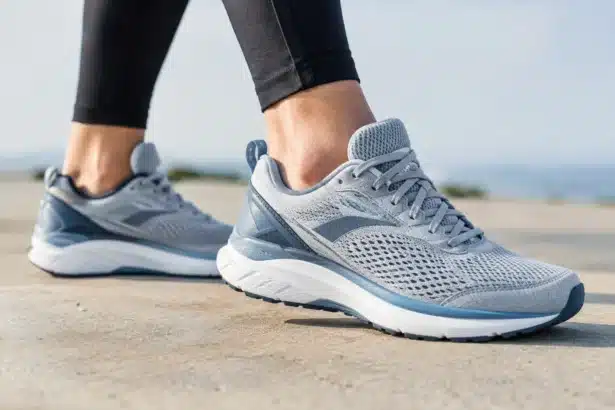
For us, a good walking shoe has a cushioned midsole, meaning the foam layer under your foot absorbs some impact. It also has a stable base, decent grip, and a heel that does not slide around when you pick up the pace. You do not need a brick on your foot. You do need a shoe that stays predictable.
The upper matters too. Soft mesh keeps things cooler and works well for errands, city walks, and warm weather. A more structured upper can feel more secure, especially if you tend to roll your foot inward or walk on uneven pavement. Neither is automatically better. It depends on whether you want airy and easy or locked-in and supported.
Extra cushioning sounds like an obvious win. Sometimes it is. A thick foam shoe can make a long day feel less punishing, particularly on concrete floors or sidewalks. Hoka, Brooks, New Balance, Asics, and On all make models that lean into that soft, protected feeling.
But more foam is not always more comfortable. Some tall shoes feel unstable when you turn a corner, step off a curb, or carry a bag of groceries. Others are so soft that your feet work harder to find balance. If you are mostly walking straight on smooth paths, a high-cushion shoe can be excellent. If you move around a busy workplace or walk on rough streets, a lower, wider platform may feel better.
We would take stable cushioning over marshmallow cushioning every time. Your foot should feel supported, not like it is balancing on a mattress.
Forget the number on the box for a second. Fit beats size every time, and different brands can feel wildly different. Nike often feels narrower through the midfoot. New Balance is usually a strong place to look if you want more room. Hoka can feel snug around the heel but spacious underfoot, while some Adidas and Puma lifestyle pairs have a more fashion-first fit than a walk-all-day fit.
Try walking shoes later in the day if you can. Feet naturally swell after hours of standing and moving, which is exactly when a too-snug pair starts to feel awful. You want roughly a thumb’s width of room in front of your longest toe. Not an empty hallway, just enough space that your toes are not hitting the front on downhill streets or stairs.
Your heel should stay put without having to crank the laces so tight that the top of your foot aches. A little movement can be normal. Repeated rubbing is not. Do not buy a shoe hoping it will stretch into the right fit. Mesh may relax a little, but a bad fit is still a bad fit.
If you have wider feet, skip the temptation to size up just for extra width. A longer shoe can bend in the wrong place and leave you clumsy. Look for wide-width options when available, or choose models known for a roomier toe box.
If you have flat feet or use orthotics, a removable insole is useful. It lets you make space for your own insert without turning the shoe into a cramped mess. We also like a shoe with a stable heel and a base that does not twist easily. That does not replace professional medical advice, but it is a more sensible starting point than buying the softest shoe in the store.
There is no single best walking shoe because not everyone walks the same day. A person doing 12,000 steps around a city needs something different from someone standing behind a counter or taking a relaxed evening walk.
For long city days, we like cushioned running-inspired shoes. Models such as the Brooks Ghost Max, Asics Gel-Nimbus, New Balance Fresh Foam 1080, or Hoka Clifton style of shoe tend to give your feet more protection than a flat casual sneaker. They are not always the coolest-looking option, but your feet do not care about cool when the pavement has been beating them up for six hours.
For all-day work, prioritize a broad, stable base. The Hoka Bondi type of shoe is popular for a reason: it feels substantial underfoot. The trade-off is that it can look big. Some people love that chunky shape. Some do not. Fair enough. Brooks and New Balance often offer a less dramatic look while keeping the ride steady.
For a cleaner, more everyday sneaker look, On and Adidas can be strong options. An On Cloudtilt-style shoe has a modern, easy-to-wear look and works well for casual walking. Adidas Ultraboost-style models feel soft and flexible, especially for errands and travel. We would not choose every fashion sneaker from these brands for eight hours on hard floors, though. A good-looking flat sole can turn on you fast.
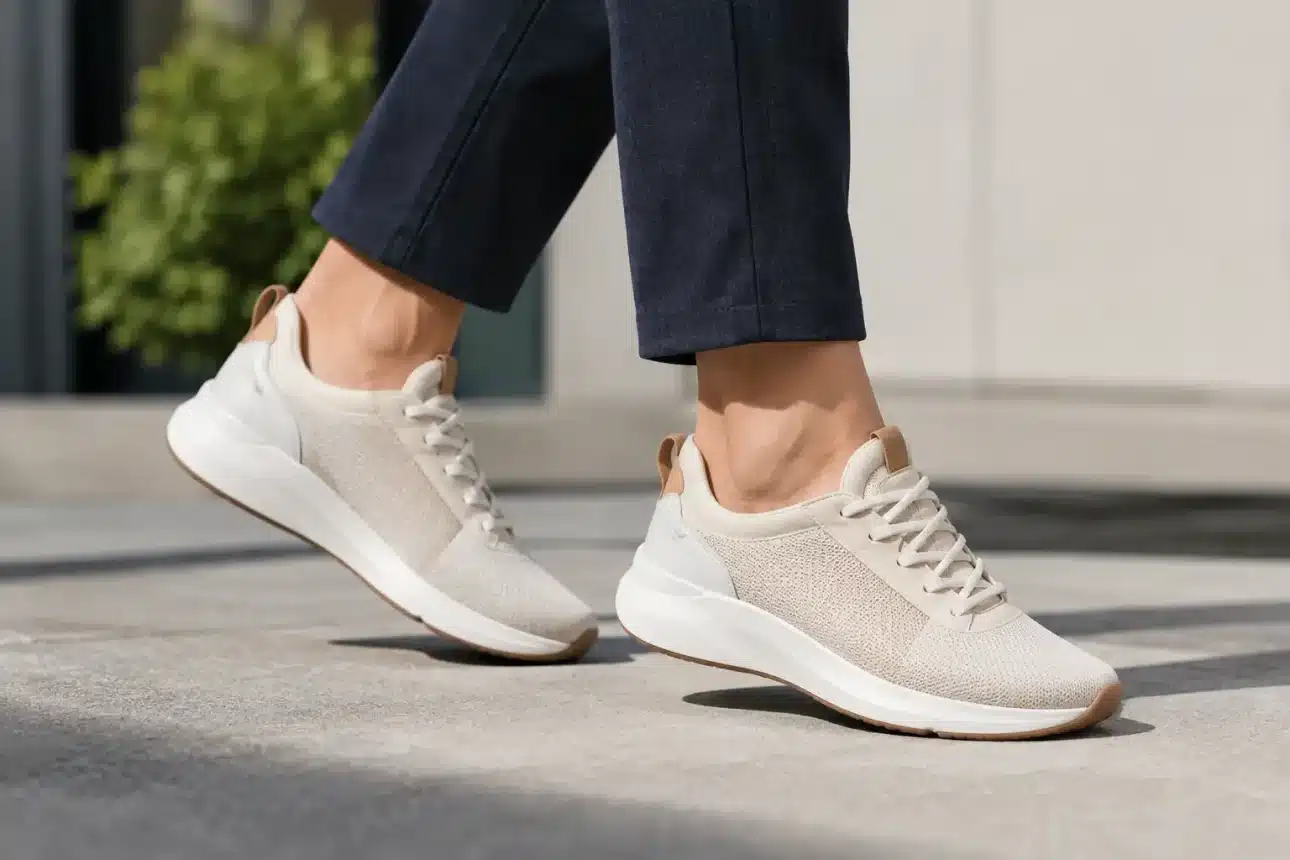
For travel, choose something light, easy to lace, and versatile enough to wear with more than one outfit. You will appreciate that at airport security and after the third day of walking around a new city. Black, gray, white, and muted neutral colors do a lot of work here. Bright colors are fun, but they are harder to wear every day.
The outsole is the rubber on the bottom. It is not the glamorous part, but it decides whether you feel planted or sketchy on wet tile. Look for visible rubber in high-wear zones, especially under the heel and forefoot. Deep, aggressive lugs are unnecessary for normal sidewalks and can feel awkward indoors. A flatter grip pattern is usually enough for daily walking.
Also look at the flex. Bend the shoe gently. It should flex around the forefoot, where your toes bend, rather than folding in half through the arch. A shoe that twists like a dish towel may feel light in your hand, but it often feels sloppy after a few miles.
Not every walk requires a performance shoe. If you are walking to class, grabbing coffee, or doing a few thousand steps on a normal day, a well-built lifestyle sneaker may be all you need. We are not here to pretend every outing needs a max-cushion running shoe.
The problem starts when people use flat, stiff, fashion-first sneakers for long shifts, travel days, or daily power walks. They look good in a mirror. Then the soles of your feet start sending complaints. If your day regularly includes serious time on concrete, choose the shoe for the job, not just the outfit.
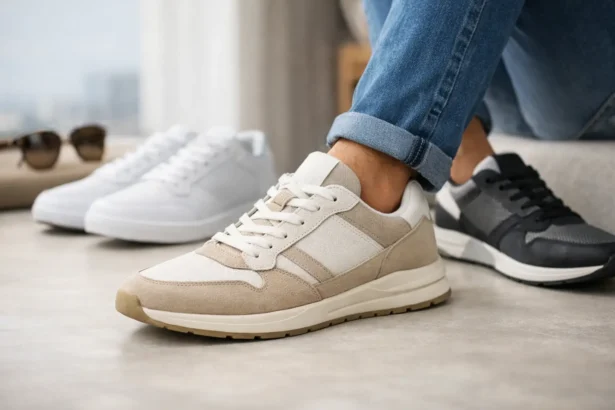
That does not mean style has to lose. The best walking shoes now come in clean colors and wearable shapes. You can find pairs that work with joggers, cargos, denim, and casual office fits without looking like you are headed to a race start.
Start with your hardest regular day, not your ideal one. Think about the day when you are on your feet for hours, carrying things, rushing between places, and still want to meet friends afterward. Buy for that day.
If you want one pair for most things, choose moderate-to-high cushioning with a stable platform and a neutral color. If your feet get tired quickly, lean cushioned. If you hate bulky shoes, look for a lighter daily trainer with a wide base rather than a tall foam stack. And if a shoe feels wrong in the first few minutes, trust that feeling. Your feet are usually right.
At SneakerPrime, we would rather help you find a pair you keep reaching for than sell you a trendy shoe that lives in its box. The right pair of walking shoes should disappear while you wear them. You should be thinking about your day, not your feet.