Cart
No products in the cart.
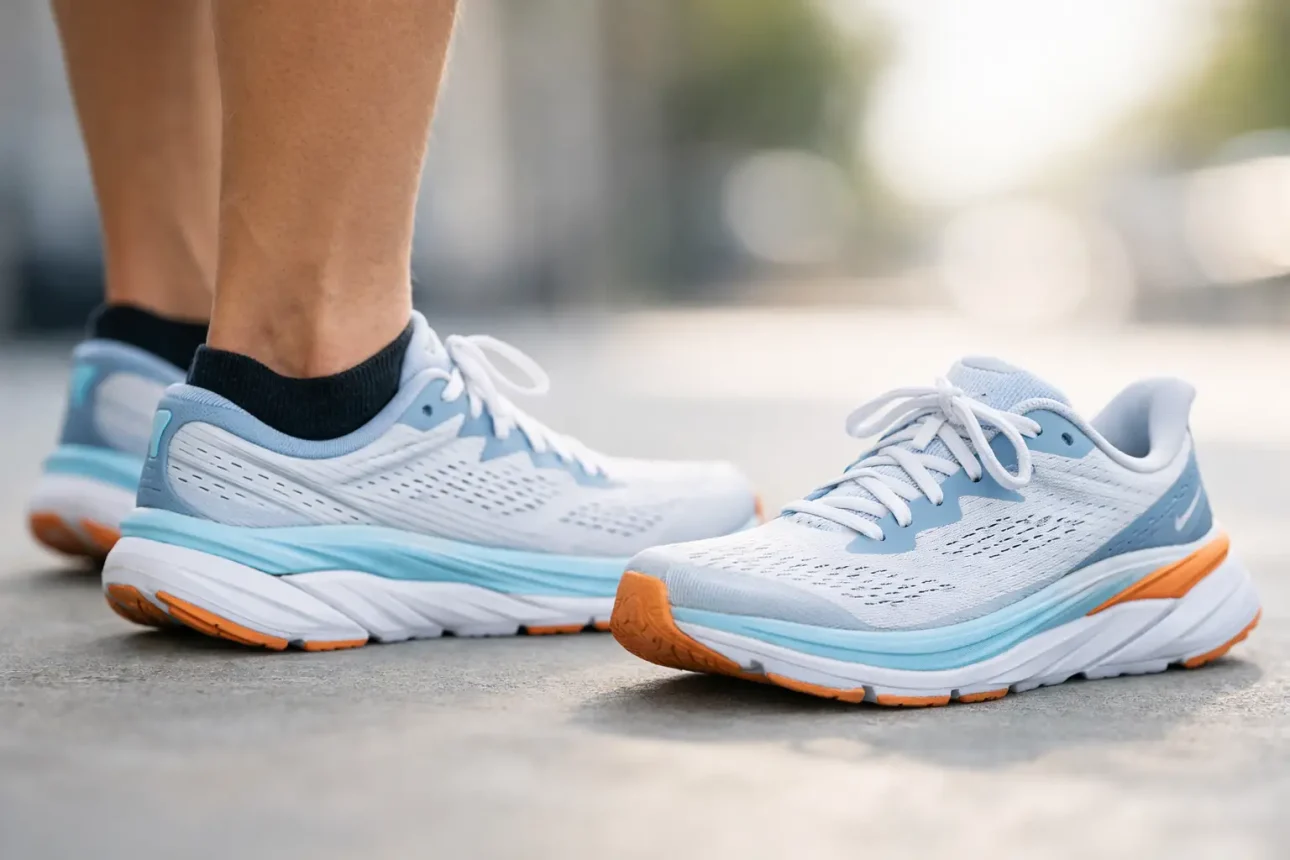
Ordering Hokas in the wrong size is a fast way to ruin a good shoe. You can love the cushioning, love the look, and still hate the fit by day two. So, do Hoka shoes run big? Our short answer: not really. Most Hoka shoes fit true to size, but a lot of pairs feel different because of their shape, stack height, and upper design.
That’s why people get mixed up. One runner says Hoka runs small. Another says they had to size down. Both can be right. Hoka has a wide range, and not every model fits the same way on foot.
Most Hoka shoes do not run big in the usual sense. We’d call the brand mostly true to size, with a catch. Some models feel roomy in the toe box, while others feel snug through the midfoot or upper. That can trick people into thinking the whole shoe runs large or small when really it’s just shaped differently.
If you already wear Nike, Adidas, or New Balance, your Hoka size will often be the same. But the ride can feel bigger underfoot because Hokas usually have more foam and more shoe around your foot. That does not always mean your foot has more space inside.
We’d rather say this plainly: Hoka sizing is less about length and more about volume and shape. If your feet are narrow, some Hokas may feel a little too open up front. If your feet are wide, some standard-width pairs may feel tight even when the length is right.
Hoka makes shoes that look chunky, and people naturally expect a roomy fit. Sometimes that happens. Sometimes it doesn’t.
A big reason is the midsole. Hoka shoes often sit on thick, soft foam. That makes the platform look oversized. But the upper – the part wrapping your foot – can still fit pretty normal, or even a bit snug.
The second reason is the rocker shape. A lot of Hokas are built to roll you forward as you walk or run. That changes how the shoe feels in motion. You may feel more forward movement, less ground feel, and a different kind of toe-off. Some people read that as extra room. It’s not. It’s the geometry doing its thing.
The third reason is that Hoka doesn’t fit the same across every category. A max-cushion walking shoe, a daily trainer, and a trail shoe can all wear differently even in the same size.
Some Hoka models feel more forgiving than others. Clifton is a good example. For a lot of people, the Clifton fits true to size in length but gives you a bit more breathing room in the forefoot. Not wide exactly. Just less cramped.
Bondi can also feel roomy underfoot because the base is broad and the cushioning is thick. We like Bondi for long workdays and easy miles, but it’s not a slim, race-day kind of fit. If you like a snug, locked-down feel, Bondi may seem bigger than it is.
Transport and some casual-wear-friendly Hoka pairs can also feel a little more relaxed depending on the upper. That’s useful if you’re wearing them all day. Less useful if you want a tight performance fit.
Arahi and Mach can feel more dialed-in through the midfoot. Speedgoat, especially for trail use, can also feel more secure and a bit less forgiving depending on your foot shape. That’s not a flaw. Trail shoes should hold better when the ground gets uneven.
We’ve also seen people struggle with Hokas that have structured uppers. If the material doesn’t give much, your usual size might suddenly feel shorter or lower in volume. Again, the length may be fine. The wrap is the issue.
If you’re between sizes, this is usually where the problem starts.
This matters more than people admit. Standard Hoka width can feel fine for average feet, but if you know you usually need extra room, don’t talk yourself into a standard pair just because the brand looks wide. That’s a visual trick.
Our take: if you regularly buy wide in running shoes, start by checking whether the Hoka model comes in wide. That’s often smarter than going up half a size. Sizing up can give you more length, but not always the kind of width your forefoot actually needs.
Narrow-footed shoppers sometimes do well in Hoka because many models lock down the heel nicely. But some pairs can still feel a little loose up front. If that’s you, don’t rush to size down unless the shoe is clearly too long. A better fix is often lacing, sock choice, or picking a more performance-shaped model.
Compared to Nike, Hoka often feels a touch more forgiving in the forefoot, depending on the model. Compared to Adidas, it’s mixed. Compared to New Balance, Hoka usually feels less boxy in standard width. Compared to Brooks or Asics, it’s pretty close, though the underfoot feel is very different.
What we tell people is simple: don’t treat Hoka like some weird sizing outlier. It usually isn’t. If your size is stable across running brands, start there with Hoka too.
Where things change is feel. Hokas often feel taller, softer, and more rolled forward than flatter trainers. That can make first try-ons a little strange even when the size is right.
A lot of people judge fit too quickly. They put the shoe on, walk five steps, and decide it’s wrong. With Hoka, you need to pay attention to a few specific things.
Your toes should not hit the front on descents or when you roll forward. Your heel should stay put without rubbing. The midfoot should feel secure, not squeezed. And the forefoot should give your toes room to spread a bit, especially in walking or distance shoes.
If the shoe feels sloppy in the heel but fine in length, don’t automatically size down. That can create toe problems later. If the toe area feels tight but the heel is perfect, a wide version may solve more than going up half a size.
You should consider going up half a size if your toes are brushing the front, the upper feels low across the top of your foot, or you plan to use the shoe for long runs where feet naturally swell.
This is especially common for runners moving into Hoka from casual sneakers. Running shoes need a little more breathing room than everyday street shoes.
If the shoe feels secure in the heel, your toes have a thumb’s width of room, and nothing pinches, stay with your normal size. Don’t overthink it just because the shoe looks large. Hokas often look bigger than they fit.
We see this all the time. People size down because the shoe seems huge in the box, then regret it after a full day on foot.
If you’re asking do Hoka shoes run big because you’re shopping online and don’t want to mess up the order, here’s our real answer. Start with your usual running shoe size, not your fashion sneaker size. That’s the best baseline.
If you’re between sizes, think about how you’ll wear them. For casual all-day use, some people prefer the neater fit of the smaller option. For running, walking, travel, or long hours standing, the half size up is often the safer bet.
And if width is your issue, stop trying to solve that with length. A longer shoe that’s still too narrow is just annoying in a different way.
We like Hoka because a lot of their models feel good for hours, not just the first ten minutes. But fit is where people get tripped up. The foam gets the attention. The shape is what decides whether you actually keep wearing them.
So no, Hoka does not generally run big. It runs normal more often than not. The better question is which Hoka fits your foot shape. Get that part right, and the rest gets much easier.