Cart
No products in the cart.
A running shoe can feel perfect for the first 30 seconds and awful by mile three. That is why learning how to buy running shoes is less about picking the coolest color and more about being honest about what you do in them. Your feet do not care what is trending when your toes are jammed against the front on a downhill.
We like a good-looking shoe as much as anyone. But a shoe that looks fast and leaves your arches angry is just expensive decoration. Start with the run you actually do, not the runner you think you should be.
Before looking at brands, answer a few basic questions. Are you running two relaxed miles a few times a week? Training for a half marathon? Mixing treadmill runs with gym sessions? Walking all day at work and squeezing in a jog after?
Those answers narrow the field fast. A light, firm shoe built for fast workouts can feel sharp and fun over short distances, but it may feel harsh if you are new to running or logging longer easy miles. On the other hand, a heavily cushioned shoe can make long runs feel less punishing, though some runners find that soft, tall feeling unstable on tight turns or fast intervals.
Our opinion: most runners do not need a different shoe for every type of workout on day one. Buy one dependable daily trainer first. It should handle easy runs, occasional faster efforts, and the odd walk to get coffee. Build a rotation later if you actually need one.
A daily trainer is the sensible pick for most people. It has enough cushioning to protect your legs from repeated pavement miles, enough grip for normal weather, and a stable enough platform that you are not fighting the shoe every step. It may not be the most exciting pair in the box. That is fine. The shoe you reach for three or four times a week earns its keep.
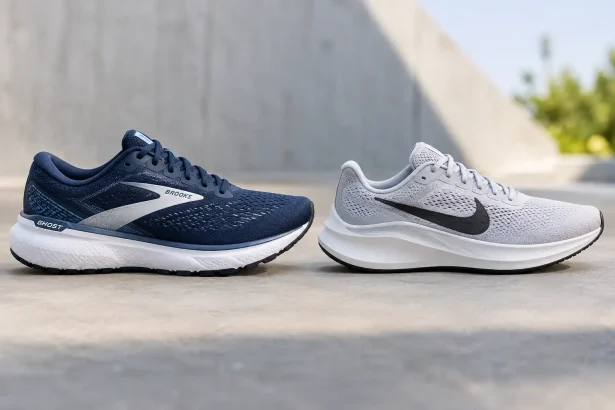
Max-cushion models from brands such as Hoka, Brooks, New Balance, and On are worth a look if long runs, recovery runs, or lots of walking are part of your week. They often feel soft underfoot, like there is more shoe between you and the sidewalk. The trade-off is that they can feel bulky, especially if you prefer a low, connected-to-the-ground ride.
Faster shoes are lighter and often use stiffer foam or a plate to help the shoe roll forward. They can feel brilliant when you are pushing pace. We would not make one your only pair unless you already know you like that firmer, more aggressive feel. Fast shoes are fun. They are not automatically better for easy miles.
Fit matters more than the logo on the side. More than foam marketing. More than whether a shoe is labeled neutral or stability.
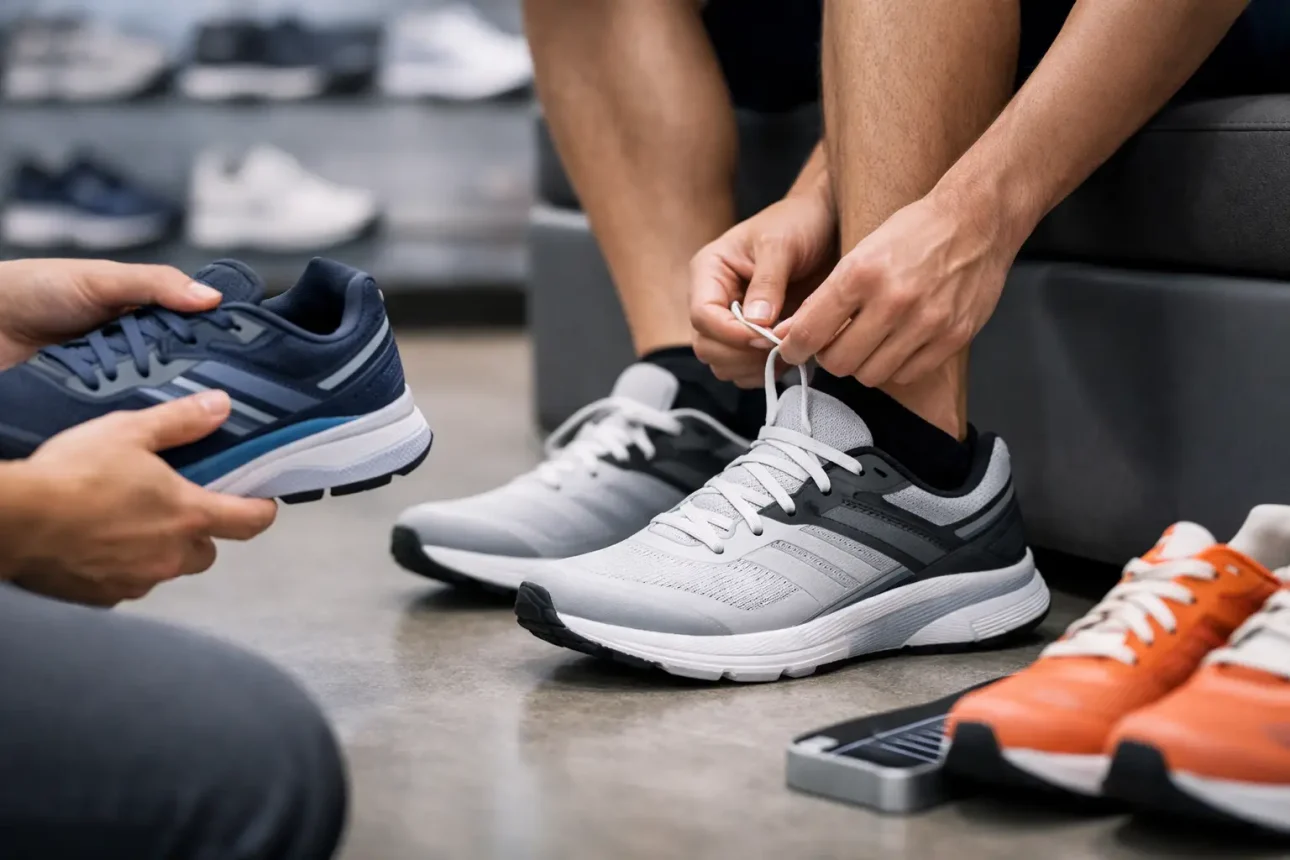
Try on running shoes later in the day if you can. Feet often swell after hours of standing, walking, or training. Wear the socks you run in. Then stand up and check the space in front of your longest toe. You want roughly a thumb’s width, not a cramped little gap. Your feet slide forward on descents, and toenails are not known for forgiving bad decisions.
The heel should feel secure without digging in. The middle of the shoe should hold your foot comfortably, not squeeze it like a hand grip. Most importantly, your toes need room to spread. If the forefoot feels tight while standing still, it will not become charming after five miles.
A surprising number of runners are wearing shoes that are too narrow because they have always bought the same size. Some brands run naturally roomier; others have a more tapered, snug shape. A standard-width shoe can work for one foot shape and feel miserable for another.
If you feel pressure along the sides of your forefoot, do not immediately size up in length. Try a wide version first if it is available. Going longer to create width can leave too much empty space at the front, which can cause sliding and blisters. Conversely, if the shoe feels long but your heel is locked in and the width is right, a different lacing method may solve the issue better than a smaller size.
Do not force a break-in period for a shoe that clearly hurts. Running shoes can soften a little, but they do not transform from wrong to right. We have seen too many people blame their feet when the shoe was the problem.
This part gets overcomplicated. A neutral running shoe does not push your foot in a particular direction. A stability shoe adds structure around the heel or midfoot to make the landing feel more guided. It is not a badge of honor either way.
If your current neutral shoes feel fine, you do not need to panic-buy a stability model because a chart online says your foot rolls inward. Everyone’s foot moves. That is normal. But if you often feel wobbly through the ankle, your knees collapse inward when you are tired, or a neutral shoe feels unstable under you, a stability option can feel calmer and more planted.
The key word is feel. A good stability shoe should not feel like it is fighting your stride. It should simply give you a steadier landing. Models from Brooks, ASICS, New Balance, and Hoka all approach support differently, so one runner’s favorite can feel too controlling to someone else.
If you have ongoing pain, repeated injuries, or a medical concern, speak with a qualified clinician or running specialist. Shoes can make runs more comfortable, but they are not a medical treatment.
Brands love naming foams. We get it. Foam matters. But the name printed on the midsole tells you very little about whether it suits your legs.
Think about what you want to feel underfoot. A softer shoe absorbs impact and usually feels easier on slow, relaxed miles. It can be a smart choice for beginners and runners who spend a lot of time on concrete. The downside is that very soft foam can feel vague or bouncy when you want to corner quickly or run hard.
A firmer shoe feels more direct. You notice the road more, and it often feels more stable. Some runners love that predictable, quick response. Others feel like they are running on a kitchen floor. Neither camp is wrong.
A moderate cushion level is our default recommendation for a first proper running shoe. It gives you enough protection without making every step feel disconnected. You can always add a softer long-run shoe later once you know what your body likes.
Online shopping is easy until you are stuck between two sizes at midnight. Use the pair you already own as a reference, but check how it fits, not just the number printed inside. A size 9 in one brand is not a promise that every other size 9 will fit the same.
Measure both feet while standing, from heel to longest toe. Use the larger measurement. Compare it with the brand’s size chart, then read the fit notes for that specific model. Some shoes have a famously narrow toe box. Some run short. Product photos will not tell you that, but a clear fit description should.
If you are between sizes, we usually lean toward the larger option for running, especially for longer distances. You need that bit of toe room once your feet warm up. The exception is a shoe that is already known to run large or has a loose heel. Then a smaller size may be the smarter call.
At SneakerPrime, we think choosing by use case is the quickest route to a better pair. Filter by running first, then look at cushioning, support, width, and the surfaces you use. Start practical. Pick the color you like after the shoe has passed the foot test.
Running shoes do not need to look destroyed before they are done. The midsole can lose its lively, protective feel long before the upper tears. Many pairs last roughly 300 to 500 miles, but runner weight, running surface, shoe construction, and your stride all change that number.
Watch for a midsole that feels flat, new aches that show up only in that pair, worn-down outsole areas, or a shoe that suddenly feels less stable. If your runs feel worse in old shoes and better in a newer pair, trust the evidence.
Keep a rough note of when you start using a pair. It does not need to be obsessive. A simple phone note is enough. Your future feet will appreciate the reminder.
The right running shoe should fade into the background while you run. You notice the route, your breathing, maybe the playlist you regret choosing. You should not be thinking about numb toes, a slipping heel, or a shoe that feels like a brick. Give yourself room, choose for your real mileage, and let comfort make the final call.