Cart
No products in the cart.
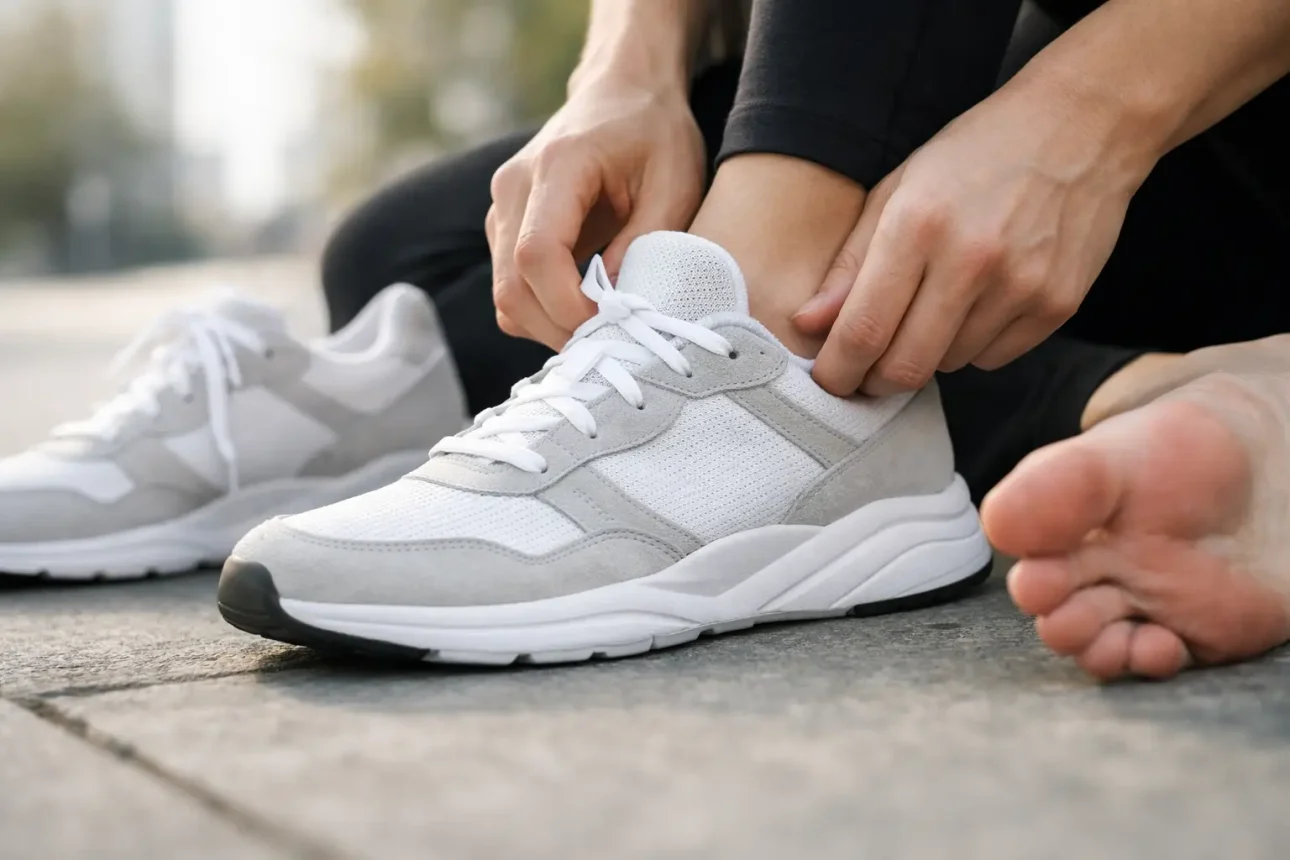
A fresh pair should feel exciting, not like a test of character. If you’re wondering how to break in sneakers, start with this rule: you are softening the shoe around your foot, not forcing your foot to survive a bad shoe. A little stiffness is normal. Numb toes, heel pain, and deep blisters are not.
We have seen people ruin perfectly good sneakers by wearing them for eight hours on day one, then blame the shoe. We have also seen people try every internet trick on a pair that simply does not fit. Both are avoidable.
Sneakers can loosen slightly across the forefoot, soften around the collar, and become less rigid through the sole. Leather and suede change the most. Knit, mesh, and modern running-shoe uppers usually feel close to their final shape right out of the box.
What will not change much is length. A shoe that crushes your toes will still crush them after ten walks around the block. A heel that slips badly may settle a little once the collar softens, but it will not suddenly lock your foot in place. If the arch feels like a hard lump in the wrong spot, stop trying to negotiate with it.
Our honest take: breaking in should make a good fit feel better. It should not turn a wrong fit into a tolerable one.
The best method is boring. That is why it works. Wear your new sneakers indoors for 30 to 60 minutes at a time for the first few sessions. Walk on clean floors, go up and down stairs, sit, stand, and pay attention to the places that start talking back.
After two or three short wears with no sharp rubbing, take them outside for an easy errand or a short walk. Think coffee run, grocery store, or a relaxed commute. Do not choose the first day of a music festival, a city trip, or a 10-mile walk. That is how a small hot spot becomes a blister the size of a coin.
Increase the time gradually over several wears. Most lifestyle sneakers settle in after a few days of normal use. Stiffer leather pairs may take a week or two. Running shoes should not need a long break-in period, but we still recommend a couple of short runs before trusting a pair for race day.
Wear the socks you actually plan to use. This matters more than people think. Thin socks can make a roomy shoe feel loose, while thick athletic socks take up space and can turn a close fit into toe pressure. Trying on a sneaker with dress socks and wearing it later with padded crew socks is a fast route to regret.
Most break-in problems happen in three places: the heel, the side of the big toe, and the top of the foot near the tongue. You do not need to wait for skin damage to deal with them.
If you feel a warm, rubbing spot on your heel, cover that area with blister tape or a cushioned bandage before your next wear. A small heel grip can help if the collar is slightly loose, but do not use one to rescue a sneaker that is clearly too big. It takes up room and can push your foot forward, which creates a whole new toe problem.
For pressure across the top of the foot, try changing the lacing before deciding the shoe is wrong. Loosen the middle eyelets or skip one set where the tongue presses. If your heel is slipping, use a runner’s loop, also called a heel-lock lace. It creates a tighter hold at the ankle without cranking down the entire shoe.
Do not lace everything as tight as possible. A sneaker should hold your foot, not cut off circulation. If your toes tingle or your foot goes numb, loosen up and reassess the fit.
Not every sneaker needs the same approach. This is where people get carried away with hacks that make no sense for the shoe in front of them.
Leather starts structured, especially around the toe box and heel. It usually gives a little with wear, mostly across the width. Start with short indoor sessions and use socks that are slightly thicker than usual if the fit is close but not painful. The warmth from your foot helps the leather relax naturally.
We do not love soaking leather sneakers, blasting them with a hair dryer, or stuffing them in a freezer. Those tricks are all over social media because they look dramatic. They can also dry leather out, affect glue, warp the shape, or leave you with a shoe that looks tired before it has had a proper outing.
Suede and nubuck can soften nicely, but water is not your friend here. Keep them dry during the break-in period and let normal wear do the work. If they are tight in one small area, a professional shoe stretcher is safer than trying to steam or soak the upper at home.
These materials are less forgiving when stained, and a water mark on a new pair is a painful way to learn that lesson.
Mesh and knit sneakers are often comfortable fast because the upper moves with your foot. If they rub or pinch immediately, the issue is usually sizing, sock choice, or the shape of the shoe – not stiffness that will magically disappear.
Synthetic leather can soften a little, but it will not stretch like real leather. Do not expect a narrow synthetic sneaker to become wide enough for you. It probably will not.
A good running shoe should feel comfortable on the first try. Not fully familiar, maybe, but comfortable. The foam may loosen slightly and the upper may settle, yet a performance shoe should not need a painful initiation ceremony.
Start with short runs or walks, then build up. Pay attention to whether your toes hit the front on downhills, whether the heel moves, and whether the arch pressure gets worse after 20 minutes. Those are useful signals. Do not ignore them because the color looks good.
There are a few break-in methods we would leave in the past. Do not wear brand-new sneakers in the shower. Do not submerge them in water. Do not bend the sole aggressively in half, hammer the heel counter, or bake the upper with heat.
These methods do not teach a shoe to fit your foot. They just stress materials that were designed to hold their shape. Glue can weaken, foam can crease oddly, and heel counters can lose the support that keeps your foot stable. A sneaker that feels softer but less supportive is not a win.
Also skip the “just push through it” advice. Mild stiffness is one thing. Pain that changes how you walk is another. Once you start limping to accommodate a shoe, your knees, hips, and back can join the complaint department. No pair is worth that.
Give a new pair a fair indoor test, but do not let the return window disappear while you hope for a miracle. Stop wearing the sneakers and consider another size or model if your toes touch the front when standing, your forefoot feels squeezed, your heel lifts more than slightly, or you get sharp pain in the same place every time.
Width matters too. A lot of people size up for width, then end up with a shoe that is too long and still uncomfortable. If that sounds familiar, look for a model known for a roomier toe box or offered in wide sizing instead. The right shape beats a desperate size-up.
At SneakerPrime, we would always rather see you in a sneaker that works from the start than one you are trying to tame for a month. Some models are built low and narrow because that is their look. Fine. But if your foot needs more room, choose comfort over suffering for the aesthetic.
Keep the first week simple. Wear them indoors, then for short trips. Check your socks and laces. Protect a rubbing spot before it becomes a blister. Let the shoe rest and dry between longer wears, especially after a warm day.
If they feel better each time, you are on the right track. If they feel worse, listen to your feet. The best broken-in sneaker does not feel like something you conquered. It feels like you stopped noticing it at all.