Cart
No products in the cart.
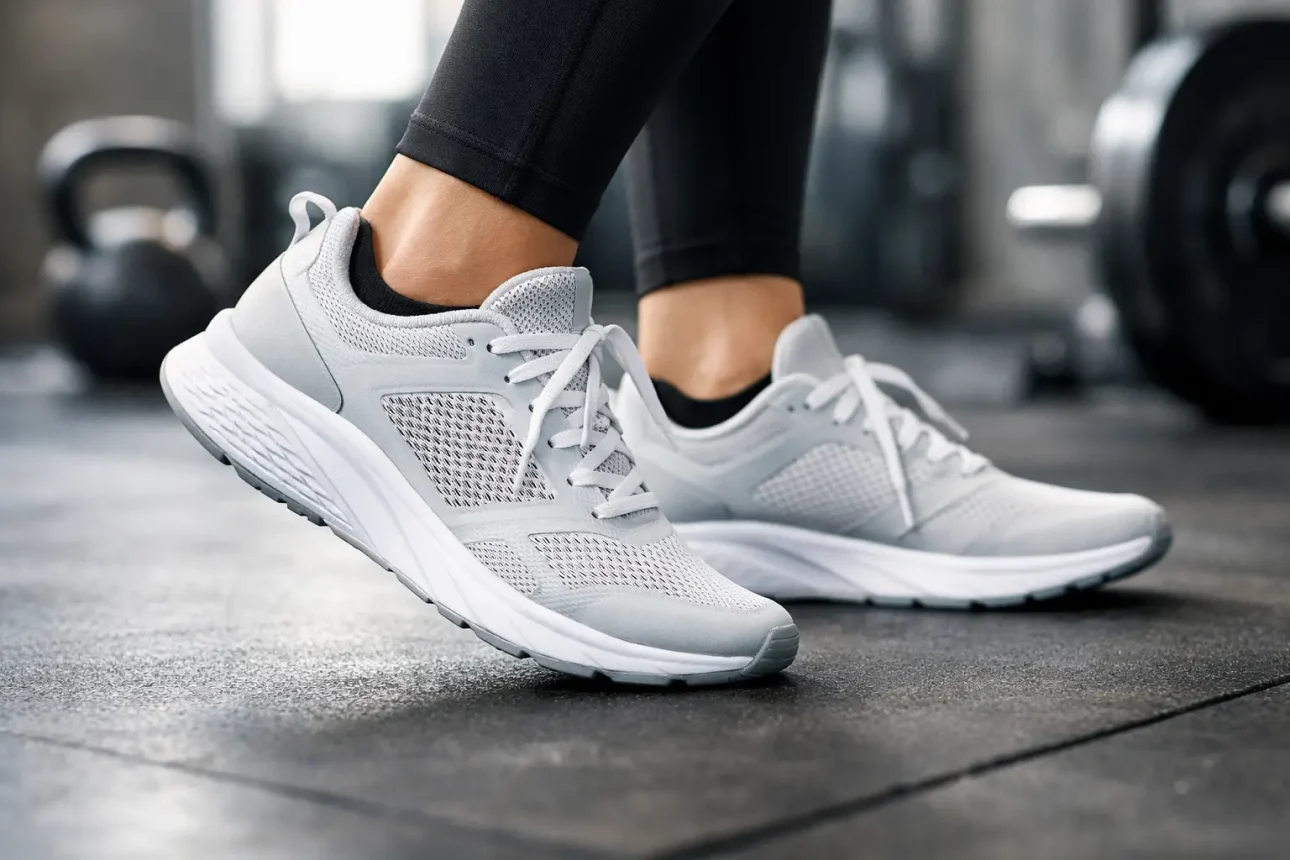
A heavy shoe can make a quick gym session feel weirdly long. You notice it on box step-ups, when you’re moving between machines, and halfway through a treadmill warm-up. That’s why lightweight shoes for gym training are worth getting right. But lighter is not automatically better. A featherweight running shoe can feel fast, then turn into a wobbly mess the second you pick up a barbell.
We like gym shoes that disappear on your feet without leaving you unsupported. The right pair depends on what you actually do once you walk through the door, not what looks best in a mirror selfie.
Most people do more than one thing at the gym. Maybe you start with 10 minutes on the treadmill, hit a few machines, do dumbbell work, then leave after a stretching session you definitely rushed. Your shoes need enough range for that reality.
For general training, we look for three things: a low, stable base; enough cushioning for short runs and jumps; and an upper that does not feel bulky or sweaty. A shoe can be light because it has barely any material underfoot. That works for some lifting days, but it is not fun for cardio. It can also be light because the upper is thin while the sole still gives you a solid platform. That is usually the sweet spot.
Weight matters, but it is not the whole story. A slightly heavier shoe that keeps your foot planted during lunges is a smarter buy than an ultra-light pair that shifts sideways when you change direction.
We see this mistake all the time: buying running shoes for every gym activity because they feel soft when you first try them on. Running shoes are built to move you forward. Many have taller, curved midsoles that are great for miles on pavement but less reliable for squats, lateral drills, and heavy leg presses.
If your gym time is mostly treadmill running, incline walking, and light machines, a lightweight running shoe makes sense. Models from On, Brooks, ASICS, Hoka, and New Balance can be excellent here. Look for a pair that feels smooth under your stride, not squishy like a foam mattress. Too much soft foam can make your feet work harder during strength moves.
If you split time between cardio and weights, a cross-training shoe is the better call. Nike, Adidas, Puma, and New Balance all make options that sit closer to the floor and feel more controlled. They may not feel as cloud-like during a run, but they are far better when you are doing lunges, sled pushes, burpees, or a quick circuit class.
If lifting is your main event, skip the plush runners. You want a firmer sole and a stable heel. Lightweight is still possible, but the goal changes. You are not chasing a floating feeling. You are chasing a planted one.
A good lightweight gym shoe feels secure when you tighten the laces. Your heel should stay put, and the front of the shoe should bend where your toes bend. That sounds basic, but plenty of trendy sneakers fail both tests.
The upper matters more than people think. Thin mesh keeps weight down and helps air move around your foot. Great for hot gyms and cardio-heavy workouts. The trade-off is durability and support. If you drag your toes on burpees or climb ropes, a very thin upper can wear out faster than you would like.
We prefer a light mesh upper with some reinforcement around the midfoot and toe area. You do not need a shoe that feels armored. You do need one that does not fold over when you move side to side.
Pay attention to the outsole too. A gym floor is not a track. You may move from rubber flooring to smooth studio surfaces, turf, or a slick locker-room tile floor. Grip is not a glamorous feature, but slipping during a lateral lunge is a fast way to hate your new shoes.
Cushioning is where shoppers get talked into more shoe than they need. Thick foam feels impressive standing still. Training in it is another thing.
For walking, treadmill intervals, and low-impact strength work, moderate cushioning is our favorite. It takes the edge off without making you feel disconnected from the ground. Think responsive rather than marshmallow-soft.
For HIIT, dance cardio, and workouts with jumping, you need cushioning that rebounds quickly. A dead, flat sole can make repeated jumps feel harsh. But an overly tall sole can make landings feel unstable. We would take balanced foam with a broad base over a huge stack of foam every time.
For lifting, firmer is better. Your foot should not sink into the shoe during a squat or deadlift. You want to feel the floor through the sole. If you only lift occasionally, a stable cross-trainer covers the job. If you train heavy and seriously, a dedicated lifting shoe or a flat, firm trainer may make more sense than trying to force a running shoe to do everything.
A shoe can look perfect online and still be wrong for your feet. Some brands run narrow through the toe box. Others have a roomier forefoot but a locked-in heel. Neither is universally better.
Your toes should have a little space at the front, especially if you use the treadmill. Feet warm up and expand during training. If your big toe is already touching the end while you are standing, do not convince yourself it will break in. It probably will not.
Check the heel by walking briskly and doing a few bodyweight squats. If your heel lifts, the shoe may rub later. If the laces need to be pulled painfully tight to feel secure, the shape is likely wrong for you.
We also would not buy a gym shoe based on your casual sneaker size without checking. A lifestyle pair can be forgiving. A training shoe needs to work when you are moving, sweating, and putting force through your feet.
Look for a naturally broad toe area instead of simply sizing up. Going longer to gain width can leave too much empty space in front, which makes fast movement feel sloppy. New Balance and some ASICS options are often worth a look for roomier fits, but always judge the individual model.
A secure midfoot is your friend. Shoes with a structured lace system or supportive overlays often feel better than loose, stretchy slip-on styles. Slip-ons are convenient. For serious gym training, we think most people are better off with laces.
We love a stylish sneaker as much as anyone, but not every sneaker belongs near a squat rack. Flat canvas shoes can work for basic lifting, yet they offer little support or grip for cardio. Bulky retro basketball shoes look great with jeans but often feel hot and clumsy during a fast workout.
We would also skip max-cushioned running shoes for strength-focused sessions. They are not bad shoes. They are just bad tools for that job. Wearing them for heavy lifting is like trying to balance on a sofa cushion. You can do it. We would rather not.
Minimal shoes are another case where it depends. Some experienced lifters love them because they feel close to the ground. If you are used to cushioning, switching straight into a thin, flat shoe for every workout can feel harsh. Ease into it rather than turning your first session into an experiment.
Start with the workout you do most often, not the workout you wish you did. If you run three times a week and lift lightly, buy the lightweight runner. If you do circuits, classes, and strength work, buy the cross-trainer. If you lift heavy four days a week, choose stability over softness.
Then think about where else you will wear them. A clean, lightweight trainer can easily handle errands and travel. That extra versatility is useful. Still, do not buy a shoe only because it looks good with joggers if its sole feels unstable in the gym. Some shoes photograph well and wear terribly. We are not here to sell you those.
At SneakerPrime, we would rather help you find one pair you keep reaching for than push a shoe built for someone else’s workout. Your gym shoes should feel quick when you move, steady when you stop, and comfortable enough that you are not thinking about your feet halfway through the session. That is the kind of lightness that actually counts.