Cart
No products in the cart.

A fresh pair of running shoes can feel so good that you want to wear them everywhere. Coffee run. Office. Airport. Dinner. We get it. But can you wear running shoes casually without looking like you forgot to change after a 10K? Absolutely. You just need the right pair, the right outfit, and a little honesty about where you are going.
We’re firmly on the yes side here. Running shoes are no longer reserved for sidewalks and treadmills. Plenty of them look sharp with everyday clothes, and the comfort can be hard to beat when you are on your feet all day. Still, not every running shoe works as a casual sneaker. Some look clean. Others look like small spaceships attached to your ankles.
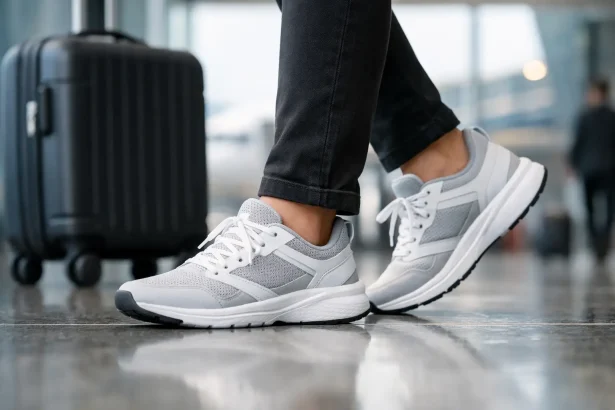
The easiest casual running shoes have a lower, cleaner profile. Think simple mesh uppers, muted colors, and soles that do not flare out dramatically at the heel. Models from New Balance, Asics, On, Adidas, Nike, and Brooks can all fit this lane, but the individual shoe matters more than the logo.
A neutral-colored shoe in white, gray, black, cream, navy, or soft beige is usually the safe bet. It does not mean every shoe has to be boring. A bright accent can look good. We just would not build a whole casual wardrobe around neon lime foam, reflective overlays, and three different shades of electric blue unless that is genuinely your style.
The sole matters most. Modern running shoes often use thick foam to soften the impact of long runs. That is great when you are putting in miles. For a casual outfit, though, a very tall, curved sole can take over the whole look. It can work with relaxed pants, technical outerwear, or an intentionally sporty outfit. With slim jeans and a button-down, it often looks confused.
Comfort is the obvious reason, but it is not the whole story. A good running shoe is built to handle repeated impact, so it often feels lighter and less punishing than a flat fashion sneaker. If your commute includes stairs, long platforms, or a lot of walking, that difference shows up by late afternoon.
The upper usually helps too. Breathable mesh keeps things less stuffy than heavy leather, especially in warm weather. Flexible materials move with your foot instead of fighting it. That makes running shoes a strong option for travel, errands, festivals, and jobs where you spend most of the day standing.
We also like the contrast they bring to simple clothes. A gray running shoe with straight-leg jeans, a white tee, and an overshirt is easy. Black runners with loose pants and a hoodie work because the silhouette feels intentional. You do not need to dress like an athlete to wear athletic shoes. You just need to avoid making the shoe look accidental.
Running shoes look best when the rest of your outfit has a similar level of ease. They are made for movement, so pairing them with relaxed everyday pieces makes sense.
Jeans are the easiest starting point. Straight, relaxed, or slightly cropped jeans give the shoe room to show. Skinny jeans can work with a sleeker runner, but they tend to exaggerate big foam soles. If the shoe is chunky, give it a wider pant leg. Balance matters more than following a trend.
Chinos and casual trousers can work too, especially in black, olive, navy, or tan. Keep the hem clean. A pant leg bunched hard around a technical running shoe is rarely flattering. A small crop, a neat break at the ankle, or a cuff can make the outfit look more considered.
Shorts are a natural match, but length changes the result. Mid-thigh or above-the-knee casual shorts work with most running shoes. Long, baggy basketball shorts can be fine if you want a sportier look, but the whole outfit needs to commit. Half casual, half gym kit is where things go sideways.
For women, running shoes pair well with leggings, relaxed jeans, cargo pants, casual dresses, and midi skirts. The mix of a simple dress and a clean runner can look better than a dressy shoe when the day involves real walking. Again, the shoe should look purposeful. A sleek white or neutral runner is easier to style than a loud race-day model.
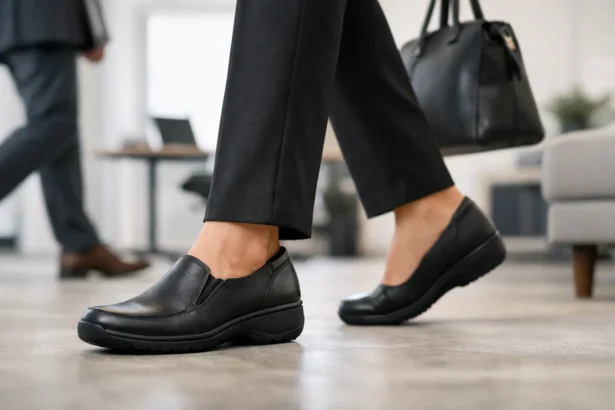
There are times when a running shoe is simply the wrong tool. Formal events are the obvious one. Weddings, interviews in conservative workplaces, upscale dinners, and anything with a clear dress code call for something else. A foam-heavy runner may be comfortable, but it can make an otherwise polished outfit feel unfinished.
We would also think twice before wearing your actual high-mileage pair casually. Once the foam is compressed and the outsole is worn smooth, the shoe can lose the feel that made it good for running in the first place. Wearing it to run errands adds more miles without giving you much back.
There is another practical issue: dirt. White mesh looks excellent for about five minutes in bad weather. If you walk through rain, city grime, or grass often, choose a darker color or a pair with sturdier overlays. Running shoes can be cleaned, but mesh does not hide scuffs and stains the way leather does.
If you run regularly, we think owning one pair for training and one pair for daily wear is the smart move. You do not need a huge shoe collection. Two pairs with separate jobs will last better and make getting dressed easier.
Your running pair should be chosen for how it feels during your runs. Fit, support, cushioning, and the type of distance you cover come first. Do not buy a shoe that feels wrong just because it photographs well with jeans. Your feet will not care about the outfit three miles in.
Your casual pair can be more style-led. Maybe it is a retro runner, a neutral daily trainer, or a walking-focused shoe with a softer ride. This is where you can choose colors that work with most of your closet instead of worrying about race-day visibility or speed-focused design.
A little rotation also helps the shoes air out between wears. That matters more than people think. Shoes that stay damp from sweat or rain can start smelling rough fast, and no outfit fixes that.
Before buying, picture the shoe with the pants you wear most. Not the outfit you might wear once on vacation. Your actual jeans, joggers, shorts, and jacket. If you cannot imagine three outfits immediately, it may be a great running shoe but not your best casual option.
Look for a colorway that gives you options. White and light gray feel fresh but need more cleaning. Black is easy and forgiving, though all-black shoes can look a little too gym-ready depending on the model. Cream, silver, navy, and earthy shades often hit the sweet spot because they feel sporty without shouting.
Pay attention to fit, too. Running shoes should usually have a little room in front of the toes for running. For casual wear, that same fit is still fine, but do not size up just to chase a bulky streetwear look. A shoe that slides at the heel will annoy you all day.
Our honest take: choose the shoe you will reach for. The coolest-looking pair in the box is useless if it pinches your toes or only works with one outfit. Some shoes look great but wear terribly. We would rather see you in a clean, comfortable pair you wear four days a week.
Yes, wear the running shoes. Just treat them like part of the outfit, not an afterthought. Keep the colors wearable, match big soles with relaxed silhouettes, and save the loud race shoes for days when you actually want them to be the main event. When your feet still feel good at 5 p.m., you picked well.