Cart
No products in the cart.
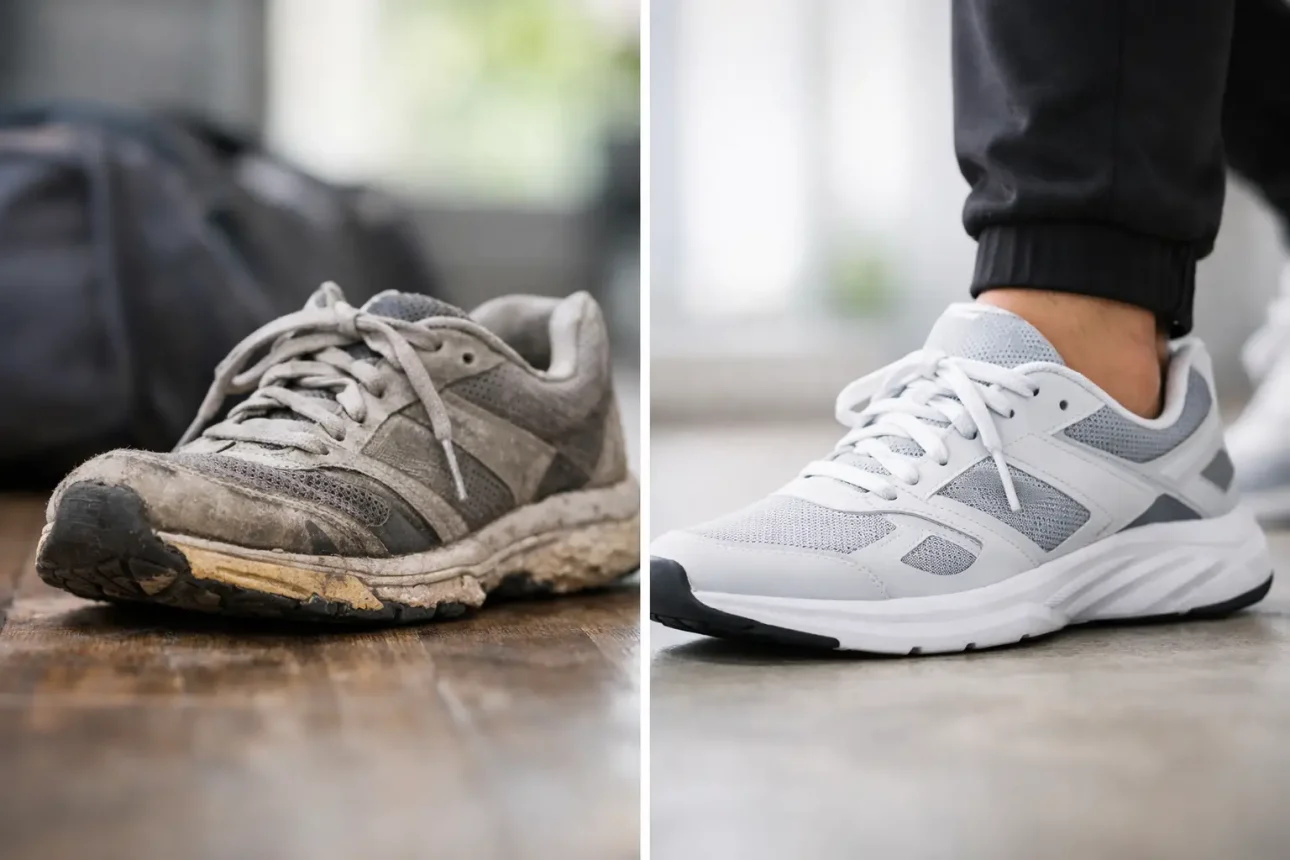
That favorite pair in your closet might still look decent from the top. But if you’re asking when should you replace sneakers, the answer usually shows up under your feet first, not in the mirror. Shoes can look fine and still feel dead. That flat, dull ride? That’s often the real warning.
We see this all the time. People wait until the outsole is shredded or a hole opens near the toe box. By then, the shoe has usually been done for weeks. The bigger issue is lost cushioning, worn-down support, and a fit that has started working against you instead of with you.
If you want the short version, most sneakers last somewhere between 300 and 500 miles if they’re used for running or heavy walking. For casual everyday wear, it depends more on how often you wear them, how heavy you are on your feet, and what surfaces you spend time on.
That range is useful, but we wouldn’t treat it like a law. Some shoes are cooked at 250 miles. Others still feel good past 500. A firmer daily trainer from Brooks or Asics may hold up longer than a super-soft foam runner that feels amazing at first and then fades fast. Soft shoes can be fun. They can also die young.
If you wear sneakers mostly for errands, commuting, or all-day casual use, a good reality check is 8 to 12 months of regular wear. If it’s the same pair almost every day, that timeline can shrink. If you rotate between two or three pairs, it stretches out.
The clearest sign is not always visible. It’s how they feel compared with when they were fresh.
This is the big one. If the shoe used to feel springy, smooth, or easy on your feet and now it feels hard, slappy, or lifeless, the midsole is probably worn out. That foam underfoot takes the beating. Once it compresses too much, it doesn’t bounce back the same way.
A lot of people keep wearing dead shoes because they still “look clean.” Bad idea. A stylish upper doesn’t help much if the platform under it has turned into cardboard.
If nothing else has changed but your feet are more tired at the end of the day, pay attention. Same goes for sore arches, cranky calves, or knees that suddenly notice every sidewalk crack. We’re not saying old sneakers cause every ache. We are saying worn-out shoes stop helping.
That matters even more if you’re on your feet all day. Retail shifts, city walking, gym sessions, weekend runs – dead sneakers make all of it feel longer.
Flip the shoe over. If the rubber is ground down harder on one side, that wear pattern can change how the shoe sits under you. A little wear is normal. Lopsided wear that makes the shoe tilt is not.
This is one of those things people ignore because the shoe is still technically wearable. Sure. So is a chair with one short leg. That doesn’t mean it’s comfortable.
Sometimes the problem is the upper, not the sole. If the heel counter is collapsing, the toe box has split, or the sidewalls are stretching so much that your foot slides around, the shoe has lost its shape. Once that happens, the fit gets sloppy fast.
We care about this more than most people do. A sneaker that doesn’t hold your foot properly can feel weird even if the outsole still has tread left.
All shoes crease. That’s normal. What matters is whether the foam looks permanently squashed. If the midsole has deep wrinkles and stays compressed, you’re probably past the good part of that shoe’s life.
Not every pair dies the same way.
Running shoes usually lose performance before they look rough. That’s because the midsole foam breaks down with impact. You may still have tread left. The upper may still be intact. But the ride is gone.
This is common with high-cushion models. They can feel great early on, then drop off fast once the foam starts giving up. We love a soft shoe, but not when it turns mushy and unstable after a few months.
Lifestyle pairs often age more visibly. The outsole gets smooth. The heel gets crooked. The upper gets stretched or creased. If you’re wearing fashion sneakers for all-day walking, they may not have had much support to begin with. Once they wear down, they get uncomfortable in a hurry.
This is where people get tricked by looks. A classic low-profile sneaker might still match everything in your closet. It still might be terrible for a full day on concrete.
Your body weight matters. So does where you wear them and how often. Running on pavement beats shoes up faster than treadmill miles. Long work shifts on tile can flatten casual sneakers quicker than weekend wear.
The shoe itself matters too. Some brands build for durability. Some build for soft first impressions. Those are not always the same thing. A sturdy New Balance walker and a lightweight fashion sneaker are not playing the same game.
Rotation helps more than people think. Wearing the same pair every single day gives the foam no time to recover. If you swap pairs, even just between two, both tend to last longer and feel better over time.
Sooner than you probably think.
Walking sounds mild, but daily walking adds up fast. If you’re hitting 8,000 to 12,000 steps most days, your sneakers are working hard. For heavy walkers, we’d rather replace shoes a little early than a little late. Once the underfoot feel goes flat, every step reminds you.
If you use one pair for everything – commuting, errands, travel, gym, weekends – check them every couple of months. Press into the midsole with your thumb. Compare the left shoe to the right. Look at the heel. If one side is leaning or the foam feels packed down, don’t talk yourself into another season just because the upper still looks decent.
Set your current pair next to a newer pair of the same type if you can. The difference is usually obvious. Old shoes sit lower. The heel may lean. The cushioning feels flat in hand and on foot.
If you don’t have a newer pair to compare, listen to your body and pay attention after long days. Shoes rarely fail all at once. They fade. That’s why people miss it.
We also think smell, dirt, and creases get too much attention. Those are cosmetic. The real question is whether the shoe still supports your foot the way it should.
Yes. Almost always.
Sneakers wear as a pair, even if one foot breaks them down a bit faster. Replacing just one shoe is awkward and usually feels wrong. The platform, support, and wear pattern won’t match. Save yourself the hassle and replace the pair.
The bigger exception is if you have multiple pairs and one gets damaged early for some random reason. But normal wear? Replace both.
People usually wait too long. We get it. Good sneakers aren’t cheap, and if a pair still looks wearable, it feels wasteful to move on. But dead shoes are sneaky. They don’t always scream for retirement. They just slowly stop doing their job.
If you’re deciding between squeezing another month out of a worn pair or moving on, we usually side with the new pair. Not because newer is always better. Because feet know. You feel it at 5 p.m., on the walk home, or halfway through a run when the shoe starts feeling like a slab.
And one more thing – stop turning every sneaker into an all-purpose shoe. Running shoes for runs. Walkers for long days. Lifestyle pairs for style. Can one pair do everything? Sometimes. Should it? Usually not.
A good sneaker should feel easy. If your pair feels like work now, that’s your answer.