Cart
No products in the cart.
A gym shoe can look perfect in the mirror and still feel terrible halfway through a workout. That is why knowing how to pick gym sneakers matters more than picking the pair with the loudest logo or the biggest foam sole. Your shoes need to match what you actually do between warm-up and cooldown.
We see the same mistake all the time: buying running shoes for heavy lifting, or flat lifestyle sneakers for high-impact classes. Neither choice is always wrong. They are just built for different jobs. Start with your workout, then worry about color.
Before you compare brands, be honest about your routine. Are you mostly squatting and deadlifting? Taking HIIT classes? Walking on the treadmill for 30 minutes, then using machines? A shoe that feels stable under a barbell can feel clunky during burpees. A soft running shoe can feel amazing for cardio and oddly wobbly during lunges.
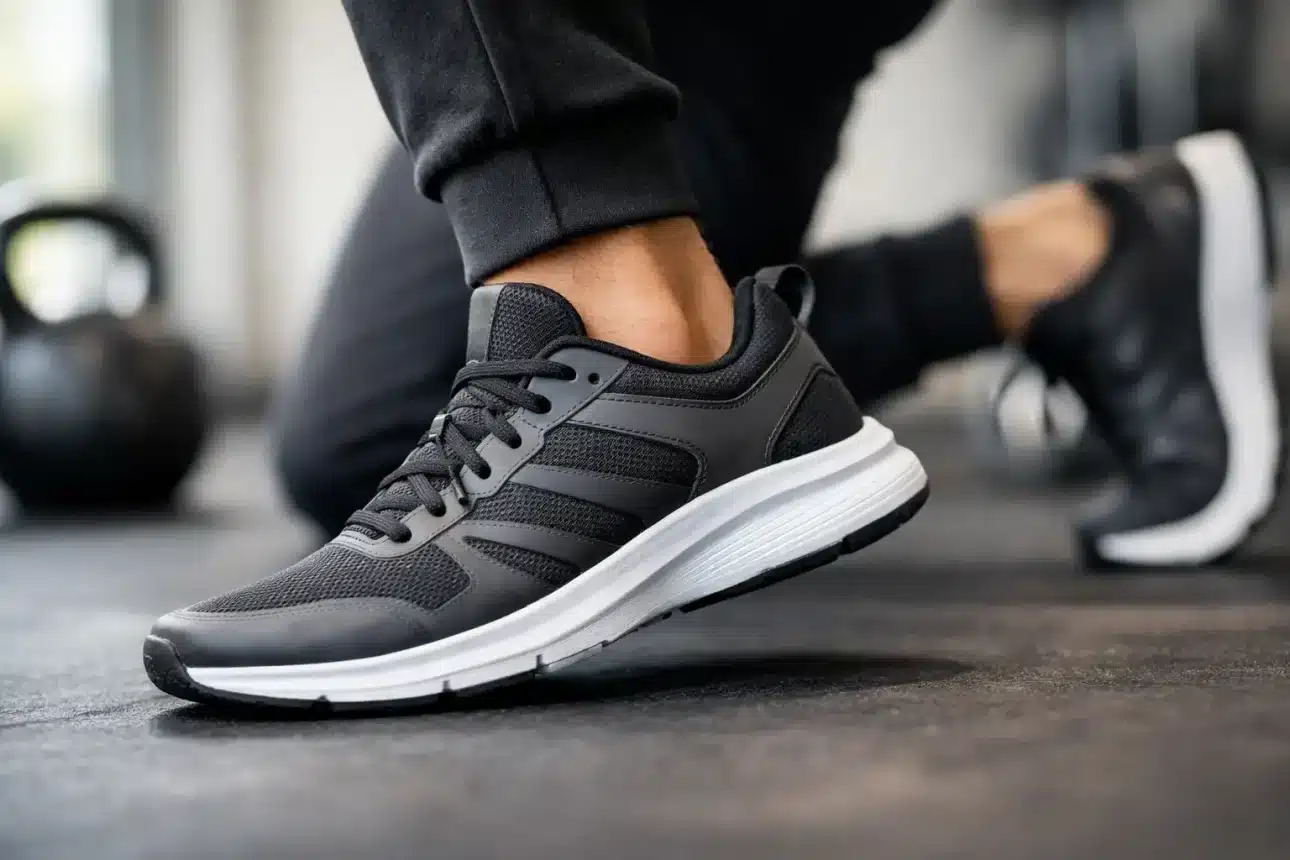
If you do one thing most of the time, buy for that thing. If your workout is a real mix of lifting, short cardio sessions, and classes, look for a training shoe. We think this is the best choice for most regular gym-goers. It is the sensible middle ground, not the boring compromise.
For strength training, stability beats softness. You want a shoe with a firm sole, a low profile, and a wide enough base that your foot does not roll around when you squat or press.
A little cushioning is fine for comfort between sets. Too much is not. Thick, soft foam compresses under weight and can make your feet feel like they are standing on a mattress. That is great for an easy run. It is not what we want when a loaded bar is on your back.
Serious lifters may prefer dedicated lifting shoes with a raised heel, especially for deep squats. But those are specialized tools. If you also do general training, a lower, flatter cross-training sneaker is usually the smarter buy.
HIIT, bootcamp, and studio classes ask a lot from one shoe. You jump, pivot, lunge, sprint, and move sideways. That means the outsole needs reliable grip and the upper needs to hold your foot in place.
Look for a sneaker with a broad platform and structure around the midfoot. When you plant your foot for a lateral move, it should feel planted, not like your foot is trying to slide off the edge of the sole. We would skip very tall, ultra-soft running shoes here. They can feel bouncy, but they are often too unstable for quick side-to-side work.
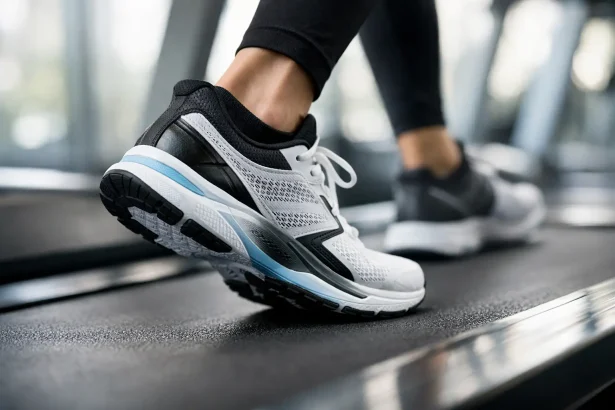
If your gym time is mostly treadmill running, incline walking, or long sessions on the elliptical, cushioning moves up the priority list. A running shoe absorbs repeated impact so your legs take less of a beating over time.
But do not buy the softest shoe you can find just because it feels good for ten steps in your living room. Some highly cushioned shoes feel smooth at an easy pace but awkward during strength work. If your routine is 80 percent cardio, go for the cushioned running shoe. If it is 20 percent cardio after lifting, a training shoe will do the job better overall.
A Nike, Adidas, New Balance, Asics, Hoka, On, Puma, Brooks, or any other familiar logo does not guarantee the right fit. Brands have different shapes, and even models from the same brand can fit very differently.
Your heel should feel held without being squeezed. Your midfoot should feel secure, but not like the laces are cutting across the top of your foot. Up front, leave roughly a thumb’s width between your longest toe and the end of the shoe. Your longest toe is not always your big toe, so check both feet.
We also recommend trying shoes later in the day when possible. Feet often swell after walking around, working, or training. A sneaker that feels perfect first thing in the morning can feel too tight at 5 p.m. That is not picky. That is just how feet work.
A gym sneaker may soften slightly after a few wears, especially around the upper. It should not need weeks of suffering before it stops rubbing your heel or crushing your toes. If it hurts while you are standing in it, putting it through a workout rarely makes the problem disappear.
Pay attention to heel slip, too. A little movement can happen in flexible shoes, but a heel that repeatedly lifts when you walk or squat is a bad sign. Try a runner’s loop lacing pattern if the fit is close. If the shoe still slips, choose another pair.
Turn the sneaker over. The outsole tells you a lot about where it belongs.
A gym-friendly outsole should have rubber in the areas that hit the floor and enough tread to grip indoor surfaces. You do not need deep trail lugs for a clean gym floor. In fact, bulky tread can feel awkward and stiff. You need traction that lets you push off confidently without catching or sliding.
Then look at the sole from the side. A low, stable platform works best for lifting and general training. More stack height, meaning more material between your foot and the floor, usually brings more cushion for running and walking. Neither is automatically better. The question is whether you need ground feel or impact protection.
We are blunt about this: do not choose a gym shoe based only on how pillowy it feels in the store. Soft foam is fun. It is not a universal answer.
The upper is the fabric or material wrapping your foot. Breathable mesh is a solid pick for hot workouts and treadmill sessions because it lets heat escape. A more structured upper is better when you need lateral support for classes or strength work.
Some lightweight running shoes use thin, stretchy uppers that feel almost invisible. We like that feeling for straight-ahead miles. For lateral drills, though, a floppy upper can leave your foot doing too much work to stay centered. If you make sharp cuts, jump, or use a sled, choose structure over the barely-there feel.
Also check where the shoe bends. It should flex near the ball of your foot, where your foot naturally bends when you walk. If it twists easily through the middle, it may feel less stable for training. If it barely bends at all, it may feel stiff for dynamic moves.
Most people train indoors, but not every gym setup is the same. Rubber flooring, polished studio floors, turf lanes, and outdoor pavement all feel different underfoot.
If you train on turf and do sled pushes or agility work, a durable outsole and stable platform matter more than plush cushioning. If you walk to the gym, train on a treadmill, and head home on pavement, a versatile training shoe with moderate cushioning makes more sense.
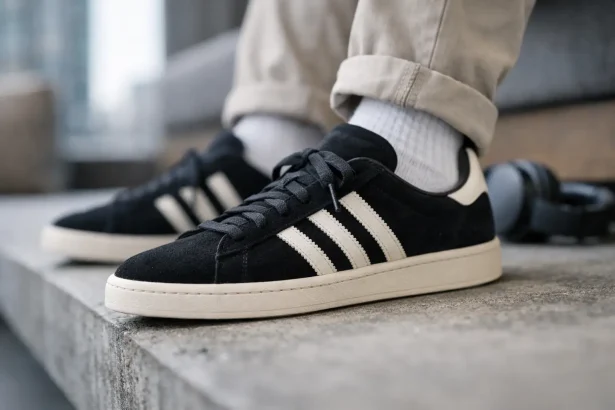
For people who lift in a commercial gym but also want a shoe that does not look strange with jeans, clean low-profile trainers are hard to beat. They will not replace a serious running shoe, but they are practical, stable, and easy to wear outside the gym. Sometimes the best shoe is the one you will actually put on.
When you try on gym sneakers, do more than walk from the bench to the mirror. Lace them properly, stand with your feet shoulder-width apart, and do a few bodyweight squats. Rise onto your toes. Take a few quick side steps. If the store allows it, make a gentle jog-in-place motion.
Ask yourself three simple questions: Do my toes have room? Does my heel stay put? Do I feel stable when I move sideways? If the answer is no to any of those, do not talk yourself into the pair because the color is good. There will be another color.
The right gym sneaker is not the one with the most technology packed into it. It is the one that supports the workout you keep coming back to. Choose firm and stable for lifting, secure and grippy for classes, and cushioned for cardio-heavy days.
And if your training changes later, your shoes can change too. One pair does not need to do every job forever. Start with the work your feet are doing this week, not the workout version of you that might show up next January.