
Cart
No products in the cart.
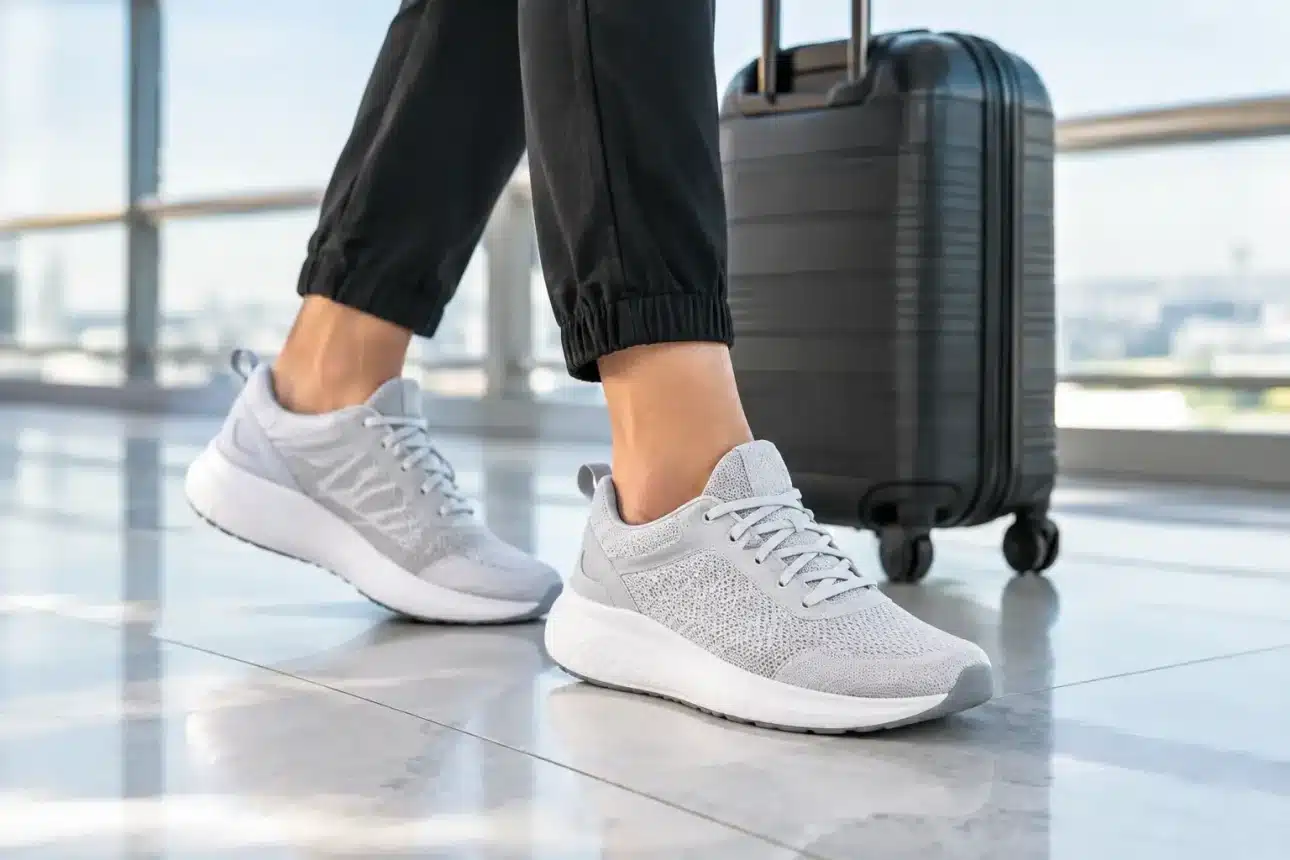
The wrong travel shoe announces itself fast. First at the airport security line, then halfway through a terminal, then when your heel starts rubbing while you are looking for dinner. Comfortable sneakers for travel days are not about finding the softest shoe on the shelf. They need to handle sitting, standing, walking, rushing, and whatever strange flooring an airport throws at you.
We think most people make one mistake: they pack the sneaker that looks best in photos and hope for the best. Bad plan. A travel sneaker should still look good, obviously, but it has a harder job than your usual everyday pair. It needs enough cushioning for long concrete walks, a stable base when you are carrying a bag, and a fit you trust after hour six.
A good travel sneaker feels easy from the first step. Not loose, not squishy, not stiff like a new pair of dress shoes that needs a week of suffering before it behaves. You should be able to wear it through a full airport day without thinking about your feet. That is the real test.
Cushioning matters, but more cushioning is not always better. A huge foam sole can feel fantastic for walking, especially if your itinerary means 20,000 steps. But if the shoe is too tall or too soft, it can feel wobbly when you are moving quickly through crowds or stepping off curbs with a backpack. For most travelers, a balanced platform beats a mattress strapped to your feet.
The upper matters just as much. Breathable mesh is great for warm destinations and long walking days. Leather or synthetic leather is easier to wipe clean after rain, spills, and airport grime. Neither is automatically better. If you are heading to a hot city and walking all day, choose airflow. If you want one clean-looking pair for a weekend with unpredictable weather, a smoother upper is easier to live with.
Then there is the fit. We cannot stress this enough: do not take a brand-new, untested pair on a major trip. Even a shoe that fits perfectly in a store can start a fight with your heel after eight hours. Wear your travel pair on a few normal days first. Walk to coffee. Take a long errand run. Give your feet a vote before you give the shoes a boarding pass.
There is no single best sneaker for every traveler. Someone doing museum days in Rome needs something different from someone flying to New York for meetings. Start with what you will actually do, not the version of yourself you imagine packing for.
If your trip is mostly walking, we lean toward Hoka and Brooks. These brands make sense when the plan includes sightseeing, neighborhoods, parks, and that accidental extra three miles because you missed the subway.
Hoka models are known for thick, lightweight foam underfoot. They can make hard pavement feel less harsh, which is exactly what tired feet want late in the day. The trade-off is the look. Some pairs are chunky. We like that style, but if you want a sleek, low-profile sneaker for dressier outfits, it may not be your lane.
Brooks is less interested in fashion drama and more interested in a steady, dependable ride. That is not a criticism. A Brooks walking or running shoe is often the sensible choice when your feet need support and you do not want to think about your shoes again until you take them off. They are not always the pair that gets compliments. They are often the pair that gets you home without blisters.
On sneakers work well for travelers who want cushioning without the oversized runner look. They tend to feel light on foot and look sharp with jeans, joggers, shorts, or travel pants. Their hollowed-out midsoles have a distinct feel – firmer and more responsive than the deep softness of many Hoka pairs. Some people love that springy step. Others want more plushness. It depends on what your feet like.
New Balance is one of our safest recommendations because the range is wide. You can find retro lifestyle pairs that work for casual city breaks and more cushioned performance models for serious walking. We would not pick a flat, narrow fashion silhouette for a day that starts at 5 a.m. and ends after dinner. But a well-cushioned New Balance runner or walking-focused model is hard to argue with.
Nike, Adidas, and Puma have plenty of sneakers that can travel well, but you need to shop with your eyes open. A classic court sneaker might look perfect with every outfit. It may also have a flatter, firmer sole than your feet want after a full day in transit.
Nike running-inspired models can be a smart middle ground. You get a familiar sporty look with more foam and flexibility than a traditional leather street sneaker. Adidas has similar options, especially if you prefer a cleaner silhouette. Puma often offers lightweight choices that are easy to pack and easy to wear, though the amount of cushioning varies a lot by model.
Our honest take: do not choose a shoe just because it has a famous logo and matches your carry-on. If it is flat, stiff, and tight in the toe box, it is a short coffee-run shoe, not a travel-day shoe.
Asics deserves more attention from travelers. The brand has a reputation for performance shoes, and that is exactly why many of its models work so well when you are on your feet. They often offer a secure heel, stable base, and cushioning that feels controlled rather than mushy.
This is a strong option if you have had bad luck with sneakers that feel fine for an hour but leave your arches tired by late afternoon. We are not saying a shoe solves every foot problem. It does not. But a stable, properly fitting pair can make long travel days much less annoying.
Leave a little room in front of your toes. Feet can swell during flights and after long walks, especially in warm weather. Your travel sneaker should feel secure at the heel while giving your toes space to spread naturally. If your big toe is already pressing the front when you try the shoe on, do not convince yourself it will stretch enough. It probably will not in the way you need.
Pay attention to width too. A shoe can be the right length and still feel miserable because it squeezes the sides of your forefoot. New Balance and Brooks are often worth checking if you need more width options. A wider fit is not a compromise or a special request. It is simply the fit your feet need.
Socks are part of the equation. Try the sneaker with the socks you plan to wear on your trip. Thin cotton socks can change the fit compared with cushioned athletic socks, and they tend to hold moisture longer. A breathable performance sock is not exciting travel gear, but neither is a blister patch at 11 p.m.
We would skip brand-new shoes, no matter how good they look. We would also skip very flat canvas sneakers for long walking itineraries unless you know your feet love them. They have their place. That place is usually a casual lunch, not a connection in Atlanta followed by a five-mile day downtown.
Heavy high-tops can be annoying at security and tiring if they are stiff around the ankle. Pure fashion runners can also disappoint if their foam is mostly there for looks. Pressing the midsole in a store tells you almost nothing. Walk in the shoe. Check whether your heel slips. Notice whether the forefoot bends naturally.
Avoid wearing your only pair of shoes on the plane if rain is likely at your destination. A wet sneaker with no backup is a bad travel souvenir. If space allows, pack a second lightweight option, even if it is just for evenings or hotel use.
If you want one pair that can fly, walk, and still look right at dinner, choose comfort first and style second by a very small margin. You should still want to wear the shoe. But a sneaker that looks perfect while punishing your feet is not stylish after hour nine.
At SneakerPrime, we would rather help you find the pair you keep reaching for than push a shoe that only looks good in the product photo. Pick the sneaker that matches your actual trip, break it in before departure, and give your feet a little extra room. Your itinerary will be busy enough without your shoes becoming the problem.


