Cart
No products in the cart.
By 3 p.m., your office shoes tell the truth. The pair that looked clean in the mirror can start pinching at the toe box, rubbing your heel, or feeling like a flat slab under your feet. That is why sneakers for casual office wear make sense. But not every sneaker belongs next to chinos, a knit polo, or a blazer. Some look like you forgot your gym bag at work.
We think the right office sneaker should do two jobs: look intentional from across the room and feel easy when your day includes stairs, errands, commuting, and standing around after a meeting. That narrows the field fast.
Start with shape, not logos. A low-profile sneaker with a clean upper usually works better than a giant performance runner, even if the runner is more comfortable. Office style is about keeping the outfit calm. Your shoes do not need to whisper, but they should not be shouting either.
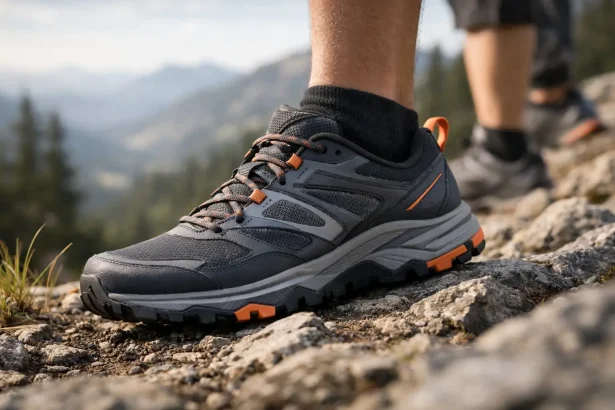
Leather, suede, smooth mesh, and tidy knit uppers are the safest materials. A little texture is good. Muddy color blocking, oversized heel clips, and thick trail lugs are usually not. We love a serious trail shoe for wet weekends. We just would not wear one with tailored pants unless the office is extremely relaxed.
Color matters too. White is the easy answer, but it is not the only answer. Off-white, gray, navy, black, brown, and muted green can look even better because they hide scuffs and do not pull focus from the rest of your outfit. Bright running colors can work in a creative office. In a more traditional workplace, they are a gamble.
The sole is where many good-looking shoes lose the plot. You want enough cushioning to make walking pleasant, but not a stack so tall it makes your pants sit strangely or turns your outfit into sportswear. A moderate sole looks grounded. It also tends to be more stable when you are standing at a desk or moving around an office all day.
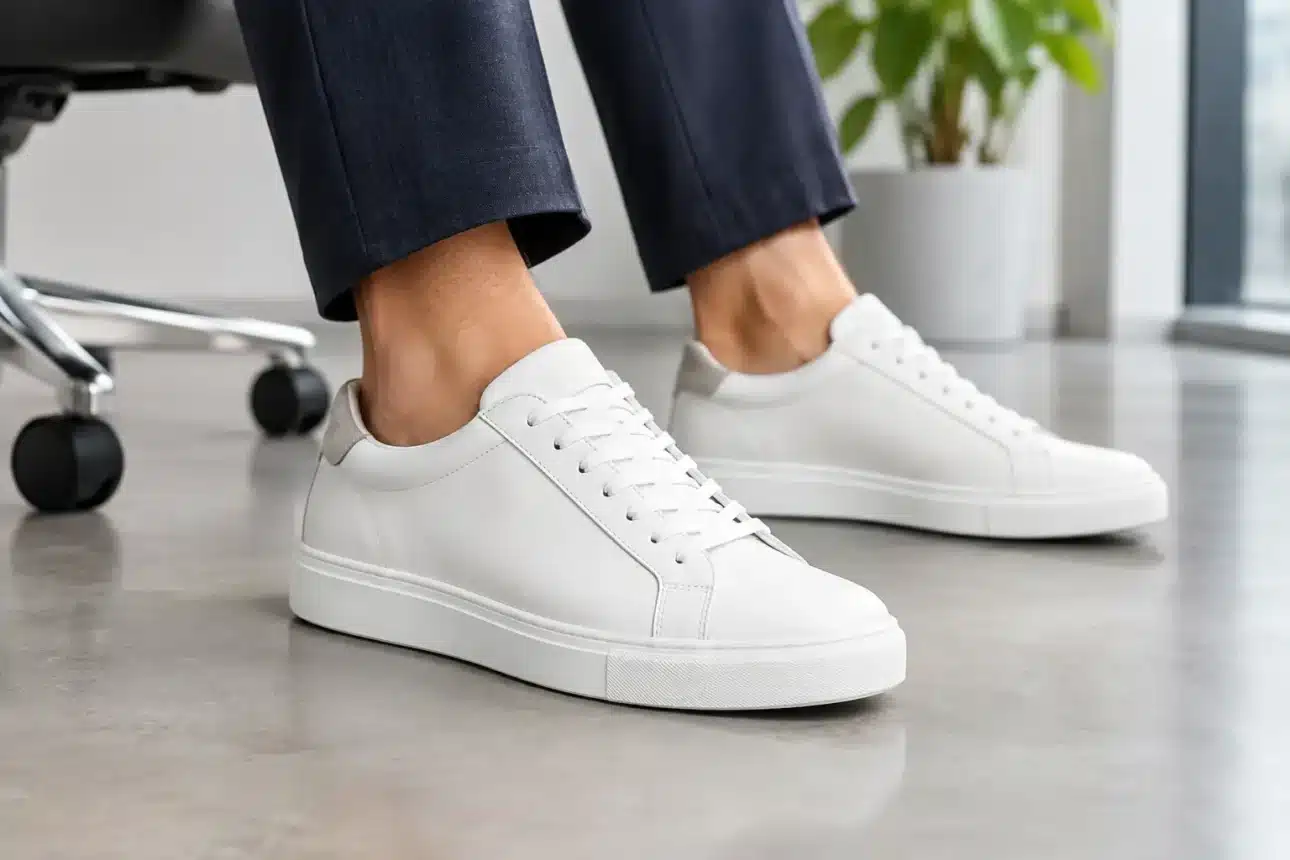
Court-style sneakers are still the safest pick for most offices. Think simple leather or suede uppers, a low cupsole, and limited branding. They work with jeans, chinos, casual trousers, and even a relaxed suit if the suit is not too formal.
Models in the Adidas Stan Smith or Samba lane, Nike Killshot-style shoes, and similar clean Puma or New Balance options make sense here. The exact model matters less than the finish. Keep them clean. A white leather sneaker covered in coffee stains is not “lived-in.” It is just dirty.
The trade-off is cushioning. Many classic court shoes look excellent but feel pretty flat after a long day. If your commute is short and you sit most of the time, that may be fine. If you walk several miles before lunch, we would choose a more modern shoe with a similar clean shape.
A retro runner can be a very good office shoe when it stays controlled. New Balance is especially strong here. Shoes with suede panels, mesh, and gray or navy colorways have enough personality without looking like performance gear.
We like this category for offices that lean smart casual rather than business casual. A gray New Balance-style runner with dark denim and an overshirt feels current without trying too hard. It is also more forgiving than a flat court sneaker when your day involves lots of walking.
The warning: not all retro runners are subtle. Some have huge logos, shiny panels, or loud color mixes. Those are fun on weekends. At work, they can make the rest of a simple outfit look accidental.
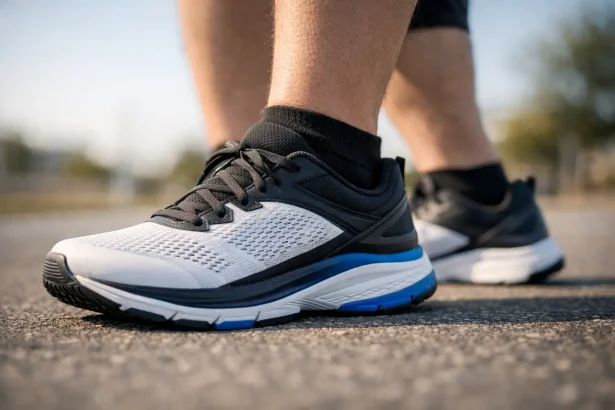
If your feet are tired by the end of the day, a cleaner modern running-inspired sneaker is often the sensible move. Brands like On, Hoka, Brooks, Asics, and New Balance make shoes with cushioning that feels noticeably softer underfoot than a classic lifestyle sneaker.
For a casual office, pick the toned-down versions. Black, gray, white, or one-color uppers are easier to wear than neon accents and racing stripes. You still get the soft ride, but the shoe does not look like it is waiting for a starting gun.
We would not force a max-cushion running shoe into every office outfit. Some are too tall, too technical, or too wide-looking for slimmer pants. They work best with relaxed chinos, straight-leg jeans, cargo pants, or looser trousers. If you wear narrow dress pants, a leaner sneaker will look better.
Black sneakers are underrated for work. They are practical, easy to maintain, and less casual-looking than bright white pairs. A simple black leather sneaker can stand in for a casual dress shoe without making your outfit feel stiff.
They are especially useful in colder months, on rainy commutes, or in offices where white sneakers feel a little too weekend. Just avoid an all-black shoe with a giant foam midsole if your goal is polish. It can read more security-guard uniform than smart casual.
The most stylish answer is not always the best one. Your commute and desk setup matter.
If you drive to work, sit most of the day, and mainly want something better than loafers, clean court sneakers are hard to beat. They look sharp and do not need much thought. If you walk, take transit, or spend hours on your feet, put comfort higher on the list. A restrained retro runner or a low-key cushioned model will make more sense by late afternoon.
If your office has a dress code, read the room before buying five pairs of chunky sneakers. Look at what people wear in leadership meetings, client-facing roles, and interviews. A casual office does not always mean anything goes. In some places, crisp sneakers are fine but running shoes are not. In others, everyone wears performance footwear and nobody cares.
We also think it helps to keep one pair specifically for work. Not because sneakers need to be precious, but because office shoes get noticed. Rotate them, wipe them down, and replace worn laces. A basic pair that is clean will look better than an expensive pair that has been through three music festivals.
The easiest formula is straight-leg jeans or chinos, a plain tee or knit, and a clean sneaker. Add an overshirt, cardigan, or unstructured jacket if you need to look more put together. This works because the sneaker is one casual piece in an otherwise tidy outfit.
With trousers, keep the hem in mind. Cropped or lightly broken pants show off the shoe without bunching over it. Wide-leg trousers can work with chunkier sneakers, but a tiny minimalist shoe may disappear under them. Slim pants usually look best with low-profile court shoes or lean retro runners.
Socks are not a small detail. White crew socks can look right with retro runners and casual denim. With cleaner trousers, socks that match your pants or shoes usually create a smoother line. Novelty socks are fine if that is your thing, but they can turn a good outfit into a costume fast.
Some shoes look great but wear terribly. Others wear wonderfully but are hard to make office-ready. We would skip deeply worn gym trainers, aggressive trail shoes, basketball high-tops in loud colors, and anything with a sole so thick it changes how you walk.
We would also be careful with ultra-minimal shoes that have no cushion at all. They photograph well. That does not mean they are pleasant after a commute, a standing meeting, and a grocery run on the way home. If you are on your feet all day, skip the flat ones unless you already know your feet are happy in them.
The same goes for buying purely by trend. A shoe can be everywhere online and still make no sense for your wardrobe. If it only works with one outfit, it is probably not your everyday office pair.
Pick the shoe that fits the most demanding part of your day. For some people, that is a client meeting. For others, it is a two-mile walk to the train. Then choose the cleanest version of that shoe you can honestly see yourself wearing three times a week.
That is the sweet spot: a pair you do not have to think about in the morning and do not want to take off at 5 p.m. Your office does not need another uncomfortable dress shoe pretending to be professional. It needs you to show up comfortable, pulled together, and ready to get on with your day.