Cart
No products in the cart.
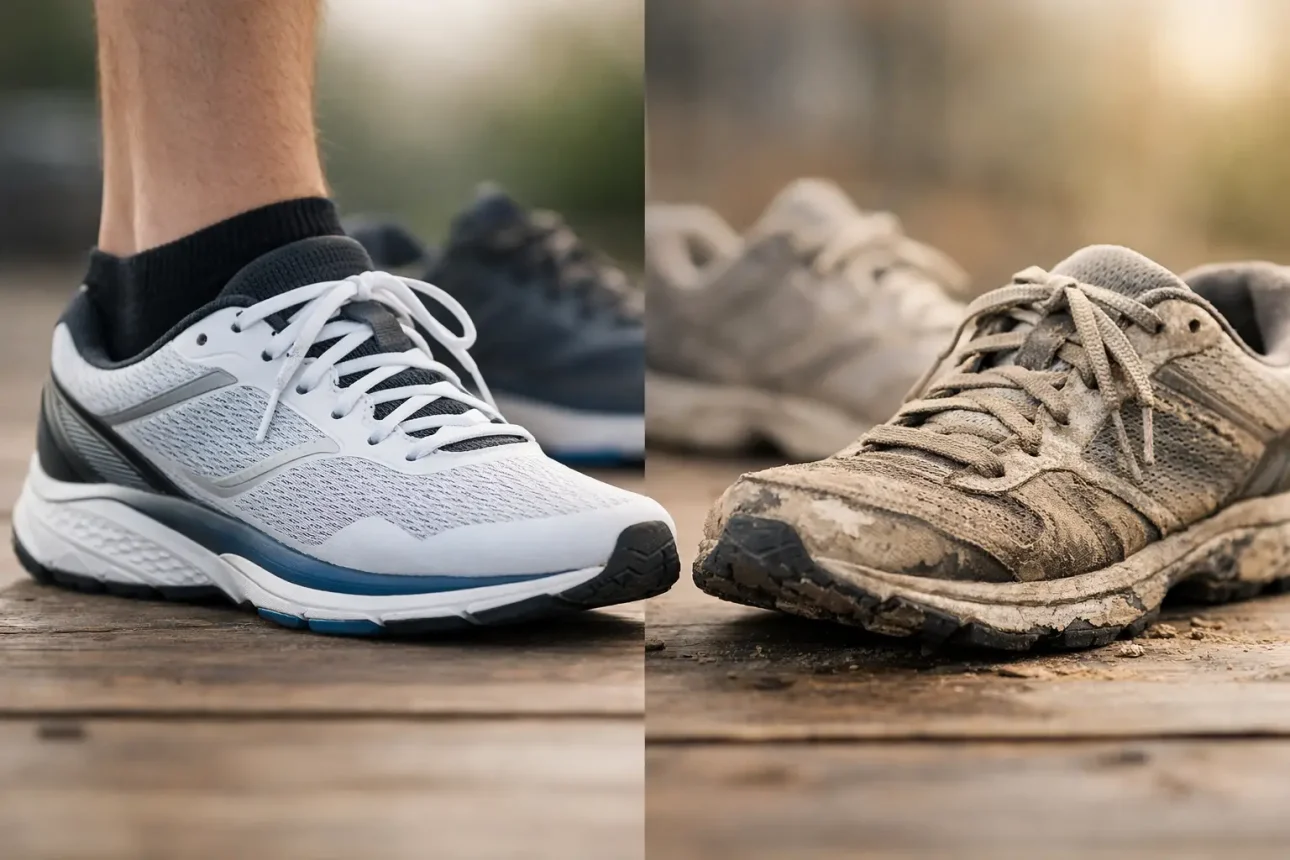
A pair can look almost new, still have tread, and feel completely dead underfoot. So, do running shoes expire? Yes, sort of. They do not come with a dramatic expiration date stamped on the box, but the foam, glue, rubber, and upper materials all age. Miles speed that up. Bad storage can speed it up even more.
We would not throw out a shoe just because it has been sitting in a closet for a year. That is wasteful. But we also would not trust a five-year-old pair for a long run simply because the outsole looks clean. Running shoes are built to absorb thousands of impacts. Once that cushioning stops doing its job, your feet and legs notice.
Age matters, but it is not the whole story. A pair worn three times a week for six months can be more worn out than a pair bought two years ago and used for short walks. What actually matters is the condition of the midsole – the thick foam layer between your foot and the ground.
That foam is where the magic happens when a running shoe is fresh. It softens impact and helps the shoe feel stable instead of harsh. Over time, foam compresses. It can also dry out, stiffen, crack, or lose its spring even when the shoe has barely been used.
This is why we are cautious with old deadstock running shoes. A vintage sneaker can be a cool casual pickup. An old performance runner is a different bet. If it has spent years in a hot garage, damp basement, car trunk, or direct sunlight, the materials may have aged badly before you ever lace it up.
Most modern running shoes stored indoors in a cool, dry place should be fine for a few years if unworn. But that does not mean they will feel factory-fresh forever. If you are buying an older model at a big discount, use your eyes and hands before trusting it for race day.
For most runners, the useful lifespan lands around 300 to 500 miles. That is a range, not a rule carved into stone. A lighter runner who sticks to smooth roads may get more life from a shoe. A heavier runner, a hard heel striker, or someone running rough trails may wear through the same model faster.
Shoe type matters too. A stripped-back racing flat is not built to last like a chunky daily trainer. Softer, highly cushioned foams can feel amazing early on, then lose their pop faster than firmer foam. That is the trade-off. We love a soft ride for easy miles, but soft foam is not invincible.
If you do not track mileage, do not panic. You can still spot a tired shoe by paying attention to how your runs feel. A pair that used to disappear under your feet may start feeling slappy, flat, or oddly unstable. You might feel more pounding in your calves or knees after a route that normally feels easy.
That does not automatically mean the shoes caused every ache. Training load, recovery, terrain, and form all matter. Still, if your body starts complaining at the same time your shoes start feeling flat, we would take the hint.
The outsole is the obvious place to look, but it is not the only place. In fact, runners often replace shoes too late because the rubber still looks decent while the foam underneath has already given up.
Check for these signs:
A smooth patch of outsole rubber is not always a deal-breaker for walking, but it is a poor sign for running in wet weather. Less rubber means less grip. Combine that with flattened cushioning and you have a shoe that is asking for retirement.
Here is a simple test we like: compare an older shoe with a newer pair of the same model, if you have one. Press your thumb into both midsoles. Walk around the house in each. The difference is often obvious. The older pair may feel like a sofa cushion that has been sat on for years. Not dangerous by default, just not what you paid for.
Nothing dramatic may happen on the first run. That is why people keep doing it. The problem is gradual: less cushioning, less support from the upper, less reliable traction, and more work for your feet to keep the shoe stable.
We are not saying worn shoes guarantee an injury. Bodies are more complicated than that. But if a shoe is no longer absorbing impact well or holding your foot securely, it is not helping. Why make your runs harder to save a pair that has already done its job?
There is a place for retired runners. They can become dog-walking shoes, gardening shoes, gym shoes for light lifting, or paint-the-wall shoes. Just do not give them a second career as your long-run pair. Flat, worn running shoes are especially bad for long days on your feet if they feel harsh by lunchtime.
Heat is the enemy. Leaving running shoes in a hot car for weeks can bake the foam and weaken glue. Humidity is not much better, especially for shoes stored in a damp basement or shed. Materials can break down, mold can form, and the outsole may harden.
Keep unworn pairs indoors, away from radiators and direct sun. A closet shelf is better than a garage. Do not seal damp shoes in a plastic bag after a rainy run either. Take out the insoles, loosen the laces, and let them dry at room temperature. No hair dryer. No heater. Fast heat can warp materials and make the upper feel weird.
If you rotate between two pairs, both pairs get a chance to dry and rebound between runs. That can help, especially if you run often. It also gives you a useful comparison. When one pair suddenly feels flatter than the other, you know which one is nearing the end.
Replace your running shoes when the ride changes enough that you notice it. That is our honest rule. The mileage number is useful, but your feet get the final vote.
If you are training for a race, do not show up in a pair that is already on its last legs. Buy the replacement early enough to get several runs in it first. New shoes can feel different, even when you buy the same model again. Brands tweak foam, fit, and upper materials more often than they admit.
And do not assume more cushioning always means more durability. Some thick shoes stay comfortable for ages. Others feel brilliant for a few hundred miles, then go flat fast. We would rather have a shoe that feels right for its intended life than a heavy brick that lasts forever.
Your running shoes do not need a funeral when they lose their bounce. Give them an easier job, replace them before your next big training block, and let your feet run on something that still feels like it wants to be there.