Cart
No products in the cart.

That clean pair of lifestyle sneakers might feel fine for a coffee run. The real test comes three hours later, when you have crossed town, stood in line, taken the stairs, and still need to get home. So, are lifestyle sneakers good for walking? Sometimes. But plenty of them are better at looking good in photos than carrying you through a full day.
We like lifestyle sneakers. They are easy to wear, they work with almost anything, and some genuinely feel great underfoot. But “lifestyle” is a style category, not a promise of walking comfort. A chunky sole can be soft or it can be a heavy slab. A classic low-top can look perfect with jeans and still leave your arches begging for a chair.
For short, casual walks, most decent lifestyle sneakers are completely fine. Walking the dog, heading to class, meeting friends, commuting with some sitting in between – no problem if the fit is right.
For long days on your feet, we would be pickier. Think city breaks, theme parks, travel days, retail shifts, or 10,000-plus-step routines. That is where the gap between a lifestyle shoe and a proper walking or running-inspired shoe starts to show.
The problem is usually not one dramatic flaw. It is the small stuff adding up: a flat insole, a stiff upper rubbing your heel, little room for your toes, or a sole that feels dead after an hour. Your feet do not care that the shoe has a famous logo. They care whether there is enough cushioning and support when it is 5 p.m.
A lifestyle sneaker with a modern foam midsole can be a strong walking option. A retro court shoe with a thin rubber sole? We love the look, but we would not choose it for a full day of sightseeing. That is not hate. It is just using the right shoe for the job.
Forget the marketing language for a minute. A good walking sneaker should feel stable, comfortable, and easy from the first few blocks to the last. You should not have to “break it in” by suffering through blisters.
Soft foam takes the edge off sidewalks and concrete. That matters more than people think. Hard pavement sends impact back through your feet all day, especially if you walk with a heavy heel strike.
But super-soft is not always better. If the foam feels like you are standing on a mattress, your feet can work harder to stay balanced. We want cushioning with a little structure. It should soften the landing without making the shoe feel wobbly.
This is why performance-inspired lifestyle models often beat old-school fashion silhouettes for walking. Brands like New Balance, Asics, Hoka, On, Brooks, Adidas, and Nike all make shoes with foams designed for movement. Not every model is a winner, obviously, but the starting point is usually better.
Walking is repetitive. Thousands of steps means tiny fit issues become big annoyances. A stable shoe has a base wide enough to support your foot instead of tipping you side to side. The heel should feel held in place, not loose and floppy.
High stacks of foam can feel amazing, but they are not automatically the best choice. If you tend to roll your ankle or feel unsteady in tall shoes, a lower, wider platform may suit you better. The shoe does not need to control every move you make. It just should not fight you.
Your feet spread as you walk. They can swell a bit during long days too. If your toes are packed into a narrow front end, you will know about it by lunchtime.
We would rather see a little extra room up front than a sneaker that looks sleek but pinches. Your longest toe needs some space before the end of the shoe, roughly a thumb’s width. The heel should stay secure while your toes can relax. That balance matters.
A walking shoe should bend near the ball of your foot, where your foot naturally flexes. If it is stiff like a board from heel to toe, every stride can feel clunky. If it folds in half with no resistance, it may not provide much support over distance.
Try this at home: hold the heel and toe and gently flex the shoe. You are looking for a natural bend in the forefoot, not a shoe that twists like a towel.
Some silhouettes make more sense for style-first days. We would keep flat canvas sneakers, thin-soled retro court shoes, and heavy platform sneakers for shorter plans. They can all look excellent. They are just not our first choice when the map says you will be walking six miles.
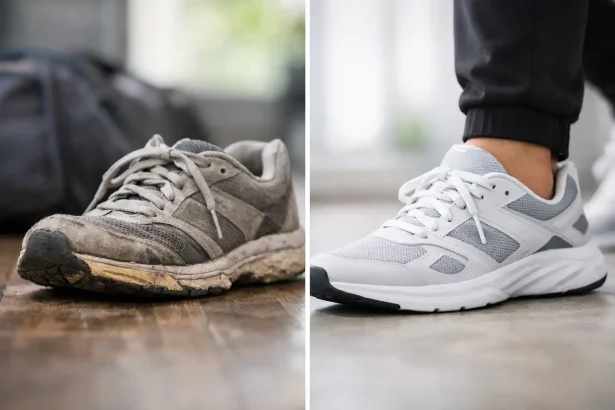
Flat shoes are the biggest trap. They feel simple and familiar, but many offer very little between your foot and the ground. Add a removable cushioned insole and they may improve, but an insole cannot fully change a narrow, stiff, flat shoe into a walking shoe.
Heavy sneakers are another mixed bag. Weight matters after a few hours. A bulky pair that feels fine walking from the car to dinner can start to feel like ankle weights during travel. If the extra bulk comes with serious cushioning and stability, fair enough. If it is just there for the look, we would skip it for long distances.
Leather uppers can also need time. Soft leather can mold nicely to your foot. Stiff leather can chew up your heel before it gets there. Do not take a brand-new pair on vacation and hope for the best. That move has ruined more than a few good trips.
There is a middle ground here. You do not have to dress like you are heading to a marathon just because you want comfortable shoes.
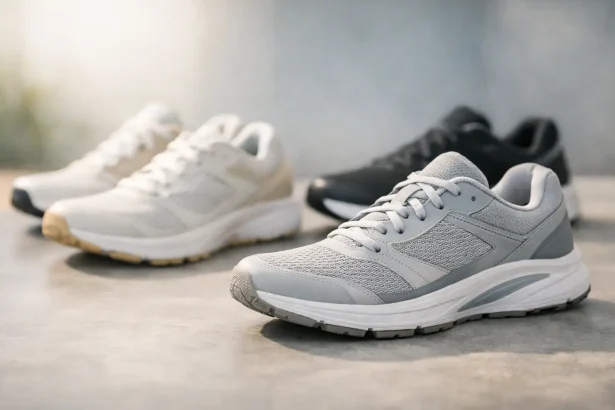
Lifestyle versions of running and walking shoes are often the sweet spot. They have enough cushioning for real miles, but their colors and shapes work with everyday clothes. A clean neutral runner with jeans, cargos, shorts, or relaxed trousers is easier to style than people make out.
We also like retro runners for moderate walking. Many have more cushioning and a more forgiving shape than flat court sneakers, while keeping that throwback look. Just check the specific model. “Runner” in the name does not mean it feels like a current running shoe. Some are built from old designs, and old designs were often much firmer than what people expect now.
At SneakerPrime, we would steer a shopper who walks a lot toward a comfort-driven model first, then help them find a colorway they will actually wear. A shoe that sits in the box because it is too sporty is not useful. But neither is a stylish pair that makes you dread the walk home.
Start with your real routine, not the version of you who plans to take long walks every morning. If you mainly drive, sit at work, and walk a few blocks at a time, a lifestyle sneaker with decent padding is likely enough. Choose the pair you like wearing.
If you commute on foot, work standing up, travel often, or regularly hit high step counts, buy for comfort first. Look for a cushioned foam midsole, a secure heel, breathable materials, and a shape that gives your toes room. Trying shoes on late in the day is smart because your feet are closer to their largest then.
Wear the socks you normally wear, too. A sneaker that fits perfectly with thin socks may feel tight with your usual crew socks. Walk around indoors. Pay attention to heel slip, pressure across the top of the foot, and whether your toes hit the front when you roll forward.
If you use custom orthotics or need extra support because of ongoing foot pain, choose a shoe with a removable insole and enough depth to accommodate it. And if pain keeps showing up no matter what you wear, talk to a qualified clinician. Shoes can help with comfort, but they are not a medical fix.
Lifestyle sneakers can be good for walking, but the category is too broad to trust on its own. Pick a cushioned, stable, well-fitting pair and you may get style and all-day comfort in one shoe. Pick a flat, narrow, heavy pair because it looks good from across the room, and your feet may send you a very direct review.
Our advice is simple: save style-first sneakers for style-first plans. When walking is the plan, let comfort have a vote. You will still look good. You will just enjoy getting there.