Cart
No products in the cart.
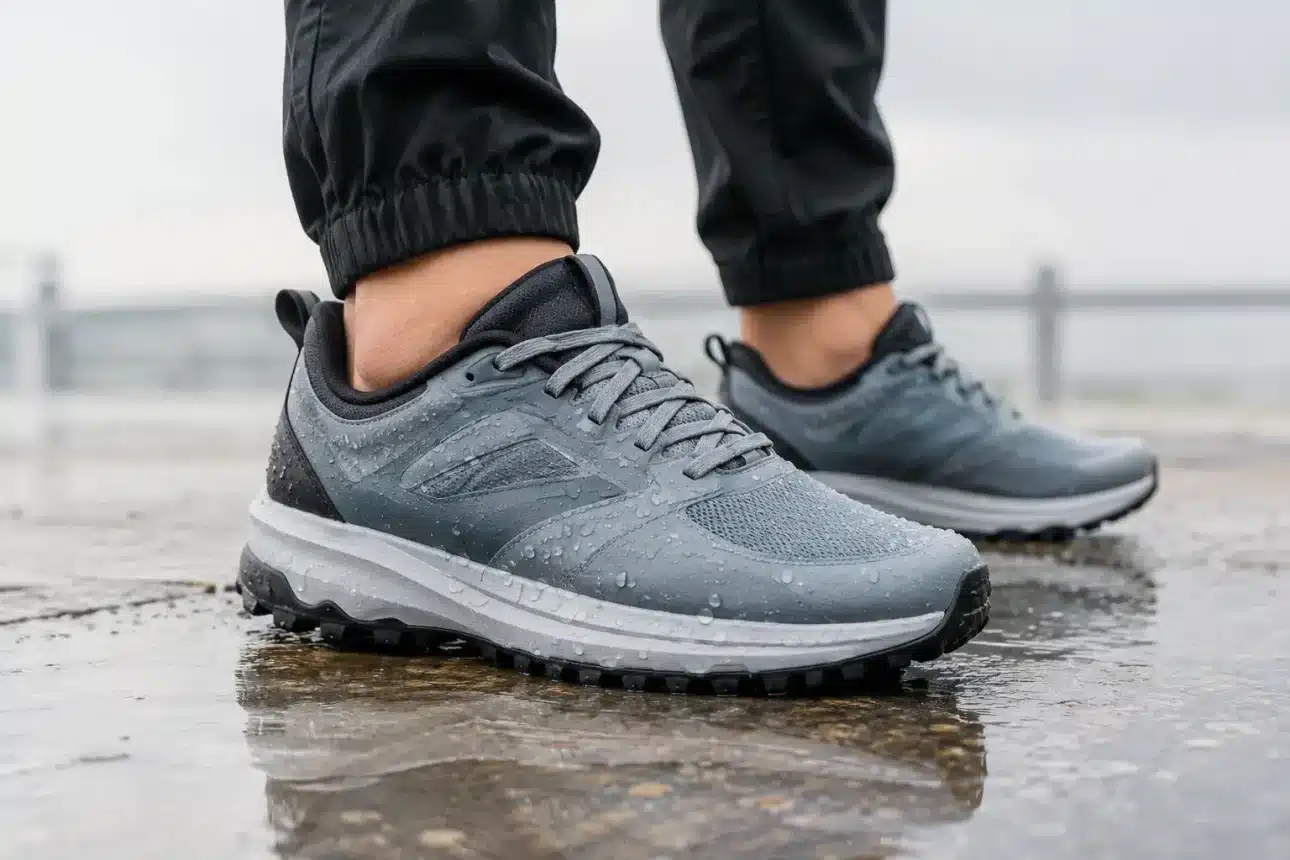
A wet commute can turn a good pair of sneakers into a cold, squelchy regret before lunch. That is where water resistant sneakers earn their place. They are built to handle drizzle, damp sidewalks, splashes, and the occasional shallow puddle without making your socks feel like they have given up on life.
But let’s be clear: water resistant is not the same thing as waterproof. A lot of people buy the wrong shoe because brands blur that line. We think most people do not need a heavy waterproof trail shoe for normal city weather. They need a pair that keeps up when the forecast gets annoying, still feels good after a long day, and does not look like hiking equipment.
Water resistance means the upper material is treated or constructed to slow water down. The shoe might use coated mesh, tightly woven synthetic fabric, treated leather, or a membrane under the outer layer. Rain beads up, light splashes stay outside, and your feet get more time before moisture works its way in.
That last part matters. Water-resistant shoes buy you time. They are excellent for walking from the train to work, running errands in a shower, taking the dog out, or getting caught in rain when you had other plans. They are not made for standing in ankle-deep water or hiking through soaked grass for two hours.
Waterproof sneakers are designed to block water more completely, usually with a membrane and sealed construction. They are better for sustained rain and muddy trails. The trade-off is that waterproof shoes often run warmer and dry more slowly once water gets inside from the top. If you live somewhere rainy and spend lots of time outdoors, that trade-off can be worth it. If you mostly live in a city, water resistance is often the smarter, less sweaty option.
We like these shoes most for people whose day does not stop because the sidewalk is wet. Think commuters, students crossing campus, dog walkers, travelers, and anyone who walks a lot but refuses to plan an outfit around the weather app.
They also make sense for runners who deal with occasional rain. A water-resistant running shoe can take the edge off a damp morning without feeling as stiff or hot as a fully waterproof version. Just do not expect it to stay dry after repeated puddle strikes. Water will find the collar eventually. It always does.
For gym-only use, we would usually skip them. A standard breathable trainer is better indoors, especially if your workouts make your feet run hot. The water-resistant layer adds protection, but it can cut airflow. There is no reason to pay for rain coverage if your biggest weather event is a spilled water bottle.
A water-resistant badge is a starting point, not the whole story. We look at how the shoe is put together because that tells you whether it will be useful or just sound useful.
Treated leather and synthetic overlays are good at shrugging off light rain. They are usually easier to wipe clean too, which makes them a solid choice for daily lifestyle wear. The downside is that they can feel less airy than open mesh.
Tightly woven mesh gives a sneaker a lighter, sportier feel. It often works well for running and walking, but coverage varies. If the toe box has large exposed mesh holes, water can still get in fast. A shoe with protective overlays around the toe and sides is usually the better bet for sloppy sidewalks.
Dry feet do not help much if you are sliding around on painted crosswalks. Look for rubber coverage and a tread pattern with visible grooves. You do not need aggressive trail lugs for city streets, but a smooth, flat sole is not our first choice when conditions are slick.
This is where some stylish sneakers lose points. Plenty look clean in product photos, then feel sketchy on wet tile or polished concrete. If rain is part of your regular life, put grip ahead of the cleanest possible sole design. Your knees will appreciate the decision.
Do not size down to make a water-resistant sneaker feel tighter. That usually creates pressure around the toes, especially when your feet swell after walking all day. Wear the socks you actually use, then make sure there is a little space in front of your longest toe.
If you plan to wear thicker socks in colder months, check the fit with those too. A shoe that feels perfect with thin ankle socks can turn cramped with a normal crew sock. Rainy weather is already irritating. A pinched toe box makes it worse.
For everyday city wear, we would lean toward a lifestyle sneaker with a water-resistant upper, supportive cushioning, and a rubber outsole. It should work with jeans, joggers, or work-casual clothes without looking like you are headed for a mountain rescue. Brands such as Nike, Adidas, New Balance, and Puma often have options that land in this zone, depending on the model.
For long walks or travel days, cushioning deserves more attention. You want a shoe that still feels decent at 5 p.m., not one that only looks good leaning against a café wall. Hoka, On, Brooks, and ASICS are worth considering when walking comfort is the priority. Just check whether the particular version has weather protection. A brand known for comfortable runners does not mean every shoe in its lineup handles rain.
For running, keep the choice practical. A water-resistant road shoe is useful for cold drizzle and wet pavement, especially if you run before work. But if you run in warm weather, regular breathable mesh may still be the better call. Wet socks are annoying. Overheated feet are annoying too. Pick the problem you deal with more often.
For trails, we would step up to a waterproof trail runner if the ground is regularly muddy, wet, or uneven. Trail conditions punish lightweight city shoes. You need better traction, more toe protection, and a build that can take dirt without falling apart emotionally after one weekend.
The treatment on a water-resistant upper will not last forever. Dirt, road salt, and grime wear it down, so a little care keeps the shoe doing its job longer. After a wet day, wipe off mud with a damp cloth and let the sneakers air-dry at room temperature. Do not put them on a radiator or blast them with a hair dryer. High heat can damage glue, warp materials, and make the upper feel rough.
If the outside stops beading water and starts soaking it up, use a sneaker-safe water-repellent spray that suits the material. Clean the shoes first, let them dry fully, then apply the spray evenly in a ventilated area. It is a small job, but it can bring an older pair back into regular rotation.
Also, do not confuse a water-resistant upper with an odor-proof shoe. If your feet get wet, remove the insoles if possible and stuff the shoes loosely with paper to absorb moisture. Give them a full day to dry. Wearing damp sneakers again the next morning is a fast way to make them smell like a locker room nobody cleans.
We think water-resistant sneakers are one of the most useful versions of an everyday shoe, as long as you buy them for the right reason. They are not magic rain boots in sneaker form. They are normal-looking shoes that make bad weather less of a hassle.
Choose a pair with grip, enough cushioning for your routine, and protection that matches the rain you actually deal with. If your walks involve city blocks and surprise showers, they make a lot of sense. If you are heading into deep puddles, mud, or nonstop rain, grab proper waterproof footwear instead. Your sneakers can handle the weather. They just should not have to fight a flood.