Cart
No products in the cart.
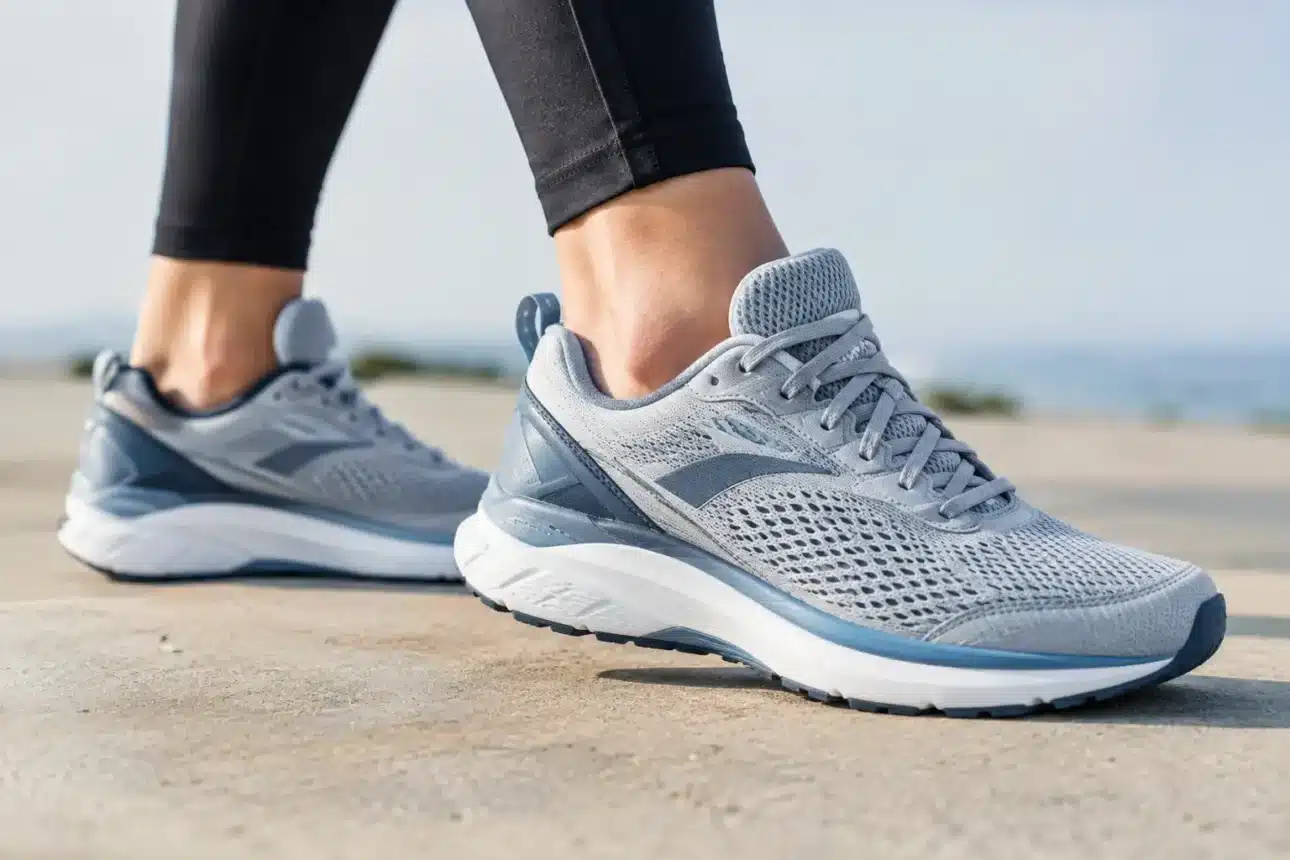
A good walk can turn bad fast when your shoes start fighting your feet. That is why this guide to walking shoe support skips the jargon and gets straight to what matters: how the shoe feels after an hour, not how impressive its product page sounds. We like stylish sneakers as much as anyone, but if you walk a lot, a flat fashion shoe can be a long day in disguise.
Walking support is not about finding the stiffest, thickest shoe in the store. It is about finding a shoe that works with the way you move. For some people, that means soft cushioning. For others, it means a stable base that does not let the foot roll around. Usually, it means a smart mix of both.
Support is a catch-all word, and brands use it loosely. In real life, it comes down to four things: cushioning, stability, fit, and flexibility. Get those right and your shoes should feel steady without feeling like ski boots.
Cushioning is the foam between your foot and the ground. It takes the edge off hard sidewalks, store floors, and concrete parking lots. More cushioning can feel amazing, especially if your route is mostly pavement. But super-soft foam is not automatically better. If it is too squishy for you, your foot may feel like it is working harder to stay balanced.
Stability is how planted the shoe feels when you land and push off. A wide base, a secure heel, and some structure through the middle of the shoe can make a big difference. We are not saying everyone needs a stiff stability model. Plenty of walkers do well in neutral shoes. But if your old shoes feel wobbly or the heel keeps collapsing inward, a more stable platform is worth trying.
Fit is support too. A shoe that slides at the heel, crushes your toes, or pinches across the top is not supportive, no matter how much foam it has. And flexibility matters because walking is a rolling movement. The forefoot should bend where your toes bend. If the whole shoe feels like a plank, it may be more shoe than you need.
Start with how and where you actually walk. Not the version of you who plans to hit 15,000 steps every day next month. The version of you who walks now.
If you are moving through a city, commuting, shopping, or standing between tasks, comfort over many hours is the main job. Look for a shoe with moderate to plush cushioning, a secure heel, and enough room for your toes to spread out naturally.
This is where a lot of lifestyle sneakers fall short. Some look clean and feel fine for coffee or dinner, then turn hard and flat around hour three. A sport-inspired walking shoe may not always be the coolest option in the room, but your feet will care more at 5 p.m. than they did in the mirror at 8 a.m.
Models from New Balance, ASICS, Brooks, Hoka, and On often make sense here because many are built around repeated impact and long wear. That does not mean every shoe from those brands will suit you. It means they are sensible places to start when comfort is the priority.
A brisk walk asks more of the shoe than a casual stroll. You want cushioning that rebounds instead of feeling dead, plus a heel that stays locked in when you pick up the pace. The shoe should move smoothly from heel to toe without forcing your foot into a strange stride.
We would choose a lightweight running shoe over a heavy leather sneaker for this job almost every time. Running shoes are not only for runners. Many of them are excellent walking shoes because they are made to handle thousands of repeated steps. Just avoid choosing the softest foam blindly. For fast walking, a stable, controlled ride often feels better than a bouncy one.
Walking and standing are related, but they are not the same. If you work retail, hospitality, healthcare, warehouses, or any job where you spend hours upright, a broad platform and steady cushioning matter more than a quick, springy feel.
Look for enough underfoot foam to soften hard floors, but do not ignore the upper. A soft upper that lets your foot drift side to side gets annoying fast. We prefer shoes that hold the heel securely while leaving enough space in the front. Your feet often swell a little over a long day, so a fit that is barely acceptable in the morning can become miserable by afternoon.
Travel shoes need to do more than walk well. They need to survive airport lines, city streets, stairs, and a full day of bad decisions about how far the restaurant really was. A versatile cushioned sneaker is usually the better pick over a heavy hiking shoe or a thin casual trainer.
Choose something easy to wear for hours, stable on uneven pavement, and simple enough to pair with most of your clothes. We would rather pack one dependable walking shoe than three pairs that each do one thing badly.
There is no prize for wearing the thickest sole. High-stack shoes, meaning shoes with a lot of foam underfoot, can make concrete feel less harsh. They are a strong choice for long walks, travel, and anyone who simply likes a softer landing.
The trade-off is ground feel. A taller, softer shoe can feel less connected and sometimes less steady on uneven paths. If you tend to feel unstable in plush shoes, choose moderate cushioning with a wider base. You still get protection from hard ground without the floating-on-a-mattress sensation.
Low-profile shoes have their place too. They can feel nimble, lighter, and more natural. But for all-day walking on pavement, we would not recommend going ultra-flat just because the shoe looks good. Minimal cushioning is a style choice for many people, not a comfort upgrade.
The heel counter is the firmer cup around the back of the shoe. It should hold your heel in place without digging into it. You do not need a rock-hard heel, but you should not be able to easily fold the entire back of the shoe flat with two fingers.
Try the shoe on and walk around indoors. Does your heel lift? Does the back rub? Does your foot feel like it is sitting on top of the midsole instead of inside the shoe? Those are signs to move on.
A secure heel makes the rest of the shoe work better. It helps you use the cushioning and platform the way they were designed to be used. Loose heels create friction, and friction is how a promising shoe becomes the pair you avoid wearing.
The middle of the shoe is where laces, overlays, and the upper keep your foot centered. This is a bigger deal than most people realize. If the midfoot is too loose, your foot slides forward. If it is too tight, you may feel pressure across the top of your foot.
We like a secure wrap that feels adjustable. Traditional laces are still hard to beat because you can loosen one area and tighten another. Slip-ons are convenient, but they are not always the best answer for longer walks. Some are excellent. Some feel supportive for ten minutes and sloppy after a mile.
If you wear orthotics or insoles, bring them when trying on shoes. The removable insole should come out easily, and the shoe needs enough depth so your foot does not sit too high once your insert is inside. If you have ongoing pain, numbness, or a condition affecting your feet, get personal advice from a qualified clinician rather than trying to solve it with a random shoe purchase.
Your toes should not touch the end of the shoe when you stand. Leave roughly a thumb’s width in front of your longest toe. That longest toe is not always your big toe, so check both feet.
Width matters just as much as length. Do not buy a shoe that feels tight and hope it will stretch into a different shape. Some uppers relax a little. The midsole does not. If the shoe squeezes the sides of your forefoot in the store, it will probably be worse after a long walk.
This is also why we are skeptical of buying your usual size without checking the brand’s fit. Sizing is messy. One brand’s snug 10 can feel like another brand’s roomy 9.5. Use your normal size as a starting point, then judge the actual fit.
You can learn a lot at home before taking the shoes outside. Wear the socks you would normally walk in, then spend 10 to 15 minutes moving around on a clean floor.
First, pay attention to heel movement. A little motion is normal, but repeated slipping is not. Next, roll through a few steps. The shoe should bend near the ball of your foot, not fight you in the middle. Finally, stand on one foot for a moment. If the platform feels wildly unstable before you even leave the house, it will not improve on cracked sidewalks.
Do not talk yourself into discomfort because the color is perfect. We have all done it. It rarely ends well.
Walking shoes are not always the answer. For steep trails, you may need more grip and protection than a road-focused sneaker offers. For serious gym lifting, a very soft, tall foam sole can feel unstable under load. For a night out where you will barely walk, wear the fashion pair if you want. Just call it what it is.
The best shoe is specific to the job. That is not boring advice. It saves you from expecting one pair to handle every surface, workout, shift, and outfit.
At SneakerPrime, we think the right walking shoe should disappear once you start moving. Not because it is dull, but because you are not thinking about pinching toes, a sliding heel, or sore feet before lunch. Start with the support your real day demands, give your toes room, and choose the pair you will actually want to put on tomorrow.