Cart
No products in the cart.
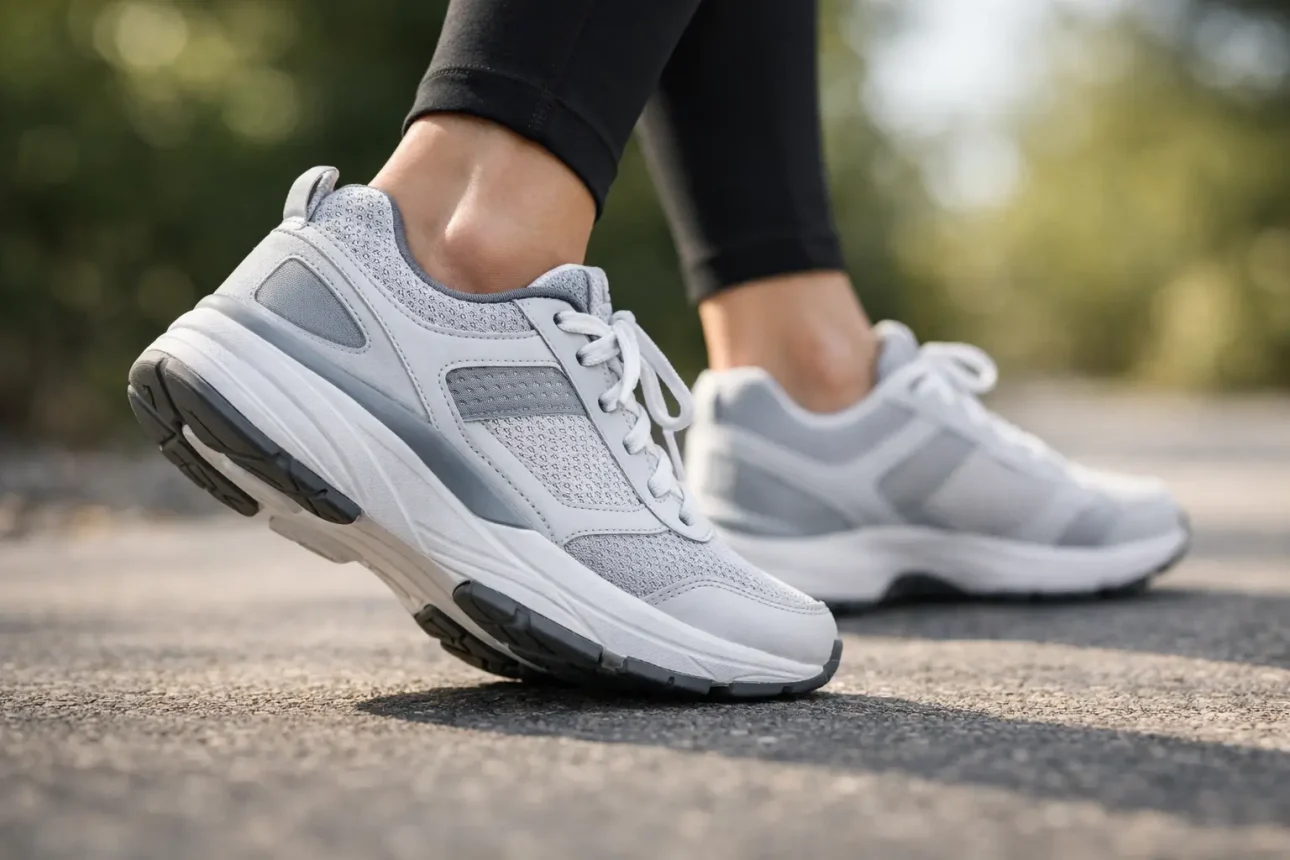
By mile three, bad shoes stop being annoying and start feeling personal. If you have flat feet, you already know that. The wrong pair can leave your arches aching, your ankles feeling sloppy, and your whole walk heavier than it should be. Good walking shoes for flat feet will not magically change your foot shape, but they can make daily movement feel a lot more stable and a lot less irritating.
We’re going to be blunt here. A lot of shoes get labeled “supportive” because they have a thick midsole and a sporty look. That doesn’t mean they’re actually good for flat feet. Some are soft in a nice way. Some are soft in a sinky, unstable way. There’s a big difference.
Flat feet are not automatically a problem. Some people have low arches and feel totally fine. Others get tired feet, sore heels, or that rolling-in feeling where the ankle seems to drift inward with every step. That’s usually the issue people are trying to solve when they shop for walking shoes.
What we look for is simple. The shoe should feel stable under the arch and heel, not wobbly. It should bend at the front of the foot, not fold in the middle like a pancake. And it should keep your foot centered instead of letting it spill over the edge of the midsole.
This is where people get tricked by extra-soft foam. Plush cushioning can feel amazing for five minutes. Then you walk a few hours and realize your foot is doing too much work to stay level. If you have flat feet, we usually prefer moderate cushioning with a stable base over super-soft foam with a narrow platform.
The first thing we check is the platform. A wide, grounded base matters more than flashy tech names. If the shoe looks tall and narrow, we get skeptical fast. Flat-footed walkers usually do better when the shoe gives them a broad landing area.
Next is midfoot support. That does not mean the arch should feel like a rock jammed into your foot. Too much arch shape can feel just as bad as too little. The sweet spot is support you notice because your stride feels smoother, not because something is poking you.
Heel structure matters too. A firm heel counter, which is the back part wrapping your heel, helps keep the rearfoot from drifting around. If the heel collapses when you squeeze it, the shoe may feel too loose in the back once you start putting real miles on it.
Then there’s flexibility. Good walking shoes flex where your toes push off. Bad ones can feel floppy through the middle. For flat feet, that midfoot fold is usually not your friend.
We’re not loyal to logos. We’re loyal to shoes that still feel good when your day is almost over.
Hoka is strong here if you want cushioning without that marshmallow mess. Models with a wider base and gentle stability tend to work well for flat-footed walkers. They often feel smooth and protective, especially on hard sidewalks. The trade-off is style. Some Hokas look great. Some look like your comfort finally beat your vanity.
Brooks is one of the safer bets if support is your main goal. Their stable walking and running models usually feel controlled without feeling harsh. We like Brooks when someone says, “I’m on my feet all day and I don’t want to think about my shoes.” That’s a compliment.
Asics also gets this category right more often than not. Their support-focused models tend to feel balanced, especially in the heel and midfoot. Not always the coolest look, but we’d rather wear slightly boring shoes than stylish ones that make us hate every sidewalk.
New Balance is another brand that understands fit. That matters because flat feet and wide feet often show up together. A good New Balance walking shoe can feel planted and roomy instead of squeezed and unstable.
On is more mixed for flat feet. Some pairs feel snappy and clean, but not all of them are forgiving if you need real support. If you like the brand’s look, choose carefully. We would not blindly recommend every On model for low arches.
Nike and Adidas have some good options, but they’re less consistent in this category. Plenty of their lifestyle sneakers look good and feel fine for quick errands, but all-day walking is a tougher test. If you have flat feet, don’t buy on looks alone. That’s how people end up with closet favorites and foot pain.
The biggest one is buying too soft. People try on a shoe, sink into it, and think, yes, this is comfort. Then the foam starts feeling unstable after an hour. For flat feet, “soft” is not always the same thing as “supportive.”
The second mistake is going too small. If your foot is flat, it may spread more when you stand. A shoe that feels sleek in the box can feel cramped by lunchtime. We usually tell people to pay attention to width as much as length. If the side of your foot is bulging over the midsole, the fit is off.
The third mistake is trusting the insole to do all the work. A removable insert is nice, especially if you use your own orthotics, but the shoe itself still needs structure. Dropping an insole into a flimsy shoe is like putting better tires on a shopping cart.
You should feel stable from the first few steps. Not stiff. Not forced. Just more centered.
Your heel should stay put without needing to crank the laces like crazy. Your arch should feel lightly supported, not attacked. And the forefoot should have enough room that your toes can spread naturally when you walk.
If you’re testing shoes at home, don’t just stand there. Walk. Turn. Go up and down stairs if you can. Flat feet often show problems in motion, not while standing still in front of a mirror.
This depends on how your feet behave, not just how they look. Some people with flat feet do perfectly well in neutral shoes, especially if the platform is wide and the upper holds the foot securely. Others really do better in a stability shoe, meaning one built to guide the foot a bit more and reduce that rolling-in feeling.
If your ankles collapse inward noticeably, or if the inside edge of your old shoes gets chewed up fast, a stability option is usually worth trying. If you have flat feet but no pain and no obvious instability, a well-built neutral walker may be enough.
We wouldn’t overcomplicate it. Your body usually tells you pretty quickly. If a shoe makes you feel more balanced and less tired by the end of the day, that’s the right direction.
We’d skip super-minimal shoes for long walks unless you already know you love them. We’d also be careful with very high, very soft midsoles that feel tippy. And we would not pick a lifestyle sneaker as your main walking shoe just because the color is perfect.
This is where honesty matters. Some sneakers are great-looking shoes. Some are great walking shoes. Sometimes those overlap. Often they don’t.
If you want one pair for both style and walking, look for models that sit in the middle – clean enough to wear casually, but built on an actual performance platform. That’s usually the smart buy.
Shopping online is convenient, but this category takes a little more attention. Read the shape of the shoe, not just the marketing copy. Wide base, structured heel, supportive midfoot, decent width options. Those clues matter.
Brand reputation helps, but model matters more. One brand can make a brilliant support shoe and a terrible flat-foot option in the next style over. We’ve seen it plenty.
If you already own a pair that works, compare everything to that. Was it the width? The firmness? The way the heel held you in? Start there. Random buying gets expensive fast.
And yes, looks still matter. We sell sneakers. We get it. Nobody wants to wear something that feels orthopedic if that’s not their thing. The good news is you don’t have to. There are plenty of walking shoes now that actually support flat feet without making you look like you gave up.
Not after one minute. After a commute, a long shift, a city walk, a grocery run that somehow turned into ten stops.
That’s the test we care about. A good pair of walking shoes for flat feet should help your stride feel less sloppy and your feet feel less cooked by the end of the day. Not perfect. Just better. And honestly, that’s usually what makes a shoe worth buying.
If your current pair leaves your arches tired and your legs annoyed, don’t overthink it. Start with stability, enough room, and a base that feels planted. Your feet usually know a bad shoe fast. They know a good one even faster.