Cart
No products in the cart.
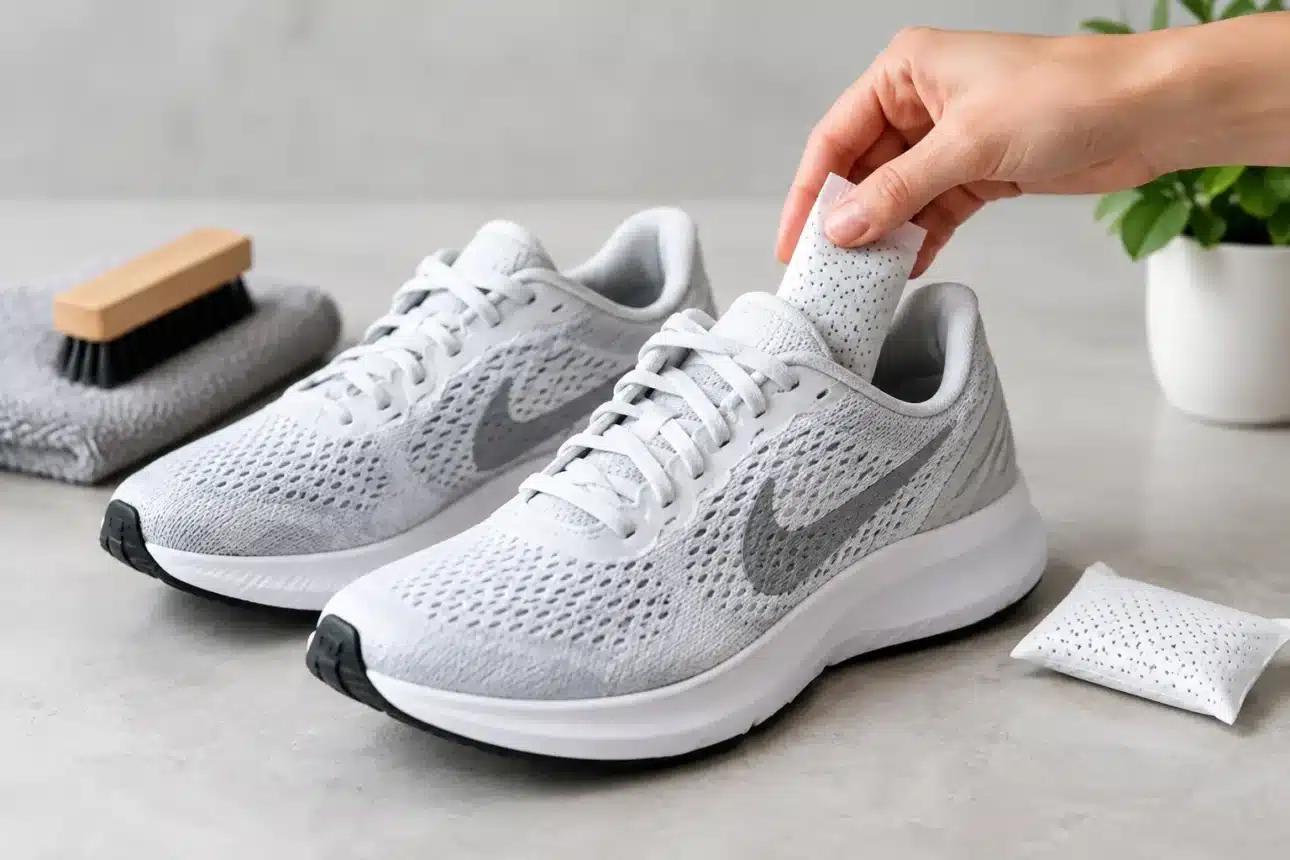
A pair of sneakers can look fresh from the outside and smell like a locked gym locker inside. It happens fast, especially with running shoes, gym pairs, and everyday sneakers worn without a break. Knowing how to remove sneaker odor is less about drowning them in fragrance and more about dealing with the sweat, bacteria, and trapped moisture causing the smell in the first place.
We’ll say this upfront: deodorizing spray alone is not the answer. It may buy you a day. It does not clean the problem. If your shoes smell again the moment your feet warm them up, they need a proper reset.
Your feet sweat. That is normal. Inside a sneaker, that moisture gets absorbed by the insole, lining, tongue, and padding around the heel. Bacteria feed on the sweat and skin cells left behind, and that is where the sharp, sour smell comes from.
Performance shoes can be especially guilty. Breathable mesh helps heat escape while you wear it, but it also holds onto moisture if you toss the pair straight into a dark closet or gym bag. Thick foam midsoles and padded collars can take longer to dry than people think.
The real enemy is not just sweat. It is sweat that stays trapped. Handle the moisture, and odor becomes much easier to control.
Start by taking out the insoles and loosening the laces. Most of the smell lives in the insole because it takes the direct hit every time you wear the shoe. Removing it also lets air reach the bottom of the sneaker, where moisture tends to sit.
If the insoles are removable, wash them by hand with warm water, a small amount of mild detergent, and a soft cloth or brush. Scrub both sides, then rinse without soaking them forever. Press them in a towel to remove excess water and leave them somewhere airy until completely dry.
Do not put damp insoles back into the shoes. That just restarts the whole mess.
If the insoles still smell after washing, sprinkle baking soda over them and leave it overnight. Shake or vacuum off the powder in the morning. Baking soda works because it helps absorb lingering odor and moisture. It is cheap, boring, and honestly more useful than most sneaker deodorizers.
If an insole is cracked, permanently flattened, or smells terrible even after cleaning, replace it. We would not keep fighting an insole that has clearly lost the battle. Fresh insoles make an old pair feel better underfoot too.
Mix warm water with a few drops of mild laundry detergent or dish soap. Dampen a cloth, wring it out well, and wipe the inside lining, heel area, and tongue. You want the fabric cleaned, not soaked.
For stubborn odor, use a light vinegar solution: one part white vinegar to three parts water. Wipe the inside, then follow with a clean damp cloth. Vinegar has a smell of its own at first, but it fades as the shoe dries. Do not use it heavily on leather, suede, or delicate materials. Those pairs need a gentler approach.
We do not recommend pouring detergent, vinegar, or disinfectant directly into your sneakers. More liquid does not mean more clean. It usually means a longer drying time and a shoe that smells worse two days later.
This is the part most people skip, then wonder why nothing worked. A sneaker that feels dry on the surface may still be wet deep in the padding.
Stuff each shoe loosely with plain paper towels or clean, unprinted paper. Replace the paper after an hour or two if it comes out damp. Leave the sneakers in a dry room with moving air and let them sit for at least 24 hours when possible.
Keep them away from radiators, hair dryers, and direct high heat. Heat can warp foam, weaken glue, and make synthetic uppers stiff. It is a fast solution right up until your favorite pair starts peeling apart.
A fan is the better move. Point it toward the opening of the shoe and let time do its job.
Sometimes, but we are not big fans of making it your default move.
Many mesh running shoes and basic fabric sneakers can survive a gentle cold wash in a laundry bag. Still, repeated machine washing can loosen glue, compress cushioning, and leave water stuck inside the midsole. It is especially rough on shoes with layered uppers, leather panels, suede, or structured foam.
Never machine wash suede, leather, nubuck, or pairs with glued-on details you care about. And never put sneakers in the dryer. The dryer is where good shoes go to become weird little shrunken shoes.
For most pairs, hand-cleaning the inside and washing the insoles separately gets the job done with less risk. Save machine washing for washable mesh trainers that are already due for a serious clean, not a quick odor fix.
Once your shoes are clean and dry, you can use something absorbent overnight to catch leftover odor. Baking soda is the obvious choice, but do not dump loose powder directly into every pair. It can be annoying to remove from mesh and seams.
Instead, place baking soda in a clean sock, coffee filter, or small breathable pouch, tie it closed, and put one in each shoe. Cedar shoe inserts and activated charcoal pouches work well too. They cost more, but they are reusable and much less messy.
Dry tea bags are another decent backup. They absorb some moisture and leave a mild scent, though they are not magic. If your sneakers smell seriously bad, tea bags are not going to rescue them on their own.
We would skip perfume, body spray, and heavily scented shoe sprays. Mixing floral fragrance with old sweat does not create freshness. It creates a more confusing problem.
The best odor fix is giving your sneakers time to dry between wears. If you train, run, or walk a lot, rotate between two pairs when you can. Your feet get a fresh shoe, and each pair gets a full day to air out. That is better for odor and often easier on the cushioning too.
A few habits make a bigger difference than expensive sprays:
Also, be honest about the fit. Shoes that are too tight make feet hotter and sweatier. Some sleek lifestyle sneakers look good but have limited airflow. We still like plenty of them, but they need more regular airing out than a breezy mesh runner.
If every pair you own develops heavy odor quickly, even with clean socks and regular drying, it may be worth checking in with a medical professional. Persistent foot odor can sometimes be related to excess sweating or a skin issue that sneaker cleaning cannot solve.
For everyone else, this comes down to a simple rule: do not seal up sweaty shoes and hope for the best. Clean the insoles, wipe the lining, dry the pair properly, and give it air before the next wear. Your sneakers do not need to smell like detergent. They just need to smell like nothing at all.