Cart
No products in the cart.
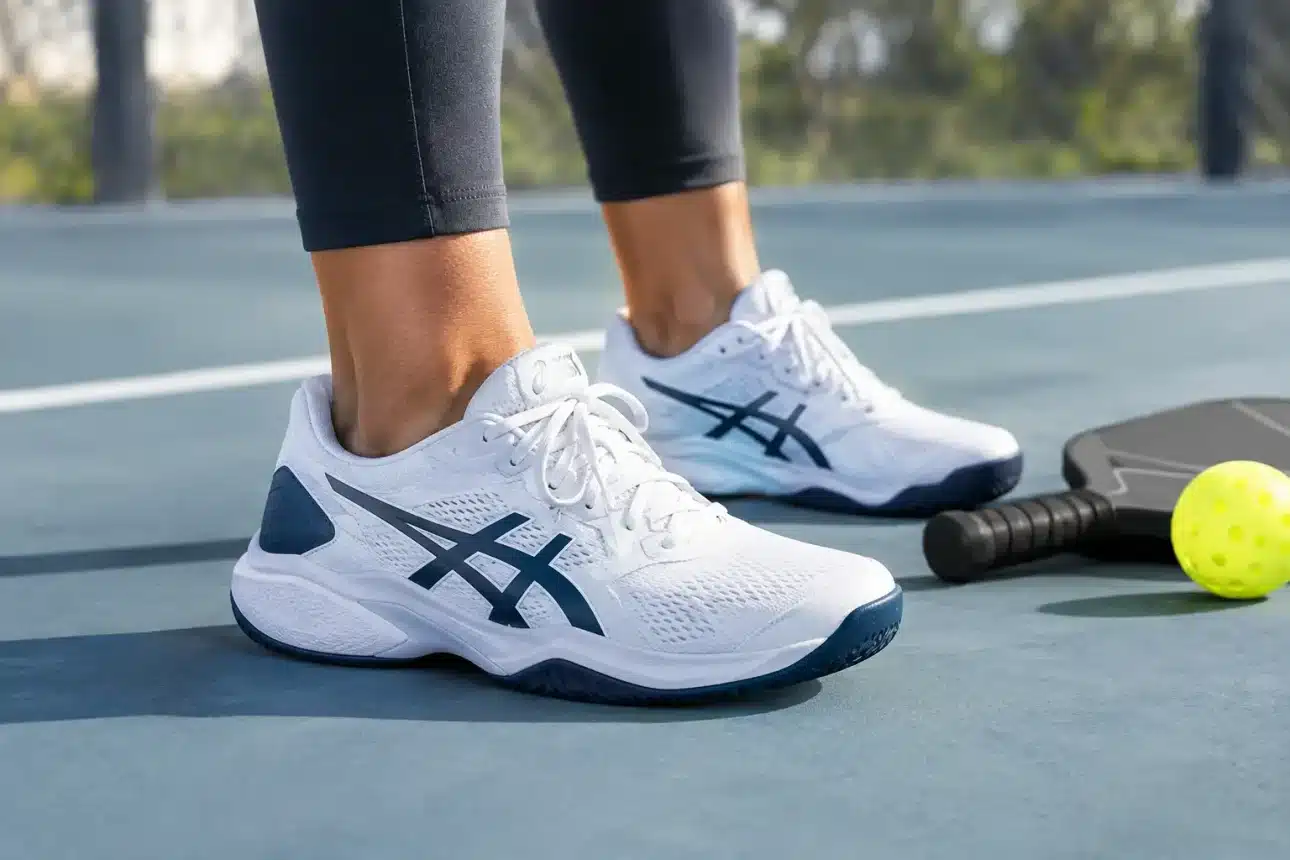
A clean dink feels great. Sliding half a step because your shoes cannot keep up does not. The best shoes for pickleball courts are not necessarily the softest, lightest, or best-looking pair in your closet. They are the ones that hold your foot steady when you stop hard, cut sideways, and sprint forward for a ball that was supposed to be out.
We will say it plainly: do not play serious pickleball in running shoes. They are built to move forward for miles, not to handle repeated side-to-side pressure. You might get away with them for a casual game. But if you play weekly, your ankles, toes, and shoe uppers will notice the difference fast.
There is no single perfect pickleball shoe. Your court surface, foot shape, playing style, and tolerance for a heavier shoe all matter. Still, a few court-focused models make more sense than the rest.
If you want a shoe made with pickleball in mind, we like the ASICS Gel-Renma. It is not trying to win a style contest. It is trying to keep you planted. The wider base feels reassuring during quick lateral moves, while the outsole is designed for the stop-start rhythm of the sport.
This is the sensible choice for newer players who have been wearing random gym shoes and want a real upgrade. The ride is firmer than a plush running sneaker, which is exactly the point. On court, too much squish can make your foot feel slow and unstable.
The trade-off is simple: it is more practical than sleek. If you want one pair for pickleball and everyday outfits, there are better-looking options. If you want a dependable court shoe, this one earns its place.
The Adidas Barricade has long been a tennis favorite, and pickleball players should pay attention. Tennis and pickleball ask a lot of the same things from footwear: grip, lateral support, and an upper that does not let your foot spill over the edge when you change direction.
We like the Barricade for players who move aggressively and want to feel locked in. It has a structured, secure feel rather than the loose, slipper-like fit some lightweight shoes give you. Bigger players and hard movers often appreciate that confidence.
Here is the honest bit: the Barricade can feel stiff at first. It is not the pair we would choose for a long day of walking around town. Give it a few sessions to break in, and make sure the fit is right from the start. A stability shoe that pinches is still a bad shoe.
The New Balance FuelCell 996v6 is a good call if heavy court shoes make you feel stuck. It is lighter and more responsive than a classic stability-first model, with enough court-ready structure for regular pickleball play.
We would point fast, athletic players toward this one. It feels more lively underfoot, especially when you are chasing a short ball or resetting after a wide return. The cushioning takes some edge off hard courts without turning every step into a foam mattress.
But lighter usually means less armor. If you drag your toes, destroy outsoles, or need maximum ankle-hugging support, the Barricade or Gel-Renma may serve you better. The 996v6 is for speed-minded players, not people looking for a tank.
The Nike Vapor Pro line is for players who hate bulky shoes. It sits lower to the ground and feels quick underfoot, which helps if you prefer to feel every move rather than stand on a tall stack of foam.
We like it for experienced players with solid footwork. The fit is usually more streamlined, and that close-to-the-court feel can make quick exchanges at the kitchen line feel sharper. It also looks less like a traditional court shoe, which some people will care about and others absolutely will not.
The caution is fit. Nike court shoes can feel narrow, especially through the forefoot. If your feet run wide, do not force it because you like the look. A shoe that squeezes your toes through a two-hour session is not a performance upgrade.
Pickleball is weird in the best way. You can be standing still one second, sprinting forward the next, then bracing hard for a wide ball. Your shoe needs to handle all of that without asking your foot to do the job alone.
Start with the outsole. Outdoor pickleball courts are usually rough acrylic or concrete-like surfaces, and they chew through soft rubber. Look for a durable rubber outsole with a tread pattern built for court movement. You want grip when you push off, but not so much grip that your foot gets stuck while the rest of your body keeps turning.
Then look at lateral support. That means the shoe’s upper and sidewalls hold your foot in place during sideways movement. A running shoe may feel wonderfully soft when walking. Move laterally in it, though, and your foot can roll over the foam edge. That is not drama. It is just the wrong tool for the job.
Cushioning matters too, especially on hard outdoor courts. But we would choose stable cushioning over maximum cushioning every time. A slightly firmer court shoe often feels better after three games than a pillowy shoe that lets your foot wobble around.
Outdoor players should prioritize outsole durability. The surface is abrasive, heat can soften rubber, and a casual pair of sneakers can get worn down surprisingly fast. Choose a real court outsole if you play outside often.
Indoor pickleball is kinder to shoes but can be slick depending on the floor. Clean outsoles matter more than people think. Dust and loose grit can turn perfectly good traction into a sketchy first step. Wipe the bottoms down before you play if your grip starts feeling off.
If you split time between indoor and outdoor courts, buy for outdoor use. A durable outdoor court shoe works indoors. A soft indoor-focused shoe can disappear quickly outside.
A big brand name cannot rescue a bad fit. Try on court shoes later in the day when your feet are a little fuller, and wear the socks you normally play in. You want a thumb’s width of room in front of your longest toe, a secure heel, and no sharp pressure along the sides.
Do a few pretend pickleball moves in them. Step sideways. Bend into a ready position. Push off your forefoot. If your heel lifts or your toes hit the front immediately, move on. Do not talk yourself into a painful break-in period. Court shoes can soften slightly, but they should not need a personality transplant.
Wide-footed players should pay close attention to the toe box. New Balance often gives more width options than many brands, while some Nike models run more narrow and streamlined. That is not a verdict on quality. It is just how the shapes work.
Skip soft running shoes, casual lifestyle sneakers, and flat skate-style shoes for serious play. Running shoes lack the lateral structure. Lifestyle pairs may look right but usually have limited grip and support. Flat shoes can feel stable at first, but many offer little impact protection on hard courts.
Basketball shoes can work in a pinch because they are made for lateral movement. Still, many are heavier than you need for pickleball and have taller collars or thicker cushioning that can make quick footwork feel clumsy. We would choose a tennis or pickleball shoe first.
You do not need the most expensive pair to play well. You do need a shoe built for lateral movement and the surface you play on. That is the line we would not cross.
Before your next game, look at the outsole of the shoes you already wear. If it is smooth, unevenly worn, or made for running straight ahead, that is your sign. Pick a court shoe that fits your foot, lace it snugly, and let your attention stay where it belongs: on the next ball.